Monday, August 14, 2006

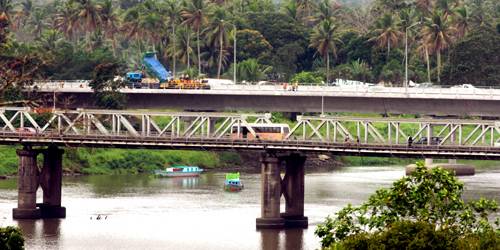
The new Rewa Bridge in Fiji


I think the new bridge could be named the Uro Rewa Bridge or the Rewa Uro Bridge as a concession to the anxiety about the fact that the European gift of millions of dollars helped to build it. 'Uro' a Fijian slang and not quite 'Euro,' but near enough. It's meaning? Well, something like 'Hello, good-looking!'
W.

Saturday, August 12, 2006

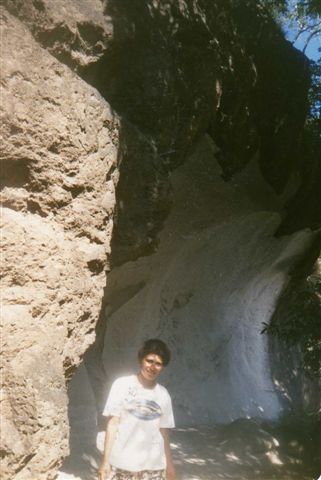
A cave on Vorovoro


At the end of the main beach on Vorovoro Island there are cliffs that form partial caves. Over the years several backpackers have camped there. This pic is of my niece in front of the cave.
Also, there is a very old narrative about shipwrecked vavalagis - from the early 1800s - who camped in a cave on a small island off the Macuata coast. Maybe it was Vorovoro.
W.

Friday, August 11, 2006

cope and paste from tribewanted - Mali kids singing

The young adventurers had to buy a tabua (whale's tooth) in Labasa for a ceremony - and that is costly. They have visited Mali District School in Ligaulevu village and recorded the kids singing. It's interesting for me to hear the adverturers' point of view, their commitment to the project, their 'innocence' even.

From the Fiji blog on tribewanted. Go to the site and listen to the podcasts if you wish.
W.
-----------
Friday 11th August

Podcasts from Fiji


On the ground in Fiji things are moving fast and Ben, Dan and Becky are learning fast about the cultures and traditions of Fiji from ceremonies to clear the land, Karva drinking and an introduction to our neighbouts - the children of Mali. In this blog we wanted to tell you the development of the story, all by podcast!

Thoughts by the sea
Check out the very latest podcast by Dan and Becky as they reflect on their first few days in Fiji. Dan and Becky speak of the ceremonies that they have been involved with, the preperation of the land and the unique culture in which they are finding themelves. Oh, and they share their thoughts right by the sea off vorovoro.

Podcast of the Children of Mali
Have you ever heard the singing of children in a third world Country? The singing of children who have nothing but their songs and smiles convey that they have all they need. Take a listen to this podcast and hear the sounds of the children of Mali.

An interview with one of tribewanted's environmental consultants
We have recently had Maleli Naiova - tribewanted's environmental consultant on the island conducting the Environmental Impact Assessment on vorovoro. We managed to grab an interview with him in order to keep you updated. Take a listen.
We hope that you enjoy the sounds of vorovoro - for tribe members this is becoming 'more real' everyday,

Vinaka
Ben

Thursday, August 10, 2006

More about kura - in fiction

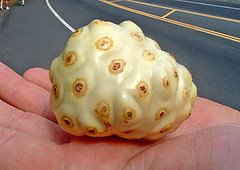
There's a green Sprite bottle in our cupboard full of dark brown liquid, a gift from a relative in Fiji. I'm not game to drink it. Is it kura? Whoever gave it swore that it was a great medicine.

Anyway, I found some references to kura in a fictional piece of writing I have been working on. Three characters here - Ofa-Atu, an elderly Fijian woman who makes kura medicine, Madeleine an Australian, Brad an American. The story is set in Suva. These are a few excerpts from the writing.
W.

Hairy roots of the baka tree trailed on the ground like bizarre sea creatures near pots of herbs and medicines stacked near the doorway of Ofa-Atu's bamboo hut. Some pots were in disarray, tipped over when Ema's nephew had visited during the night, kura fruit trodden into the dirt. They needed to be pure, unadulterated by earth. Ofa-Atu knew that the herbal medicines were agents with the possibility of cure. They did not always work; she also knew that. The colourful tablets given out at the big hospital and the injections might not help either, only quieten the mind. Not many people listened to the old ways though, as they purchased packets of pretty pills or Panadol or the magic Aspirin.

***
Her bones bit so she rubbed a homemade ointment on her knees. She leant against the plaited bamboo wall, stared at her magic river stones and golden cowrie shells, picked up two kura leaves to chew on their bitterness. A leaf basket filled with white kura fruits lay near the wooden door, like small bumpy potatoes patterned with eyes. In two or three days, they would become translucent, smell strongly inside a container covered with plastic. Four weeks in sunlight would turn them brown and the fermented juice would be ready to be squeezed out to make a healing potion.
***
The neighbours screwed up their noses when the kura became over-ripe. These days, relatives brought baskets of the fruit, but it used to be so nice to wander through the hills, in the forest understorey, search in places where there was brackish water, to find the special tree, pick the fruit, whether green or white, or translucent yellow. Ofa-Atu's routine was to fill cleaned soft-drink bottles with kura to sell for $10 each but these days, she had little energy to process the latest basket.
***
A girl in charge of a New Age medicine stall handed Madeleine a flyer and poster, colour-copied, probably from the Internet. She said, 'Kura for boils. Mouth ulcers too. My bottles only $15 to $25.You can drink half cup.'
'An elderly woman makes this in my back yard,' Madeleine offered. 'Her medicine’s strong. I only take a spoonful at a time and it tastes foul!'
'But it good for high blood pressure and for period pain us girls get. You want? Plenty tourists like. They ask for noni but kura is it. You buy?'
'No thanks. I can get all I need from Ofa-Atu.'
'Oh, you know. She good! My relative.'
Madeleine did not answer. They all said that; everyone was related. There were always connections between Fijians, always! She adjusted her flower-rimmed hat and escaped.
***
Brad leant over a book Madeleine had given him. It was about medicinal plants and written by her friend Hedley. Brad wanted to know more about that kura fruit that smelt so badly in the back garden. Someone had told him that it could be a lucrative business in Fiji. Well, if mahogany failed, maybe an investment in kura might work, but it would be nowhere as lucrative as the $600 million his Dad had said those timber plantations were worth. Brad had also heard something about locally bottled artesian water that might be worth something.
The waitress interrupted him. 'Would you like another drink, sir?'
'A small bottle of Coke, please.'
Brad read: The young flowering fruit is eaten to treat diabetes. The leaves can be put into coconut oil and then the oil can be applied to the skin to treat evil spirits. Nice one! A small piece of young root can be pounded and applied to relieve toothache, young fruit ingested for stomach ache. For urinary disorders make a drink. Green fruit is an emetic. It can also cure sad and worried women. Hmm. The healers claim that kura can help high blood pressure, arthritis, wounds, the heart, cell regeneration, antibacterial defences, stroke, obesity, appetite control and sexual behaviour. Ah ha! Brad continued his reading. Studies have shown that kura stimulates the immune system and promotes the growth of white blood cells. It inhibits the growth of tumours by increasing and stimulating T-cells in the immune system. The most stunning effect is that damaged cells, under the influence of the fruit, have actually regenerated themselves. Now for the intellectual stuff. Scopoletin binds to Serotonin, an important chemical in the human body. Serotonin is a neurotransmitter in the brain that has a crucial role in treatment of disorders, mainly those found in the central nervous system. These include anxiety, depression, Alzheimer’s, obsessive-compulsive disorder, schizophrenia, sleep disorder. Oh, oh! Really?
'Here's your drink, sir.' The girl shook the bottle and the drink burst out the top, spreading over the café table. As Brad grabbed the book, the girl apologized extravagantly, found a cloth to wipe up the mess and hurried to fetch another bottle. The book was now damp at the edges.
‘Don’t worry,’ he called after her. 'Smells better than kura!' He scrabbled for his wallet to pay.
Wednesday, August 09, 2006

Kura trees grow at Nukutatava


Last time I was at Nukutatava beach, one of the girls pointed out a kura tree growing right near the shore and I picked some of the green fruit. When the fruit turns yellow or white the women make a potent medicine to cure all sorts of ills. Kura is the Fijian name for noni which grows in many Polynesian countries and is bottled and sold in health food shops. Several of the women in our family make this medicine and are confident that it is excellent for good health.

Peceli spent yesterday down the Macuata coast at Dreketi inspecting a kura plantation as some farmers are considering alternative crops to sugar-cane. To diversify seems the way to go.

The little tree normally grows wild of course.
w.

Tuesday, August 08, 2006

Is Australia paternalistic towards the South Pacific?

This morning I listened to the ABC Radio Background Briefing program which was about Australia's relationship wtih South Pacific countries. Many of the speakers were very critical and said that Australia, unlike New Zealand, is very paternalistic in its attitude. Here is the site: for a transcript. There's an audio link also.
W.

'When Australia's role in the South Pacific is raised, the terms 'arc of instability' and 'failed states' will commonly follow. As the dominant nation in the region, Australia's national interests are to the fore, as are Australian resources and personnel in providing assistance. But how well does Australia understand its Pacific neighbourhood? An edited version of a seminar hosted by the Australian Institute of International Affairs.'

Here is a small part of a transcript from the program.

Chris Bullock: The final speaker is Imrana Jalal on 'future directions'. Imrana Jalal is a human rights lawyer from Fiji, widely known for her civil society activism. She began with a Pacific Islander's view of Australia.

Imrana Jalal: From our side I think it's fair to say that the Pacific Islander attitude towards Australia tends to be grateful, yet suspicious. For the most significant player in our region strategically, politically, economically and socially, you are not terribly well informed about us for our liking. For historical and other reasons, and dare I say some of them cultural, Australia still does not appear to have much of an instinct for the Pacific. In contrast, the New Zealanders have always appeared to be more comfortable with the region and their role in it, and are consistently better at engaging with us. There are sound historical reasons for this, of course, including New Zealand's greater and longer acknowledgment of their own indigenous population and their old, close and growing association with Polynesia.

Consequently, many of us feel that terms such as 'the arc of instability' and 'failing states' that are bandied around about us simply underscore the superficiality of the assessments of Pacific Island states and a readiness to apply questionable assumptions across what is in fact one of the most geographically, economically and culturally complex regions in the world.

Chris Bullock: The region's cultural complexity is guaranteed by its sheer diversity, and community loyalties make nationhood difficult.
Imrana Jalal again.

Imrana Jalal: In several countries, such as Papua New Guinea, Solomons and Vanuatu, nationhood is a real challenge. The attachment respective communities have for their specific areas and linguistic affiliation in Melanesia is not too readily understood or appreciated elsewhere. In Fiji, indigenous Fijian loyalties to their provinces, their tikinas and their mataqalis often placed above national interest, are poorly understood also. (etc.)

The challenge for us in the Pacific is to build a democracy that is relevant to our needs and our culture. Democracy is a foreign flower, we are told by many of our leaders. It does not fit into our culture. It is against chiefly leadership. It does not recognise the special rights of indigenous people. Democracy, I would argue, can exist side-by-side with a chiefly system if that is what the people want. And that should be accepted, whether it is palatable or not to our outside supporters. A democracy does not require the dissolution of chiefly leadership but it does require traditional leadership to be accountable. This is not based on logic, but on identity. But it must change and evolve to maintain its relevance to the emerging modern Pacific, and we Pacific Islanders ourselves need to make that happen. (etc.)

Monday, August 07, 2006

Looks like Labasa will be jumpin!

Now I hope this is not just a rumour because it seems like Labasa is getting on the map these days with lots of possibilities for being noticed in a positive rather than a negative way!

I wonder where the Survivor crew expect to go. Vorovoro is already taken. Maybe Druadrua island, or an island near Nukubati, or they could go up into the beautiful rain forests - or - down amidst the mangroves! The mind boggles. Would they bring in crocodiles as one film crew did at Pacific Harbour to film 'Anaconda 2'?

Of course the film crew will want their nice comfy accommodation so the hotels and guest houses in Labasa had better smarten up! I love the Mayor's comments about 'beautify the small island and maximise the exposure of the ghost town'! Hey, Mr Mayor, stop being so negative about Labasa. We, at Babasiga, are trying to give a positive spin to the place!
W.

From Fiji Village
Mayor welcomes Survivor Shooting
August 7 2006 17.23

The Labasa Town Council is hoping that the shooting of the next Survivor series in Labasa will boost economic possibilities in the north.

Town mayor Doctor Pradeep Singh said that with the Labasa economy taking a nose dive, the idea of having a world TV series shot on their island is an opportunity not to be missed.

He added that the council will beautify the small island and maximize the exposure of the ghost town.

FAVC Chairman Joe Mar has confirmed that officials of the series have already checked out the site in Labasa and are quite happy with what they have seen.

Mar refused to divulge further information on the matter as they want the series producers to make an official announcement first before they do.

The Survivor series brings a handful of men and women of all ages and all walks of life from America to live in a secluded land and they are divided into two tribes where the weakest link is voted off the island.

View of Vorovoro from the plane


The Chief's blog of tribewanted has some nice pics of Vorovoro Island from the air. Not many locals see it this way!

I wonder how the newcomers to the area are going to like kava drinking and can they eat cassava and fish every day? Okay, it's a nice positive story that the project is moving along. To read an enthusiastic arrival story and to see the pics go to chief's blog.

And by the way, I am not a PR person for tribewanted! Just someone with lots and lots of relatives in Mali and Vorovoro and Vatuadova.

It's my birthday today and Peceli woke me up at 5.30 a.m. trying to ring here from Labasa with his mobile phone! Starting and stopping. He's staying for a couple of days down at the bottom of a hill in his sister's house. Anyway we eventually talked. He'll be eating fresh fish while I eat fish and chips for my birthday!
W.

Sunday, August 06, 2006

Mali Islanders ready for tribewanted, says Peceli


I received a phone call this morning from Peceli in Labasa. He spent the weekend with the Mali Island people and he said they are prepared for the tribewanted visitors on September 1st and the building of the first large bure. Fijian people are very hospitable and the Mali Island people are responding positively to the Vorovoro Island project. Let's hope that all goes well with the important first steps in building low technology infrastructure to suit twenty or more visitors. The plan to co-operate by working together - islanders and visitors - is the way to go.

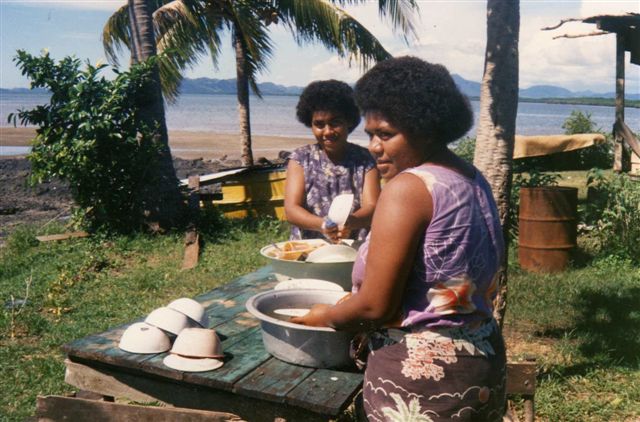
The pic is of two Mali girls (taken some time ago) washing dishes at Nukutatava which is 20 minutes by outboard to Vorovoro Island. You can see Mali Island in the background.
W.

Pine plantations in Fiji and looking to the future


When I read travel diaries and throwaway lines about Fiji people by tourists and backpackers or visitors such as the American family who lived in Taveuni to show free movies, I notice prejudice and romanticism and judgmental attitudes. So many people assume that Fijians only live for the day with no anxiety about tomorrow, and never plan for the future, I want to argue that Fijians do look to the future with the education of their children particularly.

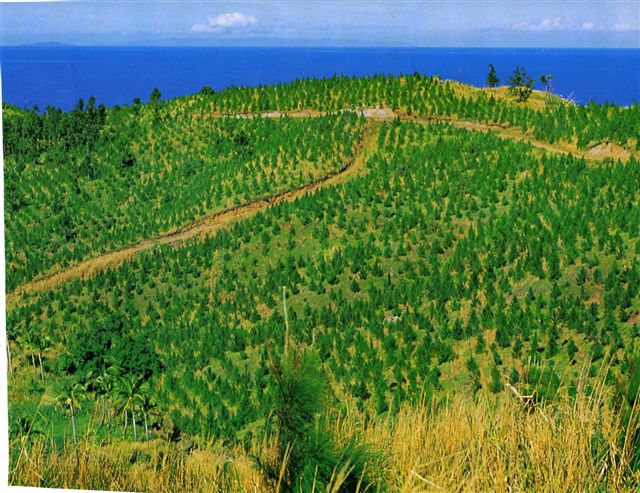
One long-term plan for many farmers in Vanua Levu may be to diversify the use of the land away from the focus on sugarcane to thinking about planting pine. Our family and some neighbours have started this and it is a long-term plan because there will be no profits until at least ten years down the track. The pic is of a Fiji pine plantation.
W.

Saturday, August 05, 2006

Reel Paradise in Taveuni


A New York couple spent a year in Taveuni showing free movies and making capital of the fact that the International Date Line runs through Taveuni. Last year a documentary came out called Reel Paradise. I wonder what it is like and if the local people are given due respect or made fun of. It is so easy for vavalagis to make judgments and find humour in everyday life in a South Pacific country. I hadn't heard of the film until I accidentally came across it when googling.
W.

Solar Power in Fiji


I am a firm believer in decentralization and appropriate technology so I am interested in the use of solar energy in rural areas of Fiji. Surely solar cell systems which generate electricity from sunlight are appropriate for a tropical country like Fiji. They are quiet, give off no pollution, don't require much land or water to operate, and can be used to generate both electricity and fuels.

Over ten years ago, solar power was installed in the village of Ovea in Tailevu. In 1999 it was intalled in the village of Naroi, Moala Island in Lau for 170 households. The cost was donated by France.

In Fiji the Department of Energy installed 193 solar power in the province of Bua and Cakaudrove in 2002. They worked with the Pacific International Centre for High Technology Research (PICHTR).

FDOE, with Public Work Department (PWD) and PICHTR, installed a 720 kWh/day renewable-energy-hybrid-power system at the Nabouwalu Government Station )western side of Vanua Levu_ for offices, shops, ice-plant, bakeries, 30-bed hospital, school, post office, police station and a village. The system was designed by PICHTR. Upwards of 70% is supplied with the renewable energy equipment and the balance with diesel generators. The system produces electricity at costs that are competitive with the true cost of electricity production with fossil fuels.

Nukubati Resort off the coast of Macuata uses panels to capture heat from the sun.
These are some examples of solar energy being used in Fiji and there are other places as well.

Surely this could be done in numerous villages and locations which are isolated from the main power sources in Fiji.

The pics above are from Ovea, Nukubati and Nabouwalu.

Are they still working well I wonder.

I presume that the adventurers who are coming to Vorovoro Island with the tribewanted scheme will be looking seriously at the option of solar power for the project.
W.

Friday, August 04, 2006

70th birthday photos


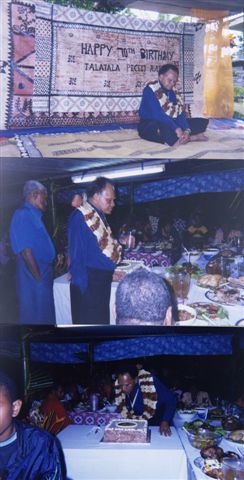
Joe brought back some photos from Peceli's birthday party in Vatuadova. Looks like they built two vakatunuloas (temporary decorated sheds) and there were about 150 people, many speeches, prayers, and lots of lovo food. The valatunuloas probably stayed up for a week because there was a wedding the following Thursday. The cake, decorated with a photo, went all the way from Suva to Labasa by ferry!
W.

Bananas on sale in Labasa


Peceli's friend Joe came back from Fiji and yesterday called with a bunch of photos of the 70th birthday etc. and even one of the market in Labasa. Does he have to rub it in!
W.

Wednesday, August 02, 2006

Raksha Bandan in Fiji


Raksha Bandan is an Indian custom for siblings to recognize and value each other. It’s held in late July or early August. The Fiji Times last week had numerous advertisements for people in Fiji to buy mobile phones, jewellery, clothing, for their loved ones.

The main emphasis however is for a sister to give her brother a bracelet, to tie on the rakhi made of thread around her brother’s right wrist usually with flowers attached. Then the brother gives his sister gifts, sweets, or money. The idea is that the brother is her protector.

In recent years the sentiment has extended outside the family to friends, irrespective of religion or ethnic group. Now wouldn’t that be nice in Fiji!

Tuesday, August 01, 2006

Teaching Computer Studies in Fiji

I googled the name Cameron Buckner after reading parts of his travel stories about Vanua Levu and found this paper entitled 'The Guessing Game: Teaching Computer Studies in Fiji'. This is written of course in a different style from the racy travel diary kind of writing. This one is a serious look at teacher-student relationships in a Fiji classroom in Savusavu.

The site takes time to download - at least for me with dial-up, but Buckner's paper is enlightening and of particular interest to teachers.
W.
PS It seems that Peceli is too busy in Labasa to post on this site. He's planting mahogany it seems, or weeding seven hundred little Caribbean Pine trees or building a fence to stop the neighbour's cow and goat from eating them! Well, that's what he tells me on the phone. Probably he's yarning and drinking kava.

Monday, July 31, 2006

Cameron Buckner's Fijian Travelogue in Vanua Levu

I've been reading parts of a very long narrative by Cameron Bucknell who was in Savusavu in a Rotary/Red Cross project concerning computers. His style is observant, funny, sympathetic, sometimes mistaken or judgmental. It's really the adventures of a vavalagi in Vanua Levu. He has some good photos. The story I first read - which comes near the end, was about a long hike in Natewa Bay area. Of course it was inevitable that someone would ask him 'You walked! Hey, why didn't you just catch a bus?'

Cameron Buckner’s Fijian Travelogue – in Vanua Levu - home page says:
'Ni sa bula!
Welcome to the web site of Cameron Buckner, a philosophy graduate student at Indiana University and incorrigible nomad. Herein lies a travelogue compiled over two summers spent in Savusavu, a lazy little town on the Fijian island of Vanua Levu. Also included for your browsing pleasure are several collections of photographs, writings, and my professional philosophy web site.'
W.

Vanishing websites for provinces!

When I read in the Fiji Times that Rewa Province have a website - as www.rew.pc-.com I thought that didn't look right, so I looked up www.rewa.pc.com . It doesn't work either though such a site should exist.

A few months ago I looked at the Ra Province site which was set up in April. It really looked very good and was about their plans for the future. Alas, that site, today, is UNDER CONSTRUCTION. When loving Peace Corp or volunteers or paid web-designers set up sites - at I don't know what cost to the Provinces - who is left there to maintain them? Perhaps the girls have gone to fetch firewood!
The cartoon is from the Fiji Times.
W.

Chief's Blog

Two stories about the Vorovoro project have been in Fiji newspapers, such as the Fiji Sun on Sunday. Go to Chief's Blog to check them out.

Also there is a rather bizarre story about shooting down coconuts - something I've never heard of! Anyway there are some good pics of sugarcane farming in Labasa on the 'Chief's' posting.
W.

Sunday, July 30, 2006

Mangroves at Nukutatava


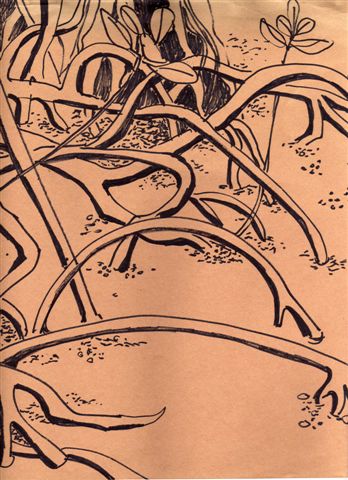
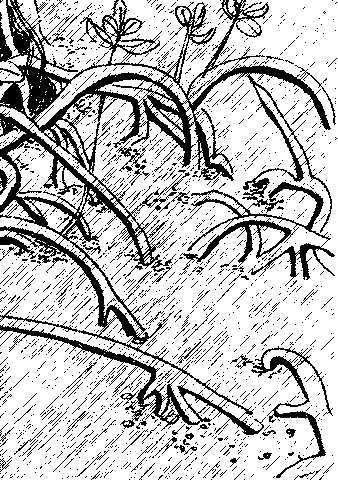
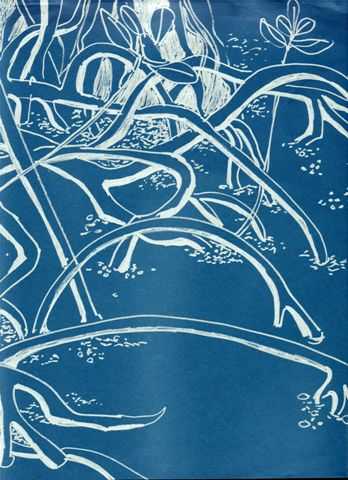
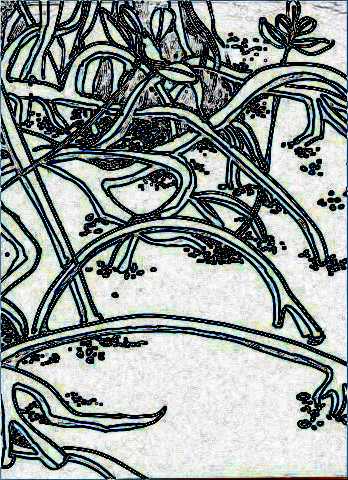
The original drawing was on orange paper, then I changed it a few ways using Photo edit.
Mangroves are sometimes seen as unremarkable but they are immensely important in the food chain for the Pacfic Islands. The Macuata coastline in Fiji has many sections of mangroves. At each end of Nukutatava beach there are mangroves. So, what happens when residents decide to chop them out? Less crabs, less fish, more erosion perhaps?

from the Fiji TV news
Loss of Mangroves – major cause for climate change
27 Jul 2006 18:04:07
The W-W-F, an N-G-O associated with nature is embarking on a programme to save Fiji's mangroves. A recent report by the United Nations has found at least 50 percent of Fiji's mangroves will be lost by the end of the century. Since the release of the report moves are now underway to spread awareness on how to save the mangroves.

Fiji has the third largest mangrove area in the region, behind PNG and the Solomon's.
And that vulnerability is linked not only to an adverse affect on our environment, but to the loss of our culture.

The area of Tinkinawai in Nadi where large hotel developments are taking place will be used as a cases-study in this Project.
-----
There are numerous websites detailing the botany and ecology of mangroves.
W.