Sunday, August 27, 2006

Do Fiji Methodists drink alcohol?


When Akuila Yabaki was re-instated into the Fiji Methodist Church after his 'lapse' a few years ago in drinking alcohol.

The Fiji Sun wrote this at the weekend:

This week Reverend Akuila Yabaki was reinstated as a Methodist church minister after he was excommunicated in 2001 for drinking alcohol. The rules of the Methodist church clearly states that any minister found drinking alcohol will be defrocked and banned from the church. Reverend Yabaki had always maintained that he drank to socialise, not to get drunk. If drinking alcohol moderately by ministers was not allowed shouldn’t the same be said for drinking grog excessively? That’s exactly what is happening at Ratu Cakobau park.
----------
This connection between Methodism and abstaining from drinking beer, wine, etc. probably developed because of drunkeness and to see a drunk man or woman or teenager for that matter isn't a pleasant sight. Perhaps it's also about the use of money when there's nothing left for the family groceries. Ministers should set an example toa the flock I guess.


But there is no ban on drinking kava - though it is not alcoholic - it also has certain effects - laziness the next morning, it costs money, it separates the drinkers from their kids who might be running wild. Members of the Assembly of God churches, sometimes called lotu tagitagi - 'crying church' abstain from kava.


I wonder if John Wesley had a glass of red, red wine with his dinner?

Spell checked - Bread More!

I noticed a story in today's Fiji Times and the spell checker did a great job with a name! Bread or cakes? Let them have cakes!
W.

Expert sets path to reform
Monday, August 28, 2006

AN Australian technical consultant will arrive in the country in two weeks to set up a unit for comprehensive reform of the civil service.

Public Service Commission chairman Stuart Huggett said this would be the initial stage of a comprehensive reform process involving wide-ranging consultation.

Mr Huggett said the arrival of consultant Bread More would be part of the first phase of a five-phase reform plan to revamp the civil service.
etc.
--

Friday, August 25, 2006

Vorovoro and Fiji Time


Things are hotting up on Vorovoro and despite the travellers' references to Fiji Time and waiting a few hours here and there, it really is going quickly. A barge has moved timber ready for the big bure with guys from Matailabasa - a village of Mali people down near where the Indian Snake temple stands. A St John's Ambulance worker, Va, had spent two days on Vorovoro teaching a First Aid course and kits are being organised for land and boat. The toilets are going up. A rep from the Fiji Visitors Bureau has visited. September 1st is the 'Arrival Day' and so far so good.

People refer to Fiji Time as casual, very late, very 'no worries mate' but I am pleased that the tribewanted guys are doing well so far.

There are podcasts on the site including a discussion with Va the St John's Ambulance worker and another with a guy from the Fiji Visitors Bureau in Suva. I wonder who is paying for their airfares as it's about $360 return - Suva-Labasa-Suva.

I've pinched the photos from the Fiji blog on the tribewanted website.
W.

Thursday, August 24, 2006

Amazing Grace Reuben


Amazing Grace Reuben

Grace Reuben is a candidate to become a Methodist minister, alongside over thirty candidates which includes six other women. I’m all for women as ministers and this has been customary in the Australian Uniting Church for many years. In Fiji women usually become deaconesses. Grace is married to Michael, and she has been a local pastor already. Her father is Rev. Lucas.

The Deaconess Order in the Methodist Church in Fiji was initiated and developed by Pauline Campbell, a missionary from Australia, and has had hundreds of excellent young woman from various ethnic communities in Fiji. Pauline worked for many years in Fiji and loved the people.

There have been very few female ministers in Fiji. Rev Meraia Siri, who worked for a few years in Labasa amongst the Indian community, is a beautiful and compassionate person. We first met Meraia as a little girl in Rakiraki when her father Ari Siri worked in the sugar industry and we had Sunday school in their bure. Ari came from a family in Navua. I used to visit Meraia each time we went to Labasa and we would sit down to a meal of dhal and rice and coconut pie as she told me stories to get me up to date with news.

I remember Loloma Tukai, one of those early deaconesses who worked in the Ba-Ra Indian Division, and later went to Vanuatu, married a pastor there. And by a wonderful coincidence, she is now in Geelong! I was so amazed to have a phone call from Loloma a few days ago. We had barely met since the time she stayed with us for three months in Rakiraki!

By the way, Mrs Reuben is from Labasa and has been a lay pastor for the past ten years.

Akuila Yabaki a breath of fresh air


I was pleased to read, though the journalist in the Fiji Sun, Kelera Serelini, over-explained the former misdeamours too much so that it read as comedy, that Rev Akuila Yabaki has been accepted back as a talatala in the Methodist Church in Fiji. He is an intelligent man with recognition outside Fiji as a compassionate and passionate advocate for democracy in Fiji, and in so doing has upset many conservative, traditional people in the church and society. He provoked and stirred and persisted. He is a breath of fresh air in the church!
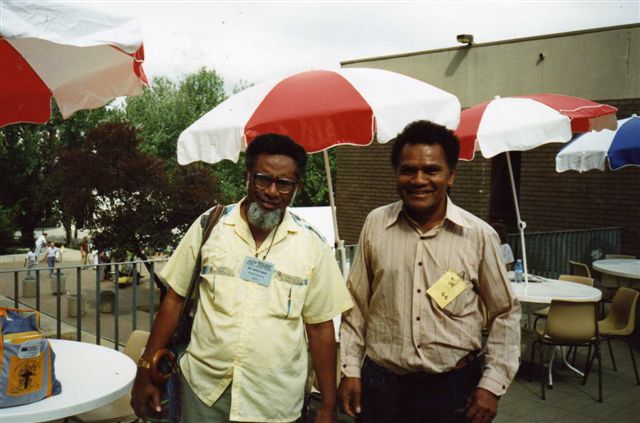
The picture of Peceli and Akuila was taken several years ago at a World Council of Churches conference in Canberra.
W.

Wednesday, August 23, 2006

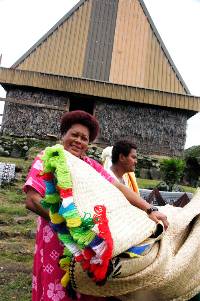
pictures of Bau island


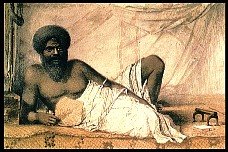
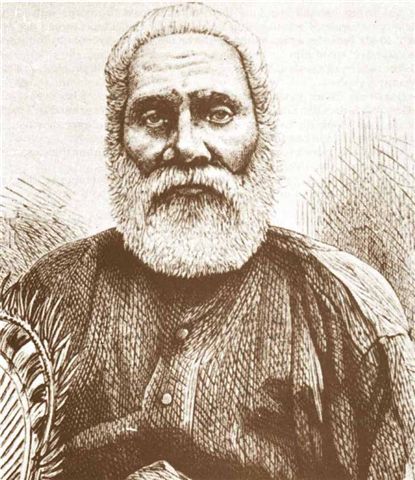
I found two photos from a teivovo - rugby site - which were taken about four years ago and an old drawing of Bau.
W.

Found a site with excellent photos

By accident - searching google for 'Bau Island' I came across a very beautiful site with superb photos, including some taken in Fiji, and some great ones of banyan trees. Check it out. Vapham.
W.

Tuesday, August 22, 2006

A nurse from Labasa hospital told me a story

A nurse told me what happened to her one day and I have adapted it into the following short story.
W.
Nanumi Siga

I was going off duty when the matron spoke to me in her usual rattling pace. 'Nanumi, I'm going away to Suva for two days. Can you check on my flat? There's some wild lads in the town who break in. I don't want my things disturbed. You can sleep there.'

'Thanks.' After our crowded quarters with six of us falling over one another I decided that this would give me some restful space so I took the key! 'I'll spend the weekend there as I'm off duty too.'

The two bedroom flat was one of those typical male-designed spaces in blunt concrete. I asked Pinky, an Indo-Fijian nurse, if she would sleep over there too.
It was a windy night and I was restless. The weather forecaster had warned of a cyclone 500 k west of us. We would be in for a blow within twenty-four hours unless the cyclone swung away over the sea. I'm used to cyclones because I come from a small island, not this sugarcane town.

I felt a kind of paralysis that saps the body when you're really asleep. My bed was directly under a large window. I saw two large smudges emerging from a dark grove of banyan trees. Two figures floated over the fields, pushing the stalks aside as she came nearer. They were two tall women with wild hair, in shabby clothes; not the neat cottons and smooth fabrics we wear today, but bark-cloth wrapping. White and orange streamers waved from their arms and waists showing their chiefly status.
One beckoned to me and smiled. She had bright blue eyes. The other glared at me with fierce dark eyes. When her arms reached out to touch me my breath just stopped, so enormous was my fear.

I threw off the blanket and ran to the other bedroom. 'Pinky! There are two ghosts outside!'

She murmured, 'Go back to sleep. It's only a bad dream.'

The figures outside dissolved and all I saw was a field of sugarcane and the wind thrashing on the window.

I lay down again but my mind drifted back to my island to find a calm centre by focussing on a pleasant memory. However all I could imagine was a dark brown sludge in our island lake. Instead of seeing children playing on the beach and the aunts singing as they plaited mats, I saw a mystery lake, a place we were banned from visiting. When I looked closer, a large writhing snake was surrounded by hundreds of smaller wriggling snakes. Our ancestor god was telling me to pick up one and touch it but I could not!

My name Nanumi means 'to remember.' When I asked my father where my name came from, he had told me that his grandfather who often sat in a rocking chair like some of the vavalagi people do, told him to name the next child, Nanumi Siga, meaning 'to remember the god Siga' because the Fijian gods have been forgotten.

I could not sleep, aware that out there, near the cane fields were the two goddesses, who had carried the large stones across the mountains to a place nearby.
The matron's flat was on the edge of a deep valley of farms but beyond there was a sacred grove, a place where no-one ever intruded except children looking for coconuts or mangoes to knock down, or some curious tourists who should not go there either. The Land Tribunal was in the middle of a legal argument about clearing this area for more cane farms. The chief was resisting such change. 'It was a sacred place, where gods once walked,' he'd said. There were photos in the papers and an American man had written a book about it. There seven large grey stones, two upright, but five lying prone in the grass but in a rectangular formation with smaller stones and platforms. A temple once stood there A men's place, but their gods had been two women.

I'd walked near that site twice when women in the village were in labour and refused to come into the hospital to deliver.

I'd heard some of the stories of the two goddesses from patients in the Psych ward. There were other stories of two chiefly sisters, one about the girl who turned into a bat at Macuata-i-wai Island. These two sisters were chased away from their mountain village by their angry father over a matter of uncooked yams. Some of our stories get mixed up and are told differently.

Now I have seen for myself the two goddesses of Wasavulu, but Pinky did not believe me.

At dawn, I threw my clothes into my bag and fled back to the safety of the crowded nurses' quarters as Pinky walked with me. I wondered then if she ever dreamt of or saw with her own eyes, Krishna, Lakshmi or Rama.

She answered, 'No, I'm a modern girl. I've left all that behind!'

But I don't think we ever leave all of that behind. It's still with us, like a strange wind that sometmes moves in a wave over the canefields.

Hibiscus Festival girls

I don't know if the writer of this letter to the editor in the Fiji Times this week is trying to do 'blonde' kind of jokes, as he sounds serious towards the end of the letter, but I think it's great.
W.
Hibiscus humour
I refer to your Davui Column (FT 21/8) concerning a certain Hibiscus contestant answering in English when spoken to in Fijian.

In the days of old, there were many stories of contestants who made people sit up and think.

A few years ago a contestant was asked by the host of the evening, "What airline flies twice weekly to Japan?" She answered in the form of a question Air Fiji? In another festival a contestant was asked what her favourite dish was, her answer was pyrex dish. That will take some chewing. And in another contest a contestant was asked why she was still in her casual clothes and her sponsor must have given her money to buy new wardrobe. She answered brightly, saying, "Oh yes, I bought a new wardrobe from Courts."

I feel when application forms are sent out, people who respond should undergo an IQ test and pass it before entering the contest. Otherwise the quality of the festival will be brought down low. Remember winners would represent Fiji in other festivals in the Pacific and even world. Just imagine if one of the girls were asked to say something in her native tongue and couldn't say anything or asked who George W Bush was and didn't know.

Allen Lockington
Lautoka

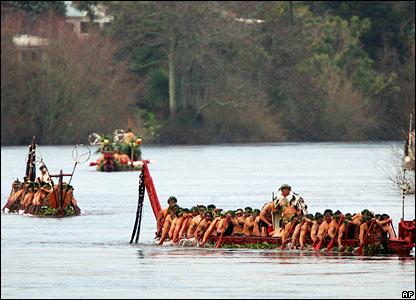
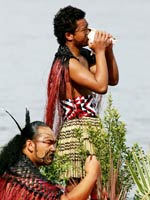
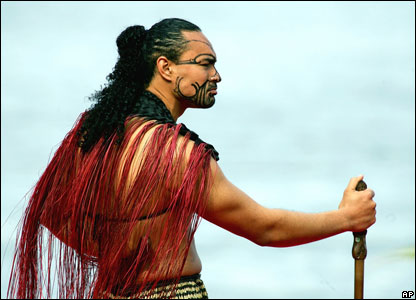
Farewell to Maori Queen in New Zealand


Maori Queen’s Funeral At Turangawaiwai

WELLINGTON (Reuters) — Tens of thousands of New Zealanders gathered to bury the Maori queen, one of the country’s most respected indigenous leaders, and celebrate the inauguration of her son as her successor. The tribal home of Dame Te Atairangikaahu, was overflowing as Maori of many tribes, New Zealand and Pacific political leaders, and many others of different races attended her funeral ceremony. Dame Te Atairangikaahu ONZ, DBE, (23 July 1931 – 15 August 2006) was the Māori Queen for 40 years.
--
Peceli and I were briefly in New Zealand one time and what a lovely place it is. We drove to Hamilton following the Waikato River. I think that Pacific people from various Island states feel warm towards the Maori people. We have many Maori friends here in Geelong and sometimes attend their weddings and parties and meet up with them at rugby of course.
W.

Sunday, August 20, 2006

Fiji Choirs and tonic solfa


Tonic Solfa - doh ray me
Sere ni lotu–hymns and anthems in the Methodist Church in Fiji are learnt in a painstaking manner by using tonic solfa – d, r, m, f, s, l, t, d with a few variations such as se, ta, to show a semitone down or up. It’s a method started in England in the 19th century and rarely used today – although it persists in the South Pacific and apparently also in Africa. It has its limits because Western notation allows for more subtlety and intricacy in music. However it certainly is amazing how beautiful the choirs can sing using tonic solfa.

So when choirs learn a new piece for the conference they first go through the four voice parts using tonic solfa – soprano, alto, tenor, bass. Many of the hymns of this nature come from the late 19th century – Alexanders, Sankeys, kind of music. Previously Fijians used three voice parts in chant – laga, tagica, druku – or melodic line, a second voice often one tone apart, and the drone.

In the annual choir competition most of the items are unaccompanied but one very good item prepared by a Melbourne choir a few years ago had the small lali drum to give a syncopated beat. Choir conductors sometimes write new songs or adapt tunes they have heard. Even the South Africa anthem has been translated as an anthem into Fijian and it’s a lovely one.

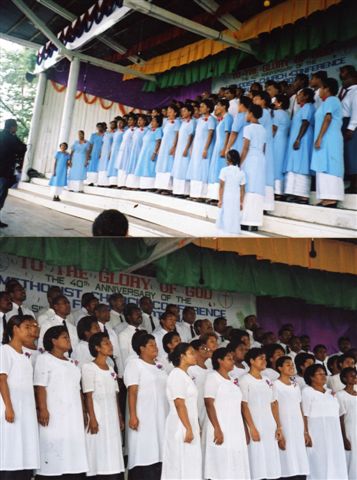
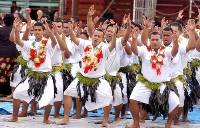
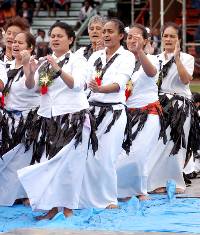
The top photo is of two choirs at the 2004 Choir competition held at Furnivall Park which was really muddy so how the singers kept their costumes clean I don't know! I only went one day, because of the mud!

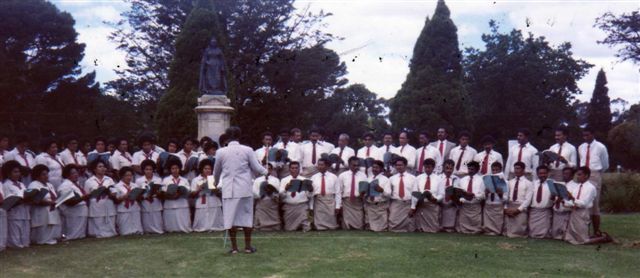
The other photo is of the Labasa choir when they visited Australia, mainly Geelong, as our guests and them camped in the church halls adjacent to our house and presented concerts at schools and toured.
W.

Bau Island, pivotal role in Fiji's history


Bau Island has been pivotal in Fiji's history, including that of the Methodist Church when Ratu Seru Cakobau embraced the lotu.

Methodist Annual Conferences in Fiji have often been located in places distant from metrapolitan Suva and that’s a good thing – such as Bua, Lau, Cuvu, Levuka. It is meaningful for this church to symbolise its relevance to the people by hosting the meetings in regional areas. It is costly but it builds networks and pride and hospitality and sometimes a renewal of customs. I noticed this particularly at the Cuvu conference held a few years ago.

Fiji Times today:
Ratu Epenisa Cakobau explains to the Fiji Times reporter that the conference, which starts on the island next Monday, had also encouraged the islanders to improve their living standard. "Since last year, we knew that we were going to host the conference so people of Bau who live on the island started renovating their homes and upgraded their surroundings in preparation for the conference."It lifted the standard of living not only on Bau Island but throughout the province of Tailevu," Ratu Epenisa said. Houses on the island stood out in their bright colours decorated with colourful clothing material tied to posts and walls of the homes.Houses on the island were freshly painted for the conference, the lawns were neatly mowed and gardens planted. No rubbish could be seen lying around the island.

Ratu Epenisa said a dress code for those visiting the island for the conference would be monitored. "That's what Bau is, with its customs. Any visitor to the island will know what kind of dress to wear. I'm sure people will bear in mind their dress code on the island," he said.
--
Hmm. I wonder who is ironing Peceli’s shirt and sulu and polishing his sandals if I’m not there!
W.

Update: Wednesday August 23rd.
A great photo of Bau Island taken from the air has been posted on Pandemonium's blogspot. Check it out.

Fiji jav thrower does very well at World Juniors


Fiji javelin thrower does very well at World Juniors
Leslie Copeland was at the 11th IAAF World Junior Athletics Championship in Beijing, China this past week. He finished in 7th place in the Javelin throw final last night with a throw of 73.13 metres. A terrific result for an eighteen year old young guy from the USP. When at Marist Brothers High School he showed great promise and already he has been at three international meets such as to Morocco. Fiji’s national javelin champ, James Goulding, was at the meet also as a coach.

The photo here shows his mother Tavenisa helping him pack his gear. Sports World equipped him with sporting gear and uniforms, which cost just over $1000. A training camp with other Oceania-based athletes prior to the competition helped the athletes to prepare.

Seventy-three metres is a great throw for a junior! Certainly beats winning in any choir competition!
W.


Fiji's javelin throwers are amongst the best in the region and have represented the country at the South Pacific, Commonwealth and Olympic Games. Luke Tubuna won Fiji's first javelin medal, a silver, at the 1950 Empire Games with fellow sportsman, Mataika Tuicakau winning gold in the Shot Put and bronze in the Discus.

Friday, August 18, 2006

Rotumans open Choir competition


from Peceli
I went to the official ceremony in the Cakobau Park and it was slowly raining. Nausori was full of people from all parts of Fiji. The Rotuman community were the official guests they gave more than $333.000.00 soli.
from Wendy
The Fiji newspapers usually emphasize the financial aspects of the annual Methodist Conference but it is more than that - it's about celebration of the lotu, (church) identity, renewal of relationships with people from all over Fiji, as well as a competition about choirs and giving money in a very public way.

Doh Ray Me
Here are three singers from a Melbourne choir who sang in a previous year, dressed in their fine choir uniforms and holding a trophy, probably for giving the biggest soli. Dr Jovili Meo, Buadromo, and Peceli. The uniforms usually don't make it home, but are given away.

Thursday, August 17, 2006

Soldiers and post-traumatic-stress

I wonder how many Fijian soldiers return from duty overseas and cannot fit back easily into civilian life. Certainly many Australian men have had problems, even suicide. Yesterday it was forty years on since Long Tan in Vietnam.

Our local paper, uncharacteristically, had some strong stories yesterday. They were by Vietnam vets remembering Long Tan. A lot of stories of post-traumatic stress. Made me think of my cousin, who as a youth was a handsome, shy lad. Went to Vietnam, his wife and daughter left him, and he has been ill and introverted ever since. Even his relatives don't seem to visit. We did and made a connection, by talkng computers of all things. I think it was Agent Orange that was part of his problems.

One of the writers in the paper wrote: 'It was all a complete waste of life as far as I'm concerned. I dont' see any relevance in it at all. My belief is,and they're finding this out in Afghanistan, you can't beat anyone in their own back yard. I often use theanalogy with my kids:take me out in the street and you might give me a hiding in the street buy try and take my house. It's just on a bigger scale to that.'
W.

Wednesday, August 16, 2006

Cartoons tell it better than I can about our world today


Leunig is one of our most compassionate artists and most of his cartoons are gentle but sometimes they say some strong things about our society today. To spend time with the lonely, rejected, imprisoned and difficult people perhaps is better than all the hoo-ha of large ceremonies and festivities.
I'll post a funny cartoon on our other blog - geelong-visual-diary - about people lining up to catch a plane these days.
W.

Dilkusha Girls


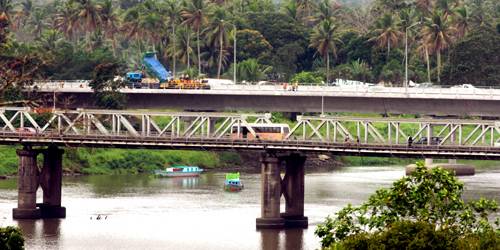
I was happy to see a picture in the Fiji Times of Dilkusha girls in their bright purple uniforms crossing the new bridge very close to their schools and home. Dilkusha means 'happy heart' and was built many many years ago as an orphanage for girls, their accommodation half-way up a hillside that overlooks the Rewa River. This has been a Methodist church institution and supported over the years with great interest from the Methodist/Uniting Church in Australia. When I was in my 20s I spent a lot of time wtih the Dilkusha girls and staff and they were the ones to teach my how to make roti when I went with them to Colo-i-suva for a camp. I still make rotis shaped like a map of Australia though! And of course, we did live in Shantiniwas one year at the bottom of the hill and our eldest boy, then aged three I think, followed the crocodile line with the littlies from Dilkusha to Davuilevu to the kindergarten run by Lorini Tevi. Three teenage girls lived with us - one went to Derrick Tech, one to Sariswati College, one to Lelean.
W.

Tuesday, August 15, 2006

Methodist Conference Timetable


Bau Island is ready for the Methodist Conference and today a ceremony will take place to seek permission for all the visitors to come. From Fiji Times 17th.
"This is an important occasion not only for Bau but Tailevu as a whole because the hosting of the conference is returning 152 years after Christianity reached the country.(area) We haven't hosted it for 152 years since Ratu Epenisa Seru Cakobau accepted Christianity in 1854 when the Takia left here to take the good message around the country."

A link on Fiji Times 16th August goes to a website that includes conference preparations and a timetable as follows:
Aug – Sep ‘06
VEIQARAVI E NA VAKAYACORI TIKO

Thurs 17th Aug
Veiqaravi vakavanua (Full Ceremony) ni Ciqomi na Lotu e Bau, pm

Fri 18th Aug
Solevu / Choir competition begins – Rotuma doladola (opening ceremony) at Nausori

Sat 19th Aug
Solevu/ Choir competition continues

Sun 20th Aug
Veivakatikori ni T/Qase (Senior ministers) at Bau

Mon 21st – Fri 25th
Solevu cont. T/tala (ministers) bose at Nausori. Catering provided by Komai Nausori M/Tea/Lunch

Sat 26th
Close of Solevu

Sun 27th
Lotu (church - evening) at Bau – Veitabaki

Mon 28th
Naloto, Nasautoka, Wailevu, Nayavu, Nailega – M/Tea, Lunch, A/Tea in Bau

Tues 29th
Namena, Waimaro - M/Tea, Lunch, A/Tea in Bau

Wed 30th
Vugalei, Viwa - M/Tea, Lunch, A/Tea in Bau

Thurs 31st
Nakelo, Buretu - M/Tea, Lunch, A/Tea in Bau

Fri 1st
Bau, Dravo, Namata - M/Tea, Lunch, A/Tea in Bau

Sat 2nd
Veisukayaki

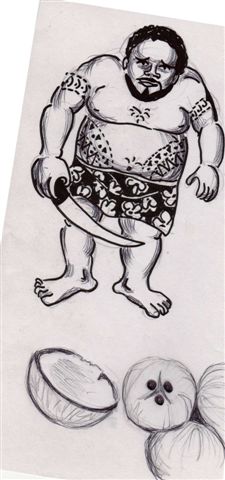
A Fijian legend - Rosiwa the Turtle


Rosiwa the Turtle
This is the beginning of a long tale about how the Tongans came to Fiji, though it starts off in Samoa. It’s adapted from a translation by Lorima Fison of a story given by the Tui Nayau in Lau, about 1890.
My version starts like this introduction: (but I’m still working on it for a book for my grandchildren.) I'm not sure of the tone of the drawings - should they be comical or serious and respectful? I'm only at the stage of trying out ideas.
W.

I sit beneath the cool tavola nut tree,
Dream of a Samoan dwarf who was shipwrecked,
A boy who was struck dumb and who never grew old,
A Tongan who sailed to Fiji, not by choice,
A heroic green turtle and the King of the Sky.
Au moce koto se ni biau
I sleep on the foam of the surge of the reef.
Isa oi-awa Rosiwa

Listening to the Labasa dialect from Vorovoro

It's delightful to listen to the audio from the tribewanted on Vorovoro because you can hear the guys talking in the Labasa dialect. I don't know what the visitors call Grandpa - Bubu in some places in Fiji but Pupu up in Labasa! The project is going at a great rate. Plans for three compost toilets, a kitchen behind Tui Mali's house, using the two existing bures as changing rooms for men and women, the building of two shelters for sleeping and eating, and then the clearing of the site for the large bure. Already they have waded through a mangrove swamp to cut timber, and Malau Timber Mill will provide timber as well. An update is on the Fiji blog of tribewanted. Includes the search to buy a tabua - whale's tooth, the making of a lovo - underground oven. I laughed when I read about the method of work - the Mali guys divide up so that half of them don't work, just sharpen their cane knives. The poor sods from England just keep on working, sweating, getting scratched. They have to learn that in the heat, you just take it easy!
W.

Monday, August 14, 2006

The new Rewa Bridge in Fiji


I think the new bridge could be named the Uro Rewa Bridge or the Rewa Uro Bridge as a concession to the anxiety about the fact that the European gift of millions of dollars helped to build it. 'Uro' a Fijian slang and not quite 'Euro,' but near enough. It's meaning? Well, something like 'Hello, good-looking!'
W.

Saturday, August 12, 2006

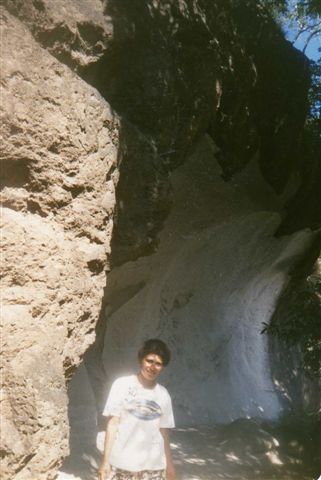
A cave on Vorovoro


At the end of the main beach on Vorovoro Island there are cliffs that form partial caves. Over the years several backpackers have camped there. This pic is of my niece in front of the cave.
Also, there is a very old narrative about shipwrecked vavalagis - from the early 1800s - who camped in a cave on a small island off the Macuata coast. Maybe it was Vorovoro.
W.

Friday, August 11, 2006

cope and paste from tribewanted - Mali kids singing

The young adventurers had to buy a tabua (whale's tooth) in Labasa for a ceremony - and that is costly. They have visited Mali District School in Ligaulevu village and recorded the kids singing. It's interesting for me to hear the adverturers' point of view, their commitment to the project, their 'innocence' even.

From the Fiji blog on tribewanted. Go to the site and listen to the podcasts if you wish.
W.
-----------
Friday 11th August

Podcasts from Fiji


On the ground in Fiji things are moving fast and Ben, Dan and Becky are learning fast about the cultures and traditions of Fiji from ceremonies to clear the land, Karva drinking and an introduction to our neighbouts - the children of Mali. In this blog we wanted to tell you the development of the story, all by podcast!

Thoughts by the sea
Check out the very latest podcast by Dan and Becky as they reflect on their first few days in Fiji. Dan and Becky speak of the ceremonies that they have been involved with, the preperation of the land and the unique culture in which they are finding themelves. Oh, and they share their thoughts right by the sea off vorovoro.

Podcast of the Children of Mali
Have you ever heard the singing of children in a third world Country? The singing of children who have nothing but their songs and smiles convey that they have all they need. Take a listen to this podcast and hear the sounds of the children of Mali.

An interview with one of tribewanted's environmental consultants
We have recently had Maleli Naiova - tribewanted's environmental consultant on the island conducting the Environmental Impact Assessment on vorovoro. We managed to grab an interview with him in order to keep you updated. Take a listen.
We hope that you enjoy the sounds of vorovoro - for tribe members this is becoming 'more real' everyday,

Vinaka
Ben

Thursday, August 10, 2006

More about kura - in fiction

There's a green Sprite bottle in our cupboard full of dark brown liquid, a gift from a relative in Fiji. I'm not game to drink it. Is it kura? Whoever gave it swore that it was a great medicine.

Anyway, I found some references to kura in a fictional piece of writing I have been working on. Three characters here - Ofa-Atu, an elderly Fijian woman who makes kura medicine, Madeleine an Australian, Brad an American. The story is set in Suva. These are a few excerpts from the writing.
W.

Hairy roots of the baka tree trailed on the ground like bizarre sea creatures near pots of herbs and medicines stacked near the doorway of Ofa-Atu's bamboo hut. Some pots were in disarray, tipped over when Ema's nephew had visited during the night, kura fruit trodden into the dirt. They needed to be pure, unadulterated by earth. Ofa-Atu knew that the herbal medicines were agents with the possibility of cure. They did not always work; she also knew that. The colourful tablets given out at the big hospital and the injections might not help either, only quieten the mind. Not many people listened to the old ways though, as they purchased packets of pretty pills or Panadol or the magic Aspirin.

***
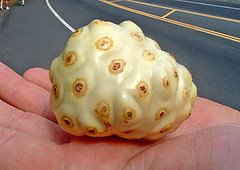
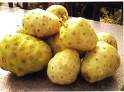
Her bones bit so she rubbed a homemade ointment on her knees. She leant against the plaited bamboo wall, stared at her magic river stones and golden cowrie shells, picked up two kura leaves to chew on their bitterness. A leaf basket filled with white kura fruits lay near the wooden door, like small bumpy potatoes patterned with eyes. In two or three days, they would become translucent, smell strongly inside a container covered with plastic. Four weeks in sunlight would turn them brown and the fermented juice would be ready to be squeezed out to make a healing potion.
***
The neighbours screwed up their noses when the kura became over-ripe. These days, relatives brought baskets of the fruit, but it used to be so nice to wander through the hills, in the forest understorey, search in places where there was brackish water, to find the special tree, pick the fruit, whether green or white, or translucent yellow. Ofa-Atu's routine was to fill cleaned soft-drink bottles with kura to sell for $10 each but these days, she had little energy to process the latest basket.
***
A girl in charge of a New Age medicine stall handed Madeleine a flyer and poster, colour-copied, probably from the Internet. She said, 'Kura for boils. Mouth ulcers too. My bottles only $15 to $25.You can drink half cup.'
'An elderly woman makes this in my back yard,' Madeleine offered. 'Her medicine’s strong. I only take a spoonful at a time and it tastes foul!'
'But it good for high blood pressure and for period pain us girls get. You want? Plenty tourists like. They ask for noni but kura is it. You buy?'
'No thanks. I can get all I need from Ofa-Atu.'
'Oh, you know. She good! My relative.'
Madeleine did not answer. They all said that; everyone was related. There were always connections between Fijians, always! She adjusted her flower-rimmed hat and escaped.
***
Brad leant over a book Madeleine had given him. It was about medicinal plants and written by her friend Hedley. Brad wanted to know more about that kura fruit that smelt so badly in the back garden. Someone had told him that it could be a lucrative business in Fiji. Well, if mahogany failed, maybe an investment in kura might work, but it would be nowhere as lucrative as the $600 million his Dad had said those timber plantations were worth. Brad had also heard something about locally bottled artesian water that might be worth something.
The waitress interrupted him. 'Would you like another drink, sir?'
'A small bottle of Coke, please.'
Brad read: The young flowering fruit is eaten to treat diabetes. The leaves can be put into coconut oil and then the oil can be applied to the skin to treat evil spirits. Nice one! A small piece of young root can be pounded and applied to relieve toothache, young fruit ingested for stomach ache. For urinary disorders make a drink. Green fruit is an emetic. It can also cure sad and worried women. Hmm. The healers claim that kura can help high blood pressure, arthritis, wounds, the heart, cell regeneration, antibacterial defences, stroke, obesity, appetite control and sexual behaviour. Ah ha! Brad continued his reading. Studies have shown that kura stimulates the immune system and promotes the growth of white blood cells. It inhibits the growth of tumours by increasing and stimulating T-cells in the immune system. The most stunning effect is that damaged cells, under the influence of the fruit, have actually regenerated themselves. Now for the intellectual stuff. Scopoletin binds to Serotonin, an important chemical in the human body. Serotonin is a neurotransmitter in the brain that has a crucial role in treatment of disorders, mainly those found in the central nervous system. These include anxiety, depression, Alzheimer’s, obsessive-compulsive disorder, schizophrenia, sleep disorder. Oh, oh! Really?
'Here's your drink, sir.' The girl shook the bottle and the drink burst out the top, spreading over the café table. As Brad grabbed the book, the girl apologized extravagantly, found a cloth to wipe up the mess and hurried to fetch another bottle. The book was now damp at the edges.
‘Don’t worry,’ he called after her. 'Smells better than kura!' He scrabbled for his wallet to pay.

Wednesday, August 09, 2006

Kura trees grow at Nukutatava


Last time I was at Nukutatava beach, one of the girls pointed out a kura tree growing right near the shore and I picked some of the green fruit. When the fruit turns yellow or white the women make a potent medicine to cure all sorts of ills. Kura is the Fijian name for noni which grows in many Polynesian countries and is bottled and sold in health food shops. Several of the women in our family make this medicine and are confident that it is excellent for good health.

Peceli spent yesterday down the Macuata coast at Dreketi inspecting a kura plantation as some farmers are considering alternative crops to sugar-cane. To diversify seems the way to go.

The little tree normally grows wild of course.
w.

Tuesday, August 08, 2006

Is Australia paternalistic towards the South Pacific?

This morning I listened to the ABC Radio Background Briefing program which was about Australia's relationship wtih South Pacific countries. Many of the speakers were very critical and said that Australia, unlike New Zealand, is very paternalistic in its attitude. Here is the site: for a transcript. There's an audio link also.
W.

'When Australia's role in the South Pacific is raised, the terms 'arc of instability' and 'failed states' will commonly follow. As the dominant nation in the region, Australia's national interests are to the fore, as are Australian resources and personnel in providing assistance. But how well does Australia understand its Pacific neighbourhood? An edited version of a seminar hosted by the Australian Institute of International Affairs.'

Here is a small part of a transcript from the program.

Chris Bullock: The final speaker is Imrana Jalal on 'future directions'. Imrana Jalal is a human rights lawyer from Fiji, widely known for her civil society activism. She began with a Pacific Islander's view of Australia.

Imrana Jalal: From our side I think it's fair to say that the Pacific Islander attitude towards Australia tends to be grateful, yet suspicious. For the most significant player in our region strategically, politically, economically and socially, you are not terribly well informed about us for our liking. For historical and other reasons, and dare I say some of them cultural, Australia still does not appear to have much of an instinct for the Pacific. In contrast, the New Zealanders have always appeared to be more comfortable with the region and their role in it, and are consistently better at engaging with us. There are sound historical reasons for this, of course, including New Zealand's greater and longer acknowledgment of their own indigenous population and their old, close and growing association with Polynesia.

Consequently, many of us feel that terms such as 'the arc of instability' and 'failing states' that are bandied around about us simply underscore the superficiality of the assessments of Pacific Island states and a readiness to apply questionable assumptions across what is in fact one of the most geographically, economically and culturally complex regions in the world.

Chris Bullock: The region's cultural complexity is guaranteed by its sheer diversity, and community loyalties make nationhood difficult.
Imrana Jalal again.

Imrana Jalal: In several countries, such as Papua New Guinea, Solomons and Vanuatu, nationhood is a real challenge. The attachment respective communities have for their specific areas and linguistic affiliation in Melanesia is not too readily understood or appreciated elsewhere. In Fiji, indigenous Fijian loyalties to their provinces, their tikinas and their mataqalis often placed above national interest, are poorly understood also. (etc.)

The challenge for us in the Pacific is to build a democracy that is relevant to our needs and our culture. Democracy is a foreign flower, we are told by many of our leaders. It does not fit into our culture. It is against chiefly leadership. It does not recognise the special rights of indigenous people. Democracy, I would argue, can exist side-by-side with a chiefly system if that is what the people want. And that should be accepted, whether it is palatable or not to our outside supporters. A democracy does not require the dissolution of chiefly leadership but it does require traditional leadership to be accountable. This is not based on logic, but on identity. But it must change and evolve to maintain its relevance to the emerging modern Pacific, and we Pacific Islanders ourselves need to make that happen. (etc.)

Monday, August 07, 2006

Looks like Labasa will be jumpin!

Now I hope this is not just a rumour because it seems like Labasa is getting on the map these days with lots of possibilities for being noticed in a positive rather than a negative way!

I wonder where the Survivor crew expect to go. Vorovoro is already taken. Maybe Druadrua island, or an island near Nukubati, or they could go up into the beautiful rain forests - or - down amidst the mangroves! The mind boggles. Would they bring in crocodiles as one film crew did at Pacific Harbour to film 'Anaconda 2'?

Of course the film crew will want their nice comfy accommodation so the hotels and guest houses in Labasa had better smarten up! I love the Mayor's comments about 'beautify the small island and maximise the exposure of the ghost town'! Hey, Mr Mayor, stop being so negative about Labasa. We, at Babasiga, are trying to give a positive spin to the place!
W.

From Fiji Village
Mayor welcomes Survivor Shooting
August 7 2006 17.23

The Labasa Town Council is hoping that the shooting of the next Survivor series in Labasa will boost economic possibilities in the north.

Town mayor Doctor Pradeep Singh said that with the Labasa economy taking a nose dive, the idea of having a world TV series shot on their island is an opportunity not to be missed.

He added that the council will beautify the small island and maximize the exposure of the ghost town.

FAVC Chairman Joe Mar has confirmed that officials of the series have already checked out the site in Labasa and are quite happy with what they have seen.

Mar refused to divulge further information on the matter as they want the series producers to make an official announcement first before they do.

The Survivor series brings a handful of men and women of all ages and all walks of life from America to live in a secluded land and they are divided into two tribes where the weakest link is voted off the island.

View of Vorovoro from the plane


The Chief's blog of tribewanted has some nice pics of Vorovoro Island from the air. Not many locals see it this way!

I wonder how the newcomers to the area are going to like kava drinking and can they eat cassava and fish every day? Okay, it's a nice positive story that the project is moving along. To read an enthusiastic arrival story and to see the pics go to chief's blog.

And by the way, I am not a PR person for tribewanted! Just someone with lots and lots of relatives in Mali and Vorovoro and Vatuadova.

It's my birthday today and Peceli woke me up at 5.30 a.m. trying to ring here from Labasa with his mobile phone! Starting and stopping. He's staying for a couple of days down at the bottom of a hill in his sister's house. Anyway we eventually talked. He'll be eating fresh fish while I eat fish and chips for my birthday!
W.

Sunday, August 06, 2006

Mali Islanders ready for tribewanted, says Peceli


I received a phone call this morning from Peceli in Labasa. He spent the weekend with the Mali Island people and he said they are prepared for the tribewanted visitors on September 1st and the building of the first large bure. Fijian people are very hospitable and the Mali Island people are responding positively to the Vorovoro Island project. Let's hope that all goes well with the important first steps in building low technology infrastructure to suit twenty or more visitors. The plan to co-operate by working together - islanders and visitors - is the way to go.

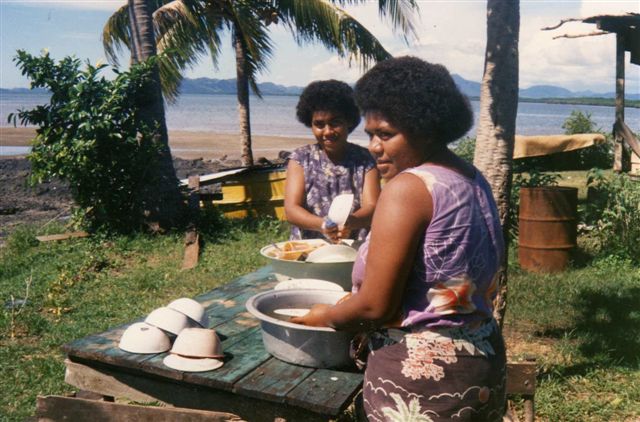
The pic is of two Mali girls (taken some time ago) washing dishes at Nukutatava which is 20 minutes by outboard to Vorovoro Island. You can see Mali Island in the background.
W.

Pine plantations in Fiji and looking to the future


When I read travel diaries and throwaway lines about Fiji people by tourists and backpackers or visitors such as the American family who lived in Taveuni to show free movies, I notice prejudice and romanticism and judgmental attitudes. So many people assume that Fijians only live for the day with no anxiety about tomorrow, and never plan for the future, I want to argue that Fijians do look to the future with the education of their children particularly.

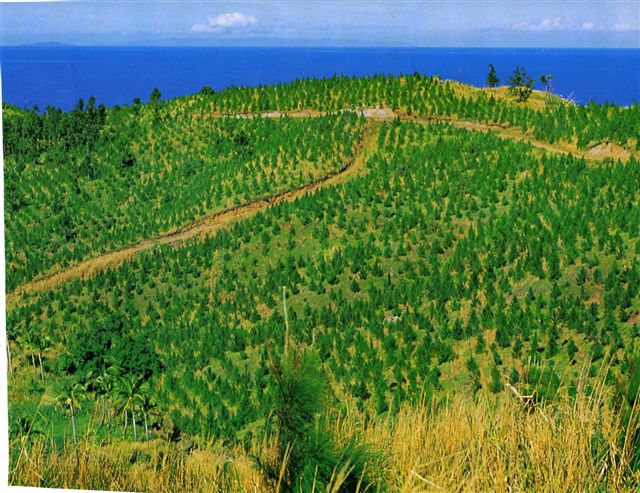
One long-term plan for many farmers in Vanua Levu may be to diversify the use of the land away from the focus on sugarcane to thinking about planting pine. Our family and some neighbours have started this and it is a long-term plan because there will be no profits until at least ten years down the track. The pic is of a Fiji pine plantation.
W.

Saturday, August 05, 2006

Reel Paradise in Taveuni


A New York couple spent a year in Taveuni showing free movies and making capital of the fact that the International Date Line runs through Taveuni. Last year a documentary came out called Reel Paradise. I wonder what it is like and if the local people are given due respect or made fun of. It is so easy for vavalagis to make judgments and find humour in everyday life in a South Pacific country. I hadn't heard of the film until I accidentally came across it when googling.
W.

Solar Power in Fiji


I am a firm believer in decentralization and appropriate technology so I am interested in the use of solar energy in rural areas of Fiji. Surely solar cell systems which generate electricity from sunlight are appropriate for a tropical country like Fiji. They are quiet, give off no pollution, don't require much land or water to operate, and can be used to generate both electricity and fuels.

Over ten years ago, solar power was installed in the village of Ovea in Tailevu. In 1999 it was intalled in the village of Naroi, Moala Island in Lau for 170 households. The cost was donated by France.

In Fiji the Department of Energy installed 193 solar power in the province of Bua and Cakaudrove in 2002. They worked with the Pacific International Centre for High Technology Research (PICHTR).

FDOE, with Public Work Department (PWD) and PICHTR, installed a 720 kWh/day renewable-energy-hybrid-power system at the Nabouwalu Government Station )western side of Vanua Levu_ for offices, shops, ice-plant, bakeries, 30-bed hospital, school, post office, police station and a village. The system was designed by PICHTR. Upwards of 70% is supplied with the renewable energy equipment and the balance with diesel generators. The system produces electricity at costs that are competitive with the true cost of electricity production with fossil fuels.

Nukubati Resort off the coast of Macuata uses panels to capture heat from the sun.
These are some examples of solar energy being used in Fiji and there are other places as well.

Surely this could be done in numerous villages and locations which are isolated from the main power sources in Fiji.

The pics above are from Ovea, Nukubati and Nabouwalu.

Are they still working well I wonder.

I presume that the adventurers who are coming to Vorovoro Island with the tribewanted scheme will be looking seriously at the option of solar power for the project.
W.

Friday, August 04, 2006

70th birthday photos


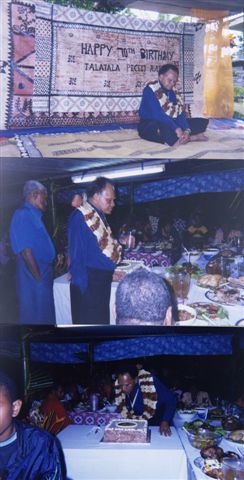
Joe brought back some photos from Peceli's birthday party in Vatuadova. Looks like they built two vakatunuloas (temporary decorated sheds) and there were about 150 people, many speeches, prayers, and lots of lovo food. The valatunuloas probably stayed up for a week because there was a wedding the following Thursday. The cake, decorated with a photo, went all the way from Suva to Labasa by ferry!
W.

Bananas on sale in Labasa


Peceli's friend Joe came back from Fiji and yesterday called with a bunch of photos of the 70th birthday etc. and even one of the market in Labasa. Does he have to rub it in!
W.

Wednesday, August 02, 2006

Raksha Bandan in Fiji


Raksha Bandan is an Indian custom for siblings to recognize and value each other. It’s held in late July or early August. The Fiji Times last week had numerous advertisements for people in Fiji to buy mobile phones, jewellery, clothing, for their loved ones.

The main emphasis however is for a sister to give her brother a bracelet, to tie on the rakhi made of thread around her brother’s right wrist usually with flowers attached. Then the brother gives his sister gifts, sweets, or money. The idea is that the brother is her protector.
In recent years the sentiment has extended outside the family to friends, irrespective of religion or ethnic group. Now wouldn’t that be nice in Fiji!

Tuesday, August 01, 2006

Teaching Computer Studies in Fiji

I googled the name Cameron Buckner after reading parts of his travel stories about Vanua Levu and found this paper entitled 'The Guessing Game: Teaching Computer Studies in Fiji'. This is written of course in a different style from the racy travel diary kind of writing. This one is a serious look at teacher-student relationships in a Fiji classroom in Savusavu.

The site takes time to download - at least for me with dial-up, but Buckner's paper is enlightening and of particular interest to teachers.
W.
PS It seems that Peceli is too busy in Labasa to post on this site. He's planting mahogany it seems, or weeding seven hundred little Caribbean Pine trees or building a fence to stop the neighbour's cow and goat from eating them! Well, that's what he tells me on the phone. Probably he's yarning and drinking kava.

Monday, July 31, 2006

Cameron Buckner's Fijian Travelogue in Vanua Levu

I've been reading parts of a very long narrative by Cameron Bucknell who was in Savusavu in a Rotary/Red Cross project concerning computers. His style is observant, funny, sympathetic, sometimes mistaken or judgmental. It's really the adventures of a vavalagi in Vanua Levu. He has some good photos. The story I first read - which comes near the end, was about a long hike in Natewa Bay area. Of course it was inevitable that someone would ask him 'You walked! Hey, why didn't you just catch a bus?'

Cameron Buckner’s Fijian Travelogue – in Vanua Levu - home page says:
'Ni sa bula!
Welcome to the web site of Cameron Buckner, a philosophy graduate student at Indiana University and incorrigible nomad. Herein lies a travelogue compiled over two summers spent in Savusavu, a lazy little town on the Fijian island of Vanua Levu. Also included for your browsing pleasure are several collections of photographs, writings, and my professional philosophy web site.'
W.

Vanishing websites for provinces!

When I read in the Fiji Times that Rewa Province have a website - as www.rew.pc-.com I thought that didn't look right, so I looked up www.rewa.pc.com . It doesn't work either though such a site should exist.

A few months ago I looked at the Ra Province site which was set up in April. It really looked very good and was about their plans for the future. Alas, that site, today, is UNDER CONSTRUCTION. When loving Peace Corp or volunteers or paid web-designers set up sites - at I don't know what cost to the Provinces - who is left there to maintain them? Perhaps the girls have gone to fetch firewood!
The cartoon is from the Fiji Times.
W.

Chief's Blog

Two stories about the Vorovoro project have been in Fiji newspapers, such as the Fiji Sun on Sunday. Go to Chief's Blog to check them out.

Also there is a rather bizarre story about shooting down coconuts - something I've never heard of! Anyway there are some good pics of sugarcane farming in Labasa on the 'Chief's' posting.
W.