Thursday, July 06, 2006

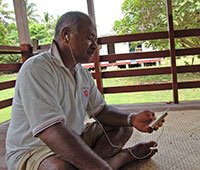
Another good man from Labasa - Krishna Dutt


Krishna Dutt is an excellent man, elected to Parliament and in the multi-party cabinet. There's some nastiness going on in the Labour Party at present and I'll say no more.
W.

Wednesday, July 05, 2006

Professor Subramani's Hindi novel

This is about a book published nearly five years ago but it certainly demands attention as it apparently is the first Fiji novel written entirely in Fijibhat - Fiji Hindustani, based on two or more dialects from India and the book is full of slang, colloquials, odd or no grammar, but what a great idea. Of course there have been critics - how dare someone even think of using Fiji's broken Hindi to sustain a novel of over 500 pages!!! Such a critic is Rameshwar Prasad of Lautoka Teachers' College and I will not post his comments here. The main character comes from Vanua Levu and the sugar mill setting of Labasa.
A very good review is found here - by Som Prakash.

Here are some of the comments by Noora Ali from November 7th 2001 from Wansolwara Online.

Dauka Puraan

by Professor Subramani, published by Star Publications, New Delhi, 2001
Price: Softcover: $29.50; hardcover: $49.50
Order at: USP Book Centre

SUVA: It is like a "scoundrels' tale". That is how the author describes it. Here we are talking about the first ever novel written in Fiji Hindi. Dauka Puraan, launched earlier this year in New Delhi , is being launched locally tonight at the University of the South Pacific's Oceania Centre for Arts and Culture....

After the New Delhi launching, the book grabbed the attention of a wide circle of writers and critics.

The first work of its kind for Subramani, professor of literature at the University of the South Pacific, as well as for the language (Fiji Hindi), Duaka Puraan has been reviewed by many people since it was published.

The stories of Fiji Lal (an old villager) as told by him to a visiting scholar to his village is what the book is about. Subramani could not help smiling as he went about describing the character of Fiji Lal.

"He is a bit of a tramp, a person who had travelled in Fiji, he makes things up at times and he tells his stories to this visiting scholar in a three day sitting," says Subramani.

It is, however, more than just Fiji Lal’s own stories, these stories are the ones which colour the history of the little things, the important events and introductions, the humorous history of real people, the unwritten and almost forgotten history of their way of life.

As Subramani highlights certain aspects of his book, he talks about the importance of the introduction of the gramophone to Fiji Lal, how he is very fond of it and learns to sing a couple of songs. It is this kind of historical reality of the grassroots people that he brings out in the book, the kind which isn't usually found in normal history books.

Apart from being a first in Fiji Hindi language, the book is also talked about for its humorous style of writing. Talking to the author it was evident that humour captured in it's own language is a really important part of the book.

"Every page of the book is meant to be funny." He talks about a soccer match in the book which he compares to the cricket match in the recent Hindi hit movie Lagaan. "It should make people laugh." he adds.

Subramani talks about the book being a sort of the 19th Puraan. The book is written in the style of the Puraans but in a humorous way. Puraan being a scared I think sacred is the word) text where all the 18 Puraans have come out of India, Subramani says "lets say that this one had emerged from Indians overseas. But this one is not a religious Puraan. Since it has come out of an ex colony things are bound to be a little daukish, slightly up-side-down or even whacky. This is a comic Puraan."

With a love story, murder and mystery included in it entwined with history and village life as told by Fiji Lal makes up the 521 pages of Dauka Puraan. The book which took three years to be completed, was partly written while the author was travelling in India, with a major part of it written in the library of the University of the South Pacific.

A triumph for the Fiji Hindi language which is a mixture of Bhojpuri and Awadhi, Dauka Puraan is written in the vernacular the author heard when he was growing up. The book we could say is definitely a positive step forward in exploring the language further. It has also opened up new avenues for upcoming young writers who would like to follow in the footsteps of Subramani.

For the people who don’t read the language (Fiji Hindi), the book is now in the process of being translated into English. Subramani concludes that he would like someone with the creative talent take up the challenge of turning the novel into a television serial or a feature film.

---
I do hope that is can be translated for those who cannot read Hindustani.

Fishing from the bridge at Labasa


There's only one road through Labasa town that crosses the river to go to the Sugar Mill or the Hospital, so it is very busy, not only with people walking but with cars and trucks loaded with sugar-cane. Now, add many kids and men and women fishing from the bridge because it is the salala season. These fish attract larger fish as they swarm (if that's the word) and there's the chance of catching bigger fish with lines. Salala can be caught in nets. The second bridge is for the sugar trains so that's not convenient either. The picture is of people fishing from the sugar train bridge.

One of today's Fiji papers tells it this way.

Police drive salala seekers off bridge
Thursday, July 06, 2006

POLICE have increased patrols in the Labasa Bridge area as people continue to defy orders and fish from the footpath, forcing pedestrians to walk on the road.
After police managed to empty the bridge yesterday, a few people walked to the adjacent locomotive bridge to take advantage of the salala (small bait fish) season.

Northern Division crime prevention co-ordinator Esekaia Daugunu said people had to be warned because Labasa had only one road into town and the bridge was always busy. He said cane-laden trucks, fire tenders and ambulances used the road and were forced to slow down to avoid an accident.

Inspector Daugunu said the salala season started last week and was expected to last until the end of the cold season. He said the officers initially spoke to the people but some of them were stubborn and returned to the bridge. "A few had to be warned that they would be charged and taken to court for obstructing traffic. We told them to use boats or bamboo rafts but they found it convenient to fish from the bridge. "The bridge is overcrowded at night and sometimes the whole family with small children spend hours there. A few of them moved to the locomotive bridge and we had to tell them to move away because it is the crushing season," said Inspector Daugunu.

One man, Bana Arae, of Rabi, fished from a boat and said only a few people could sell what they caught.

Epistemology - er...what?

from Wendy

Several months ago a friend said he was going to Fiji for a conference about writing. He didn't go after all - his Uni wouldn't fund him!
I found out that it was a conference on Epistemology. Er...what? I had to look it up. Apparently it's about knowledge, meaning, point of view - that sort of things. What a great idea for Pacific people to look at knowledge in lateral ways, not just through a Western model of 'seeing', an imposed model.

The conference is on at the USP this week and I wish I was there!!!! The conference website introduces the conference as follows:

Vaka Vuku: Navigating Knowledge

Pacific Epistemologies Conference


July 3-7, 2006, at the University of the South Pacific, Suva, Fiji
'Vaka' translates as canoe in Polynesian. In an Oceanic mind, 'canoe' connotes travel, visiting and taking gifts, connecting with other clans and tribes, a means to a livelihood, and a part of a family. Some Polynesian languages use the word wa'a or va'a. In Kiribati wā is used. The word 'vuku' is from Fijian. As a noun, it refers to wisdom, or a body of knowledge. As a person, it is someone who knows.
Vaka vuku: Canoes of wisdom and knowledge and people who know.

You can download some pertinent articles e.g. Emerging Epistemologies, by Professor Subramani. (More about him in a later blog because he wrote a very interesting novel in Fijibhat - Fiji Hindi - which unfortunately I cannot read. I once could read and sing bhajans but have lost most of that skill these days through lack of practice.)

Sunday, July 02, 2006

bits of history about Labasa

from a website -
Labasa Town The town established in 1922, this town was formerly a village with an earth road having deep side drains. During the spring tide you could fish in the middle of the commercial sites that were surrounded by cane, rice, coconut and cattle farms.

wrong - Labasa was never a village. It is the name of a river. The village was Naseakula and the area called Nasea by most people.

The present site of the Civic Centre was the site where James McCober family occupied four bure houses and the site was covered with tiri patches that became lowland swaps at high tide. There were no water supply, electricity or telephone services and people used well and tank water, kerosene hurricane lamps, and horses as the means of transportation.

Tiri is mangrove.

There were a few stores scattered in the area facing the CSR tramline, which was the main highway in those days.

and the attractions -

There are several charming and interesting attractions here like the hot springs at Waiqele or the floating island at Nakelikoso lying 26 miles from town. The swinging bridge here was built in early days and is still in use. You can also enjoy the lovely beaches at Nasealevu/Nukutatava, or the cascading clear Lekutulevu Waterfalls. Three sisters, is a mountain with a legendary background. This natural beauty is quite popular and has 3 knolls that give it its name.

and sports -The Council provides sporting areas for rugby, soccer, volleyball, netball, lawn tennis (operated by an association), squash courts, swimming pool. The FSC (Fiji Sugar Co-operation Ltd) has a bowling green and a golf course.

from the Cyclopedia of Fiji 1907, the following are listed as living and working in Labasa, mainly at the sugarmill. Some of the names are still around in Fiji in the Part-European community.

Mr Alfred Hill, Mr Charles Hill, Mr Edgar Masters, Mr Robert Duncan McPhee, Mr Charles R Innes, Mr John Moore, Mr Trevor Jones, Mr Charles Carne, Mr James Hillhouse, Mr Angus Morrison, Mr James Simmons, Mr Isaac Simpson, Mr Michael Dyer, Captain H Hansen, Mr James M Shute, Mr William James Barrack, Mrs Ellen E Harman, Mr Mathew Siompson, Mr James Brand Simmons, Mr Charles Ormond Eyre, Mr Julian Bathie Miller, Mr F Whippy, and others.

It's interesting that they give little bios for each person, emphasising schooling overseas mainly, then their job. They don't pay much attention to the Fijian or Part-Fijian wives of many of these men.

The Cyclopedia seems to have been compiled to attract overseas investors in Fiji. I don't dare copy some of the awful descriptions the author/authors have of the indigenous population and the Indian indentured labourers!

The class structure was replicated in the housing of the families in Labasa - the people with the highest status on the hill in large bungalows, engineers and moderately skilled staff half-way down the hill, and the lowest area for the 'lines' which were crowded barracks for labourers. These 'lines' remained for more than eighty years. I saw some of the 'lines' in Lautoka one time and they were two small rooms per family in a long rectangular wooden building which housed about fifteen families.

Saturday, July 01, 2006

Fiji Table Tennis players in Oceania tournament

The Fiji Table Tennis team is currently in Geelong for the Oceania tournament. Eight players and a coach came from Fiji and the Open games finished yesterday, Next week the juniors will continue the tournament as part of the circuit in the world championships. They are playing at the Geelong Tabletennis Centre. The winners the first week were competitors from Australia and New Zealand but all the players did well.

According to Pita and Junior who went there yesterday with Alisi, one of the juniors from Fiji,(who had one day off from playing) the players are really professional, always talking seriously with their coaches, thumping the floor, leaping about and are as active as in a Fijian spear dance! Samoa send a group of observers but other Pacific teams playing included Tahiti, Vanuatu, Cook Islands and all their Pacific flags were flying. Alisi and another player and the coach will stay in Geelong for another week.

Unlike soccer and rugby, the Fiji newspapers don't seem to have given much space to this little band of battlers on the table-tennis circuit!

Friday, June 30, 2006

Re.Tagimaucia story from Taveuni

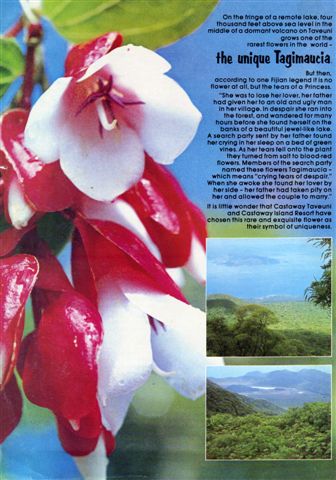
Thank you to Pandamonium for posting the story of the tagimaucia flower from Taveuni.
Here's a pic I have from a tourist brochure I kept because I used the tagimaucia story as a prompt for something I was writing. Someone said it does grow in the mountains of Vanua Levu as well as Taveuni, but of course the Taveuni people dispute that. There is a string-band song about the flower and I'll try and find the words. Tepola plays it a lot on Saturdays 3 p.m. Fijian program on SBS radio in Australia.

Thursday, June 29, 2006

The floating island near Labasa


A house guest, Pita from Sydney, told me a story today about the floating island in Macuata. Pita is from Vunivutu village, east of Labasa. He said that it is within the village of Nubu, over an hour’s bus drive from Labasa, going east, there is a small lake with a floating island about the size of a large house. It is made of thick tangled reeds such as kuta and is called Nawaqakuta which means the Kuta reed boat. Kuta is a type of reed. The island is so-named because it moves like a boat. Pita said that a traditional priest, a bete, chants beside the lake and the island moves. Eventually it stops and sits beside the hard land. The people don't go swimming in this lake and it is rather shallow.

The only references I found to a floating island in a lake in this area is named as Nakelikoso, which is a village not far from Nubu. Today a road goes to Nubu. Before, access was by boat and river. The local people do not go near the lake because they are a bit frightened about it, Pita said. But when the priest performs his chant a group of people can stand on the floating island.

Wednesday, June 28, 2006

Fiji Sugar Cane Story and "Tears in Paradise"


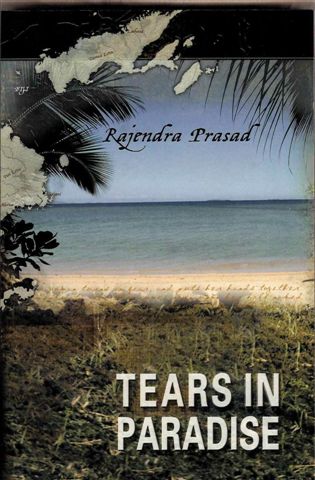
Other people can more eloquently tell the painful story of the early years of the sugar industry in Fiji because aspects of it have been called 'a crime against humanity' in the treatment of the girmit workers who were indentured from India in those early days. Rajendra Prasad writes the story in 'Tears in Paradise' based on his family history in the Ba area of Fiji. The website about the book is informative with excerpts, a letter to the Colonial Sugar Refining Co. and recommendations.

Cane cutting has started in Fiji


The cousins and nephews and nieces inform us that they have started cutting the sugarcane at Labasa for this season. Gangs of youths from Mali Island stay at Vatuadova for the season and work as one of the cane-cutting gangs. The lads get about $1 an hour I reckon and the family feeds them. Though most of the sugar in Fiji is grown by Indian farmers, there is now a considerable number of Fijian cane farmers and their youths work in cane-cutting gangs during the season.

The four mills in Fiji are Lautoka, Rarawai at Ba, Penang at Rakiraki and Labasa. There are sometimes glitches when there is a mechanical breakdown or a strike by truck-drivers etc.

The Labasa Mill commenced operations in 1895, but earlier there were mills in odd places for growing sugar such as Nausori, Suva and Navua - on the wetter side of Viti Levu. The very early Suva attempt was rather a failure and the cane was planted from the Nabukulou Creek down to where Government House stands!

One of the pics here is of flowering sugar-cane, and that season gives me the sneezes!

Tuesday, June 27, 2006

Tinned fish or real fish?


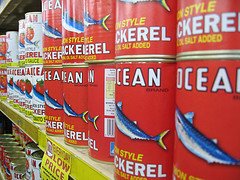
The fish in the Labasa market are excellent, but more often than not, people buy tinned mackerel to make curries, etc. At one time we used to joke about the Mali fishermen who would bring their catch into the Labasa market, sell the fish, then turn around and spend the money in a supermarket and buy a crate of tinned fish to take back! At least mackerel is good for you - so they say. I can cook it in about six ways, (curry, kedgeree, with lolo and baigan,with pasta and cheese, toasted sandwich,) but sometimes the guys just open the tin, chop up some onions and eat it like that.
W.

Labasa Chinese man turns 100


Longest surviving Asian in Fiji turns 100
Tuesday June 27, 2006, adapted from Fijilive.

Harry Yee Foong Gau believes he can live for another decade after celebrating his 100th birth at the weekend in Suva. He said the secret of his long life was being cautious with his life. "I have a normal meal three times a day but I’m cautious and very particular with what I eat. I eat almost everything, but it’s the quantity I take," he said. "I have a glass or two of whisky every day. I take a walk every morning, exercise every day and I always try and go out for swimming to make my blood veins moving. If I have a chance and I walk to the grocery shop every day to open it. I drink a little bit of grog but I hardly smoke. The secret is eat on time and sleep on time. I have been doing it in the last 50 years and the rate I’m in I can live for another 10 years,’’ he said.

He is from the village of Mewkong, district of Tai Peng in the province of Canton, which is located in the south of mainland China. Yee Foong had been in school for seven years in China before coming to Fiji in 1927.

He knew Fiji through one of his uncles, who had a big vegetable farm in Tamavua.
The trip to Fiji took a month, travelling first to Hong Kong, then to the Philippines, Sydney and then to Suva.

He was one of the first students to be enrolled at the then St Paul Chinese School now Yat-Sen School to learn English. He said the school was set up by Anglican Priests for Chinese children who wanted to learn the English language.

To his understanding there were already 2000 Chinese people living in Fiji when he set foot here. His first job was at a bakery in Toorak, before working with other Chinese businesses in Suva for nine months.

He then went to Labasa in 1929, becoming the first Chinese immigrant in the North. He set up a small grocery shop in the town’s main street and named it Yuen Hing Store, which is now run by his youngest son Robert Keith Yee.

He has three daughters and a son. The eldest daughter lives in China and is 68 years old with three children. Another daughter lives in Canada while he lives with his only son in Labasa.

He has been to China four times and last visited his village in China in 1990. His wife, Tong Chinyan, died at the age of 85 two years ago. Yee Foong has 11 grandchildren and three great grandchildren, two of whom live in mainland China.

Sunday, June 25, 2006

Why do people blog?

from Wendy

Because it's there!
Peceli and I started this blog at the suggestion of a relative, then Peceli took off to play golf four days a week!

Anyway I read some other bloggers' reasons about why they blog and I've picked out random lines from their comments about blogging. The first five lines are from me of course!

Blogging is like skating on thin ice at times
Forgetting Google’s binoculars
That will post and repost mistaken ideas
Foolish one-liners
Never forget your ‘real’ name.

I love collecting things and clippings are all over the place in different notebooks and books, and blogging just adds to this mania for collecting because blogs can be an organizer of thoughts, insights, crazy moments.

The tools are easy, easier than setting up a website. It is a diary for friends, relatives, strangers or finding an audience when no-one else will listen. The connections not local, but global and it can be a meeting of minds, different, argumentative.

We live in the age of memoir and confession. Anything goes and everyone's an audience. You don’t need to be a celebrity or a world leader to be worth listening to any more.

We have a growing sense of our own mortality. Baby boomers in mid-life are beginning to sum up, to think about what we’ve learned from life, and interested in sharing what we find. We need to make our own mark, to stand out from the crowd.
and there is a lot of tumult and anxiety.

We are looking for answers and perspective.The Pope or the mullahs or the Christian Right do not provide adequate answers I can relate to. Slowing down and meditating on the moment brings me peace and balance.

The age of the misunderstood garret dweller is over. There are others - tens of thousands or more - who are traveling the same road, asking the same questions.

We create a more richly textured and friendlier world when we connect.

It gives me a way to make sense of me and my surroundings. It acts as my spiritual practice, a kind of meditation, where I can communicate without judgement or without my inner critic taking over. Not that my inner critic doesn't have a voice.
speak through images, photographs stolen from other websites.

A way of purging and reflection, the more we see the truth, a way to release pressure, create beauty and put in concrete form, some of the things that rattle around inside me. Modern life is bruising and so fast.

I occasionally suffer from information overload and have to disconnect for awhile.
A way to parse my crazy world, to make some sense of it.

It is a marketing tool too.

We are all voyeurs. You have to have a real talent to do them, though. Not to go into the morbid details of your daily toilettes. Know when to stop.

Needing to vent about some crappy situation in my life. Bemoaning some relationship issue or now mostly, just my private thoughts about various people, places, work, books read, etc. complete strangers out in the ether.

But then, who would want to read about my mundanities and/or profundities?

Saturday, June 24, 2006

Some pics related to Labasa and babasiga


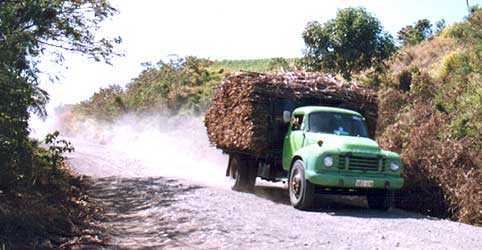
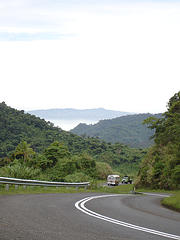
I found a few pics by other people of Labasa and babasiga land to remind us that this blog is supposed to be about Labasa! They are of the Savusavu-Labasa road, a floating island, snake rock Indian temple, Labasa River, a logging truck going down the main street of Labasa and the bus station.

Thursday, June 22, 2006

Whalers in the South Pacific, early 19th century

From Wendy

When we make judgments about Japan's concern to increase whaling, we ought to remember the past stories as some of our kin have not been blameless and righteous in caring for animals and our environment.

I was searching for information about whaling in the Pacific but could not find any direct references to whaling in the Fiji area, though no doubt this was part of the story, together with the foreigners coming to Fiji to exploit the resources of sandalwood and beche-de-mer. Some of the crew of whalers most certainly found themselves shipwrecked in Fiji waters and were the ancestors of many Fiji nationals today.

Alan Moorehead's book The Fatal Impact, an account of the invasion of the South Pacific 1767-1840, was published in 1966 and has some stories about whaling.

Whalers came from Le Havre in France, Hull in England, New Bedford and Nantucket in America and the main whaling stations were in Hawaii, Tahiti, Bay of Islands in New Zealand, eastern coast of Australia at Sydney and the Derwent Estuary in Hobart. It is hard to believe that the whaling ships from Nantucket were owned by Quakers! Why? It was for the money as whale-oil was worth a lot. They could hardly justify their passion for whaling just to get corset -bones or umbrella spikes!

Conditions on board were appalling with minimal pay, rotten food, rats, cockroaches, continual dampness, sickness, danger and death. Perhaps a lad wanting adventure so signed up. Others wanted to escape a situation, even from the penal colonies in Australia. Melville referred to Australia when he wrote 'The whaleship is the true mother of that now mighty colony' saving settlers from starvation with the gift of ships biscuits! Omoo and of course Moby Dick reveal the sordidness of life on whaling ships.

Once the South Pacific was decimated of whales through the indiscriminate harpooning of males, females and young, the fisheries collapsed until about fifty years later when steam-driven whalers broke through the ice of Antarctica and the slaughter continued. By the 1930s up to 37,000 whales were killed every year.

It is only in very recent years that people have been concerned about a whale sanctuary and a moratorium on killing these beautiful creatures.

Wednesday, June 21, 2006

when tourists wed in Fiji - Weddings Inc

from Wendy
Sometimes I write short fiction, so here is one based on observations concerning weddings in Fiji where tourist couples decide to tie the knot in an 'exotic' location. I've written mainly from the viewpoint of a Fijian girl working at a resort.

Weddings Inc.

Ana wipes four lipstick hearts smeared over a mirror as she cleans a guest villa 3 at the Vakawati Resort, vacated by Craig and Natalie from Sydney. Mynah birds screech from the nearby breadfruit tree waiting to pounce on food scraps and Ana also scratches and gleans what she can to supplement her $1.80 an hour.

Some tourists hand over gifts directly to her with a smile, perhaps an ugly dress that even Aunt Rosi would not wear. Toothpaste, suntan lotion, not that this was needed, sometimes Mills and Boons paperback novels in easy English.

Natalie and Craig had just flown away after six days. ‘Two hot natives in paradise,’ the white woman had screeched, joking about her husband and herself.
A page torn from a newspaper headed Travel Section lies on the floor. Ana picks it up and reads the article headed ‘Getting hitched abroad’ and a paragraph is circled with a feltpen, reporting on weddings on Vatulele and Sheraton. The writer does not mention Vakawati. Craig and Natalie told Ana they had found out about Vakawati from their travel agent in Sydney.

The idea of tourist weddings in this area was the inspiration of Talatala Jeke Kalougata, Ana’s uncle. Lucky Jack, as the tourists called him, had noticed how much money overseas people had and he decided that he would build a new church with money raised from this venture. He had his own business cards made in a quick-copy machine and send a bundle to his cousin in Sydney to give out to travel agents. Rev Jeke Kalougata, Minister of Hearts, Marriages arranged in Fiji. Phone Nadi, etc.

Ana picks up a scrap of paper on which Craig had listed the costs of the holiday - 6 days $3005, wedding ceremony $1450, licence for marriage $15, air fares $1680, video of marriage $150. The ceremony allocation, Ana knows, has been divided between the choir, the chief, the resort owners, the men who mixed the yaqona, the men who dug the lovo, and Rev Jeke who will get $60 which is the same as a week’s wage.

Murti who made the video got his $150 though it cost him $6 for the tape. But as everyone knows, he is a better businessman than people like Uncle Jeke.

There have been many ups and down in planning these weddings for mainly Japanese and Australian couples.. One problem was the amount of food needed. Other tourists at the resort automatically were guests at the weddings. They ate very little, going mainly for the salads which are not really food at all, and leaving the dalo and yam. Jeke’s family, the chief’s family and the villagers wanted the left-overs as is the custom, but Gopal, the resort accountant said no. No food for the villagers, just put the leftovers back in the fridge.

‘That is not our way,’ shouted the chief’s spokesman, but in the end the Fijian elders had to give in. The resort owners are from overseas so it has to be accepted that their way is different.

Natalie and Craig were a typical tourist couple. Natalie had been pleasant enough but she had no manners when she walked along the beach arms wrapped around her tall, skinny man, kissing and touching in that peculiar vavalagi way, with no respect at all about who is watching. Even on Sunday morning, when the Fijians were at church. and Ana sat in the choir, she noticed the boys and young men laughing. Old Joeli poked the children with his long pole but they still kept on laughing. When Ana looked through the open window she saw Craig and Natalie walking along the beach. Natalie had taken off the top of her bathers and her tiny white breasts were lightly bouncing. Uncle Jeke had thundered on, unaware, his voice almost falsetto towards the end of the sermon.

Ana decided that overseas women were obsessed with their bodies, lying in the hot sun to brown their skins but they had white patches on their bottoms and breasts when the sun could not reach. Natalie was thin, her body ugly, even though she was wealthy enough to eat plenty of food. She was about the same age as Ana, 24, but Ana was well-built. However Ana had a tooth missing. It had happened in a netball game. Some tourists had commented that it spoilt her smile. One offered to pay for her to fix it up, gave her $30 but she had used it to pay school fees for Ilisoni her nephew who had been sent back to the village to get his fees.

At Natalie and Craig’s marriage ceremony, Ana had helped Aunt Suliana to dress the bride and groom in barkcloth, pale cream masi wrapped first, then the Tongan style of brown and cream, then a layer of black and white stencilled masi.. Now Natalie had more substance. Craig was wrapped also and he scratched himself as the masi ticked his soft skin. He grinned as Ana coated his limbs in coconut oil. The small bare feet of the two looked so quaint.

Uncle Jeke had performed a satisfactory ceremony for the couple in his stilted English, often confusing gender in the foreign language, mixing up ‘him’ and ‘her’, and ‘she and he’, but nevertheless the marriage was still legal. Ana was fairly fluent in English and has gone to Secondary School up to Form 4.

After the four day honeymoon, it was time for Craig and Natalie to leave by courtesy bus. The Vakawati staff had stood together on the beach, all smiling, and singing ‘Isa Lei’ the farewell song. The guitar players were off-key and tired after a grog-session the night before. The bus dropped off the ten tourists and picked up another lot, this time from Japan. Three more weddings were planned from within this group.

Craig had given a tip of $10 to Ana’s Uncle Jeke. So far, after fifteen weddings, Lucky Jack had collected enough money to buy a pile of cement blocks as a start to his new church. It would take longer than he thought but he was happy that Weddings Inc was going to be a success.

Tuesday, June 20, 2006

Vorovoro Island project - interview with Ulai

copied from Chief's blog, tribewanted website:
Thursday 15th June

Island View

Bengazi talks to Tui Mali’s nephew and tribewanted community representative, Ulai Baya, about life growing up on the island and the exciting prospect of his community working in partnership with tribewanted.

Bengazi: “Bula sia Ulai! First of all, what does this partnership between Tui Mali and tribewanted mean to you and the community?”

Ulai: “Bula sia Bengazi! The partnership between tribewanted and the Tui Mali’s yavusa is an unprecedented one. One founded on the implicit understanding between the founders of tribewanted and the landowning unit towards a common goal to ensure the sustainable development of the island community. There is no better opportunity to offer a small community the chance to develop in a collaborative way than tribewanted’s choice of Vorovoro as the Adventure Island. So much so given the varying ideas, the different cultural and technical backgrounds, who will visit and call the island home for the next three years. Some of these ideas will undoubtedly remain and become an integral part of the island in years to come. To this end, this partnership is of immense value given the sum total of its socio economic perspective on the island’s future. Through tribewanted, the island itself becomes a phenomenon of intellectual pieces coming together.


Ulai (right) with Joreti Dakuwaqa, Manager for the Native Land Trust Board in Northern Fiji, on their way ‘home’.

Bengazi: “How does the Mali community feel about this project?”

Ulai: “To the community of Mali, this is a proud moment. People all over the world through this partnership will come to know of Vorovoro, the needs of its people and possible ways of addressing them with solutions from all corners of the globe. To the people of Mali, Vorovoro is very dear and close to their hearts. Reference to it, imbues a sense of pride and a feeling of infinite connection to everything regarding it. It is about who you are and where you come from. It is therefore an immense honor to have the world’s attention drawn towards you whilst at the same time showing concerns about it in facilitating discussions towards its sustainable development. The opportunities that results from it would be priceless.”

Bengazi: “What are you looking forward to?”

Ulai: “I am excited about the arrival of the first tribe members given the different cultures, views and their reaction to everything on the island. The sheer interest and focus on the island with continuous arrival of members would take sometime to sink in. I guess it must be seen to be believed given that the island is sometimes home to two people.”

Bengazi: “You haven’t lived on the island for quite a few years now, but what do you remember from your childhood there?”

Ulai: “I remember one particular story well. Once, whilst on “tutelage attachment” with my grandfather, the batteries of our little transistor radio lived its full life. That radio was our only connection to the outside world. During that week we went about our daily chores; cutting copra and digging and preparing yam gardens. On Sunday we waded across, during low tide to the nearest village to attend church. To our surprise, kids from that village were nosily making their way towards Vorovoro with fishing spears equipped for a whole days expedition. After some concerning thoughts regarding Christian values and reverence shown towards the day of rest, we were abruptly informed that “Sunday was yesterday” Indeed, we had lost a day.

Bengazi: “Do you have a favourite part of the island?”

Ulai: “Yes, my favourite part of Vorovoro is turtle beach (the southern tip) because it used to have a small concrete contraption where we would collect water from a small cliff face for afternoon bath. Usually the approach is along the beach during sunset after a hard days work. There is no view so magnificent as such. To a young mind it has a lasting and indelible effect of having survived a day without a bother from the outside world.”

Bengazi: “What do you think is the most important aspect of this project for Tui Mali?”

Ulai: “For Tui Mali, it is the welfare of his people. It is about the involvement of the whole community on a eco-sustainable project with little or minimal affectation to the environment. That Vorovoro is fronted by the third largest continuous reef formation in the world (now with fishing moratorium) tribewantred is a perfect compliment in many ways. The commencement of this partnership will undoubtedly showcase northern Vanua Levu to the rest of Fiji and the world. It is about the world (through tribal members) concerning itself in the development of the community of Mali and its people that has for Tui Mali the most exciting potential.”


Tui Mali requests ‘country music’ on Bengazi’s i-pod. What were the chances?

Bengazi: “What do you think lies at the core of the tribewanted idea?”

Ulai: “Tribewanted is about a social exchange of invaluable proportion. There’s a sense of travel and the experience of a new social environment. There is also that sense of satisfaction from the intercultural co-existence. The sum total is interactive community development with utmost respect to community values and its people. It will be an amazing experience for all involved!”

Bengazi: “Ulai, vinaka vakelevu and see you in your back garden soon.”

Ulai: “Vinaka Chief and bula vinaka tribe – bring on September!”

Ulai has a professional background in Law with special interests in Natural Resource law and related policy issues. Having practiced in Australian native title jurisdiction looking after Aboriginal native title rights and interests in land and waters for indigenous Australians in the Central Queensland region, Ulai is well placed as the community representative in Fiji. For Ulai getting involved with tribewanted was “a chance to realize a dream in attracting world attention to the North and to appreciate the beauty and tranquility of what we can offer along the Macuata coast.”

MJ & Ben

Sunday, June 18, 2006

Fiji Living Magazine


We've been reading the June/July issue of the new magazine launched in Fiji recently. Lots of good pics and articles, gutsy, relevant. Though the senior gentleman on the cover mightn't really attract the young people the magazine is intended for! The price of $2.99 is quite reasonable.

A review of the magazine is below:
USP JOURNALISM GRADUATE STARTS NEW LIFESTYLE MAGAZINE
http://www.usp.ac.fj/journ/

By Erica Lee and Sukulu Rupeni

SUVA: (Wansolwara/Pacific Media Watch): A group of young journalists and designers have launched a new lifestyle publication, Fiji Living, that hit the stores in April. The magazine is the brainchild of editor Stanley Simpson, a University of the South Pacific journalism graduate.

A colourful, vibrant, and hip magazine, it has articles on local celebrities, cars, politics, health, the latest fashion tips, music and art, food, animal care, current affairs, crossword puzzles and the odd joke or two.

Simpson, founding editor of the USP journalism programme newspaper Wansolwara, has worked with NGOs since graduating in 1998. He said he had dreamed of returning to journalism. He took on the challenge of starting a new magazine because he wanted to do something adventurous.

He described Fiji Living as a family-based magazine that, - as the title suggests - is about life in Fiji."This magazine can be read and enjoyed by parents, teenagers and children. This is a magazine for the future," said Simpson.

A youthful and talented team of emerging writers and graphic artists are behind the venture. They include former Fiji TV reporter Imraz Iqbal, creative director Josua Toganivalu and graphic assistant Bilitaki Lovo. Contributing writers include former USP journalism student Angeline Lal.

The cover girl in the first issue is local Fiji TV personality, Irene Edwards, who hosts the locally produced TV comedy, P.I.P.E. Four pages are dedicated to profiling the 25-year-old who has been in television for the past 10 years. The magazine reports that her fame has brought her a very persistent stalker.

There is a piece on the famous coffee shop, Headworks, run by the Bulatiko siblings, a story on Mereoni Taginadavui’s struggle with cancer, a question and answer interview with local rapper Sammy G and recipes by Tracey Powell.

The magazine also has a serious side and highlights issues of national concern such as road safety, crime and health.

The first-issue editorial by Simpson describes Fiji as country of many contradictions."We can be as modern as Sydney, yet as backward as Sudan," he wrote."Fiji Living aims to showcase the best and the worst of both worlds in full colour, analysis and character," he added.

Simpson aims to use his background in journalism, history and politics and environmental activism to take the magazine to new heights.

Saturday, June 17, 2006

Whaling and whales' teeth


From Wendy

In the light of this week’s voting on whaling with representatives from South Pacific small countries, I decided to post some comments about whaling and whales’ teeth in reference to Fiji. There are always two or three whales’ teeth in our household, one always hanging on the wall over a piece of Fijian barkcloth. They keep moving on though when there is a need for a ceremony. Also, we have a large photograph on our lounge room wall of a whale leaping, next to photograph of Michael Jordan also leaping!


The following notes are from cutting and pasting after a Google search.

The tabua

In Pacific Island society, some objects can have a 'spiritual' value that far outweighs their actual 'market' value. The tabua plays a similar role in Fijian society. Tabua are pierced and braided whales’ teeth, originally taken from the lower jaw of sperm whales found stranded on Fijian beaches. As whale strandings were relatively rare, so were whales' teeth more valued as a result.

Tabua are considered by Fijians as a 'chiefly thing'. Ceremonial tabua have holes drilled through the tip and the butt, and a braided sennit cord is attached. The teeth are polished and sometimes rubbed with coconut oil and turmeric to darken them.


While the tabua is a uniquely Fijian object, whales’ teeth are used in other societies. European sailors used to carve and colour whales' teeth in their spare time - this was called scrimshaw. They were also shaped into necklaces and other ornaments in many parts of the Pacific, including Samoa, Tonga, Tahiti, Hawai'i and the Marquesas Islands. Māori also used whales' teeth to make rei niho (whale tooth pendants) which were worn by people of high rank. However, nowhere else in the Pacific do whale teeth have the power or meaning of tabua in Fiji.

History of the tabua

Before the Europeans came to the South Pacific, the people of Fiji used a wooden token for various ceremonial purposes. Called the bua-ta, the token was a highly polished piece of wood carved from the bua tree. But, about one hundred fifty years ago, western whalers began to call at Fiji, offering whales' teeth in exchange for sandalwood and other resources. The natives were struck by the similarities between the whales' teeth and their ancient bua-ta and soon adopted them instead, naming them a tabua.

It is believed that the whale’s tooth, as an object of value, was first introduced to Fiji from Tonga at the end of the 18th century. However, long before the whale’s tooth, Fijians placed special value on other objects - such as rare shells for important presentations. Depending on the significance of the event, several hundred shells would sometimes change hands.

The tabua is an honorary bestowal, presented as a traditional welcome to important guests, when making a special request, to seal a betrothal, as a token of mourning and to solve disputes. Each presentation ceremony follows a rigid set of rules for occasions such as birth, marriage, death, the launching of a canoe, the welcoming of visitors, the installation of a new chief. It is also used as an exchange of apology after a disagreement. In modern Fiji, the tabua holds an indispensable place in the social and economic life of the Fijian people that far outweighs its intrinsic value.

Whalers in Rotuma - from "Voyage in the South Seas," etc., Captain Peter Dillon, 1829, vol. ii, p. 95.

(Rotuma) became a favourite resort for American whalers in the South Pacific, as many as nine being remembered at anchor at one time at Oinafa. From these were naturally many deserters, who came to live on the island. At first they were received with open arms by the natives and supplied with food, but in time their numbers became ~o great, and their behaviour was so bad, that they were left severely alone; from first to last it never went so far as to allow them to starve. Their number at one time cannot have been far short of 100, but fortunately they acquired no lands and few wives, so that they have, comparatively speaking, left little traces. Their children invariably remained on the island with their mothers, and were brought up just in the same way as a Rotuman child would be. It is recorded, to show their mode of life, that one beachcomber started from his house to make a circuit of the island. Of course he bad to stop and get drunk with each white man on his way, so that he was over three months (in getting home again.)
-------
International politics and whaling

I don’t think whalers would get a welcome in Fiji these days, but I wonder how many South Pacific small nations have voted with Japan at St Kitts this week in favour of whaling? On the Inernational Whaling Commission website the following are listed: Kiribati, Nauru, Solomon Islands, Tuvalu, but not Fiji. I heard that the Solomon islands delegate absteined from one or more of the votes.

Wednesday, June 14, 2006

Let me take you by the hand and walk you...

through the streets of Suva....
Princess Anne is visiting Fiji next month. She is one of the few royals who does seem to spend time on social justice issues. Let's hope that the NGOs in Suva will take her by the hand and allow her to meet and greet street-kids, people with disability, and those who struggle in life, rather than her itiniery be filled with meeting bling-bling high society.

from Fiji Live today
Fiji tour for Princess Royal
Thursday June 15, 2006

Princess Anne, the daughter of Queen Elizabeth II, will pay a private four-day visit to Fiji next month. She will arrive on July 6 and departs the country on July 9.
Princess Anne will stop over on her way to New Zealand where she is deputising for her father, the Duke of Edinbrough Prince Philip, for the Emerging Pacific Leaders Dialogue (EPLD). Prince Philip is the patron of EPLD.

As in any visit by a member of the Royal Family, the Fiji Government will host Princess Anne at Borron House and accord her a State banquet at Government House a day before her departure.

A committee, including representatives from Foreign Affairs, the military and Fiji Police, has been formed to prepare for the visit.

She is also expected to open the soon-to-be-completed Great Council of Chiefs complex in Nasova.

While in Fiji Princess Anne will visit several NGO projects and the UNAIDS scheme. She is the patron of the International AIDS committee.