Wednesday, August 08, 2012

How you gonna keep 'em down on the farm

from w
From the experience of our Fijian family over two generations, many of the young people do not want to be cane-farmers but to have different jobs and also some have gone overseas to New Zealand, Australia, Ireland, England and do a variety of jobs or take up study opportunities.  There's so little money to be made in cane-farming these days so I'm not surprised that the Labasa Mill isn't getting the tons of cane expected. In a village a few will plant and others will take up employment for a weekly wage and generally will support the whole village according to their wishes or talents. Perhaps some coast along for the ride as well watching sunrise and sunset without contributing much at all.
From today's Fiji Times:

Youngsters missing from farms

Serafina Silaitoga
Thursday, August 09, 2012
RURAL-URBAN drift by the younger generation has seen ageing farmers working on cane farms.
This was raised at a meeting of field and mill officers of the Fiji Sugar Corporation in Labasa with Sugar Ministry permanent secretary Lieutenant Colonel Manasa Vaniqi in Labasa yesterday.
It was also heard the situation had also contributed to the drop of cane harvested in Vanua Levu.
What used to be 1.2 million tonnes of harvested cane in the north per season now stands at around 500,000 tonnes — a drop of over 50 per cent.
FSC officers told Lt-Col Vaniqi the younger generation had lost interest in cane farming.
One of the reasons discussed was that the younger generation had opted for white collar jobs and greener pastures over working in farms.
Lt-Col Vaniqi said such situation was faced by farmers in the sugar industry, apart from the expiry of land leases.
Field officers told Lt-Col Vaniqi that farmers had also sent their children for further studies outside Labasa so to receive better education and jobs leaving the elderly remaining on cane farms.
Lt-Col Vaniqi assured those present at the meeting that government was committed to revitalising the sugar industry at any cost.
He said new strategies were being discussed and he urged farmers and field workers to work with them to take the industry forward.
Tonnage of cane production in Labasa was also mentioned with the sector of Wailevu outside Labasa Town now producing 93,000 tonnes compared to the 186,000 tonnes in the "glory days".
At Wainikoro Sector outside Labasa, farmers used to harvest 81,000 tonnes of cane compared to today's 22,000 tonnes. This is equivalent to 73 per cent loss of cane production.
Daku Sector used to produce 112,000 tonnes of cane but now produces 33,000 tonnes.
For farmers in Natua, Seaqaqa, they used to supply about 50,000 tonnes of cane which has now been reduced to 25,000 tonnes.

Thursday, August 02, 2012

Qarase - the verdict

from w
My response is of course 'He who casts the first stone let him be without sin' or words to that effect.  Aren't we all guilty of some error of judgement and of putting our family and kin up front.  'Insider trading' I suppose is the term used, but the farce of this trial is that it was motivated not for justice but for other reasons. There would be hundreds of people, and more, who use knowledge and influence to assist friends and family.

The sentencing is gaol for one year and of course others with more disastrous crimes against society go about freely.

From a blogsite:

Fiji's last democratically elected prime minister has been sentenced to one year in jail by the military dictatorship that toppled him in 2006.

71 year old Laisenia Qarase was handed the sentence for the 9 corruption related charges at the Suva High Court a short time ago by the presiding judge, Justice Priyantha Fernando.

With Qarase in the dock, Justice Fernando said that the facts of the case have been established that Qarase as advisor of the Fijian Affairs Board, advisor of the Great Council of Chiefs and director of FHL applied for Class A FHL shares and then facilitated the issuance and allotment of the shares to Cicia Plantation Co-op Society Limited, Q-Ten Investments Limited and Mavana Investments Limited.  

During the sentencing Justice Fernando told Qarase that he failed to disclose his interest in the three companies to FHL, FAB and GCC.

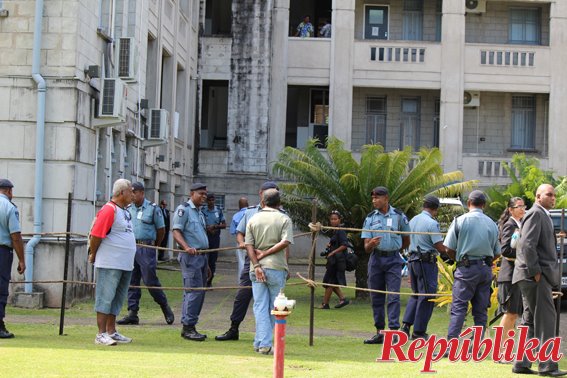
Security boosted at court
Justice Fernando said that Qarase held very high office in the public sector as he was a financial advisor in the government and the public vested their trust in him.

He said Qarase had a duty to safeguard the interests of the Fijian people but he applied for shares for companies in which he had a private interest. 


Justice Fernando said Qarase has breached the trust of the people. 


The judge said he considered all the things said about Qarase in mitigation: that he is 71 years old, has five children and 15 grandchildren, his wife has health issues, he is a first offender, the offence was committed 20 years ago, his diabetic condition is worsening and other health conditions.        


He started the sentence at 18 months imprisonment for the six counts of abuse of office then reduced it to 12 months imprisonment. 
 

Qarase has been given 30 days to appeal the prison sentence and his lawyer, Tupou Draunidalo confirmed that she will appeal the sentence on Monday. 

Following the sentencing, Qarase hugged his lawyers and his wife, Leba. 


He was then escorted by police officers to the back end of the court house, got into a police vehicle and taken to prison.
 

In a country widely known to no longer have a rule of law, Qarase's  conviction was driven always by the coterie that has robbed Fiji citizens of so many of their rights, the illegal attorney general Aiyaz Sayed Khaiyum, the illegal chief justice, Anthony Gates, and the former high court judge, Nazhat Shameem.

He was appointed, of course, by Frank Bainimarama as a caretaker prime minister after the George Speight coup but was soon toppled, with Bainimarama refusing to relinquish power ever since. 
  
Hundreds of Qarase's suppporters were at court today as they were yesterday, despite warnings from police it had boosted security and was ready for trouble.

The numbers in spite of the restrictions over large groups gathering is a testament to support for Qarase and dislike of the regime. 


That dislike, driven underground by the relentless decrees, will have no doubt been fueled by the decision to go after Qarase using 'crimes' going back more than a decade and where the key players are no longer around to argue the murky details.


New Zealand's apparent indifference to Qarase's fate will no doubt be noted as well, given the u-turn on its position on Fiji this week in the unproven belief elections and freeom will finally come to Fiji. 

I don't talk politics much these days but...

from w
Here are a few bits I read today from the media:

CCF holds forum

Tevita Vuibau
Wednesday, August 01, 2012

Local academics, former politicians and human rights activists gathered at the Holiday Inn last week to take part in the Citizens Constitutional Forum titled "Bringing Fiji Together-Addressing Inclusivity in Constitution Making". Notable speakers at the event included former vice-president Ratu Joni Madraiwiwi, Prof Vijay Naidu and the University of the South Pacific Dean of the School of Economics Dr Biman Prasad. Other speakers at the event included Dr Wadan Narsey and Virisila Buadromo.
JUST IN FROM PRIME MINISTER LAISENIA QARASE - Thursday 2.08.12
Dear Friends and Well wishers
I wish to express to you all my deepest appreciation of your tremendous support, encouragement and best wishes during my High Court trial.
The sentencing by the Court will be delivered tomorrow, 3rd August, 2012. Whatever the court decision I thank God for his blessings upon all of us and for your support.
I also wish to thank the many prayer groups, individuals, and families, both in Fiji and abroad, who have been praying for me, my family and for Fiji during this difficult period.
God Bless you all and God Bless Fiji. Vinaka Vakalevu.
Laisenia Qarase

'He's always polite, patient'
Nasik Swami
Thursday, August 02, 2012

FORMER prime minister Laisenia Qarase was hailed as a man of respect and professionalism by Bau chief Ratu Joni Madraiwiwi.
A character witness in the case, the country's former vice president Ratu Joni Madraiwiwi said Qarase was always polite, respectful and professional.
He said when he was the vice-president from January 2005 to December 2006, he used to meet Qarase together with the president every fortnightly to relay matters of national interest.
"At all times, Qarase was polite, respectful and patient even if when they disagreed on some matters," Ratu Joni said.
He gave examples to the court of Qarase's involvement in the reconciliation, tolerance and promotion of Unity Bill, Qoliqoli bill and he always remained polite and engaged.
Ratu Joni said Qarase remained polite and professional even when they had differing views on the Reconciliation and Qoliqoli bills.
"Mr Qarase was the prime minister for the country for six years and was a public figure, secretary for the Public Service and managing director for Fiji Development Bank, which showed the character of the man," he said.
Ratu Joni also claimed that he saw Qarase's conviction as a humiliation to his reputation.

Sunday, July 29, 2012

Fiji team at Olympics

from w


I missed watching the opening of the Olympics because I was at a women's retreat in the hills but caught up with some pictures of the Fiji team in London.  Good luck to the athletes.

Fiji has nine competitors at the London 2012 Olympic Games;
  • LESLIE COPELAND - Track and Field Mens - Javelin
  • DANIELLE ALAKIJA - Track and Field Womens 400m
  • GLENN KABLE - Shooting - Mens Trap
  • MATELITA BUADROMO - Swimming - Womens 100m Breastroke
  • PAUL ELAISA - Swimming - Mens 100m Freestyle
  • MANUELI TULO - Weightlifting - Mens 56 kilo class
  • MARIA LIKU - Weightlifting - Womens 58 kilo class
  • ROBERT ELDER - Archery - mens individual
  • JOSATEKI NAULU - Judoka  (flag bearer) - Mens 81kg
This is Fiji's 13th Olympic Games, having first participated in 1956 in Melbourne, Australia.

Anglicans in Labasa

from w
It's good to read that a woman has been ordained as a priest in Labasa at St Thomas' Anglican church. There are not too many women priests/ministers/talatalas around so it's good news. I've been reading some of the papers in a Pacific journal about theology and certainly there are some fine women in the Pacific thinking about female roles in ministry and the church - not just making the tea and coconut pies.  I've just spent the weekend at a women's retreat (in Australia) and all of our speakers over 15 sessions were women. Excellent!

from Fiji Times:

Church installs new priest

Salaseini Vosamana
Monday, July 30, 2012
ABOUT 100 members of St Thomas' Anglican Church in Labasa gathered yesterday to witness the ordination of Angela Suruj Prasad.
Reverend Prasad will be the third woman to be ordained in the northern church.
She was installed by Archbishop Reverend Doctor Winston Halapua. Archbishop Halapua said she would help other priests and lay preachers spread the gospel of God not only in Vanua Levu but throughout the world.
"This is a historic event for us because Labasa is the only parish that has three women priests," he said.
"With this ordination, at least women leadership and aspects will be brought up in the church and also in Anglican schools.
"Her leadership will allow the young ones to learn the right thing and choose a successful path in life."
In her ordination, she said she was ready to commit herself wholly to the ministry.
"My concern will be to show love, care and compassion and I ask God to give me strength and humility so I can carry out my work properly," she said.
She will be based at the St Mary's Hostel as she embarks on her new calling.

Monday, July 23, 2012

Re mining in Bua - I told you so!

from w
Of course there will be side effects and a trade off when there's a mine in Bua.  Now it's dust and possible bad health consequences for the children going to school. Come on Basilio - shake a leg!

This story is from today's Fiji Times.

Dusty road a hazard
Salaseini Vosamana
 Tuesday, July 24, 2012

A GROUP of parents in Bua refused to send their children to school yesterday because of dust from trucks loaded with bauxite that run the road to the jetty.
The parents of Waibunabuna Primary School in Lekutu claim they've experienced the dust since the bauxite mine opened.
Speaking on their behalf, school board member Dinesh Chandra said they were worried students would get sick as a result of inhaling the dust.
"Most of the students walk from their homes every morning and when they reach the school, they need to bathe again because they're covered in dust," Mr Chandra said.
"They clean their classrooms in the morning and after one hour, they're dirty again because the ten-wheeler trucks just continue to throw up more dust.
"We have written to the relevant government departments to request assistance but our plea seems to be falling on deaf ears."
Resident Manoa Vutudromu said his house was always closed during the day when the trucks were running.
"I am really concerned about my family's health and I make sure all our clothes are hung out at night and not during the day," he said.
"It's really sad to see children walking along the road covering their faces when these trucks pass.
"We were informed that an access road would be built to cater for the students and also the main road would be tarsealed but we're still waiting," he said.
Mr Vutudromu said they hoped the authorities would look into the matter.
Bua provincial administrator Inoke Tagicakibau said they had a truck to splash water on the main road.
"For now, a truck is diffusing water to stop the thick dust from entering the school compound and this will be an ongoing process until the situation improves," he said.
"The government will soon upgrade the Dreketi and Nabouwalu highway and such developments include the tarsealing of the Lekutu road."
North education officer Mere Fisher said she was not aware of the matter but would liaise with the school.
Queries sent to Xinfa Aurum Exploration (Fiji) Limited spokesman Basilio Vanuaca remained unanswered.

Sunday, July 22, 2012

Dress codes in Fiji

from w
Here we go again, the men telling the women what to wear. Okay, there are protocols in Fijian villages about respect and decorum which is more conservative than the dress codes in towns like Suva and Lautoka. Long pants on women, well that's okay most of the time, but a sulu or longish skirt is expected when walking into a village.  Cargo shorts, flip-flops, T-shorts are not really okay if on official business with the top offices but fine for casual wear. I remember a time when I won a bundle of gifts from Morris Hedstrom in a competition including a bikini, well I only wore it once when swimming and no more because there were too many older relatives coming and going and to them it was shocking!  Most of our young relatives today dress casually - except to church or on formal occasions in our village near Labasa and that's okay.  Visiting journalists also take note. I remember the time at a chiefly installation in Somosomo, Taveuni, when a male vavalagi journalist was traipsing around in a casual flowery sulu, well, that did look silly for this occasion.

In today's Fiji Times:

Dress appropriately

Salaseini Vosamana
Monday, July 23, 2012
THE chiefs of Bua have called on media personnel, especially females, throughout the country to dress accordingly when they visit villages for news coverage.
The statement was sounded following the recent launch of the first pine chip shipment at Wairiki where a group of journalists from various media organisations wore long pants and tops in the village while on the job.
Speaking on behalf of the chiefs, Tui Wainunu Ratu Orisi Baleitavea said showing respect for the vanua and its cultural values were imperative. "We understand that journalists are doing their jobs but they still should dress up appropriately because they are visiting a village," Ratu Orisi said.
"It's unpleasant to see them, especially the iTaukei journalists, walking around with long pants during traditional presentations because it doesn't portray a good image. "At least, they should wear a sulu or skirt when they are assigned to cover news items in villages," he said.
Ratu Orisi said it would be a better idea for journalists to keep a sulu or skirt in their respective offices because rural news coverage was usually unpredictable.
"Sometimes, journalists wear long pants to work but when they reach the office, they are told to cover a news assignment in a village and if this happens, they can use the clothes kept in the office.
"We are not trying to cause them problems as they go about doing their work but it's our duty as chiefs to remind them about tradition and cultural values," he added.
Ministry of Information permanent secretary Sharon Smith-Johns yesterday said it was disrespectful for such personnel to dress up inappropriately when visiting villages.
"There are certain protocols we should follow when visiting villages and its only proper we abide by it as villages have their own by-laws," Ms Smith-Johns said.
"We should at least respect one's culture by dressing up properly because this is a true reflection of the organisation we work in. We will look into the matter if the journalists were from MINFO because we have constantly reminded them of dress codes," she said.
"It has also been noticed that some personnel who visit relevant government officials like the Prime Minister Commodore Voreqe Bainimarama and the President Ratu Epeli Nailatikau for interviews often wear three-quarter pants, T-shirts and flip flops."
She said such dress codes were inappropriate and disrespectful particularly when meeting with elite people in society.
"They should be leading by example as they are representing their own organisations," she said.

Friday, July 06, 2012

Advice to the hierarchy of the church

from w
A letter to the editor of the Fiji Times today is pertinent - that the Methodist Church in Fiji does need to be modernised and reorganise somewhat to be stewards of the finances. Decentralization would work better than too much emphasis on Suva headquarters. And make use of the well-educated men and women of middle years instead of the elderly. Okay, old people may have wisdom - at times - but these days the church does need IT literate people to modernise many areas of concern, the use of emails, blogs, websites,  also focus on youth instead of he same old, same old....  such as four part harmony in choir music, men talking loud in long sermons. On the other hand they do accept women as leaders - the rare kind as a talatala like wonderful Meraia, and Deaconesses. I did read that eight positions are being made redundant because of finances, secretaries I think. Still not sure if they've got permission for the Conference for August, police not making it clear as yet. But they need more than three days - because reports from the schools and institutions etc. need to be looked at. Citizenship issues and human rights I guess are not on the agenda.


Church reforms
I commend the Methodist Church Assistant Secretary General Reverend Nawadra for the austerity measures and structural reforms proposed for the Methodist Church to cut cost as published in the Fiji Times (FT 4/7).
The Methodist Church has become too large a bureaucracy and a burden to members to sustain financially.
The initiative proposed is not only timely but necessary to modernize the church structure to a leaner, more efficient and cost effective institution in terms of the delivery of its core spiritual and developmental functions.
Such social development interventions by the church, which it has been doing over the years, could do much more to assist Government fight against reducing social problems and poverty which is now becoming the most serious problem with 45% of the people in Fiji living in poverty; the majorities are rural iTaukei and are members of the Methodist Church.
I hope that the budget cut from $3.47 million to $2.9 million is only the beginning of such review by the church and should also include the cost of running the Divisional Circuits (Wasewase), the District Circuits (Tabacakacaka) and the village circuits (Koro-Vakatawa) and their efficacy.
The $2.9 million is an understatement of the cost of operations of the Methodist Church because this is only for headquarters operations but the majority of the costs incurred by members are at the above levels.
Again I applaud Reverend Nawadra's vision and look forward to see a modern and progressive Methodist Church with a new sense of direction; a church that is lean, cost effective and to becoming self financing and truthful to its primary core function to promote the spiritual development of members and not the operations of the church institution.
JW Bulai
Nausori

Visitors from Papua New Guinea

from w


This morning it was minus 1 degree at 8 a.m. after a very cold night, but we had a good party last night when Ben's family visited us and stayed overnight. Ben works in Port Morseby but the family are from Fiji. We had a good time with the delightful children. Kava flowing and sociable though sometimes kids do love their computer screens.

Thursday, July 05, 2012

Build it and they will come

from w
Thanks Ateca for the photos of the church building in progress and for cementing the grave of beloved Suli. Build it and they will come - even though the wooden church is only 14 years old, and was dedicated on the same day as George and Bale's wedding,  a new church is needed for the large number of people in Vatuadova village, the surrounds and families who come out into the countryside from Labasa town..


Vinaka Jone

from w
Is this young man Rev Paula Niukula's son?  Sounds like it.  Vinaka Jone for the great job you are doing.
from Fiji Times today:

Nature's close to my heart

Geraldine Panapasa
Friday, July 06, 2012
FOR the past decade, Jone Niukula has dedicated his time and effort to maintaining Fiji's natural heritage and landscape from the devastating impact of climate change, invasive and evasive species, extinction and depletion of natural resources, and threats to sustainable living.
Two weeks ago, he led a team from the National Trust of Fiji, Ministry of Forests, Food and Nutrition Centre, Conservation International and the University of the South Pacific en route to Yadua Island in the Northern Division for a two-day workshop on climate change adaptation.
The end result was the compilation of a work plan by the villagers of Denimanu to establish a nursery site and further training on sustainable farming practises.
Jone is no stranger to conservation work and 10 years is a long time to familiarise oneself with our natural landscape.
Whether it's hiking through rough terrains or taking charge of a fibreglass boat over rough seas, Jone says dealing with traditions and culture are issues close to the heart.
"Somebody who motivated me to care about the environment and traditional plants and animals especially important native species in Fiji was Professor Randy Thaman from the University of the South Pacific," said the 34-year old from Tonuve Village, Bemana in the province of Nadroga.
"I've lived in Suva my whole life. I love the great outdoors, going to the beach, to the village, exploring mangroves, malea (tilapia) and duna. I've had many people come up to me saying they want (to do) my job and travel around Fiji.
"Working with communities on different projects can be a challenge mostly establishing an understanding. You really need to be there with them, learn about what they do, how they do things and you have to mix it up with what you want to tell them - the importance of conserving plants and animals."
The former Lelean Memorial School scholar graduated from USP with a Bachelor of Arts degree majoring in geography and minoring in earth science.
He initially reached final year of his Bachelor of Science program before switching to an Arts degree program. It was nature's way of pulling him deep into the study of our local landscape and heritage. In 2002, Jone joined the National Trust of Fiji as a project officer and was instrumental in several successful projects like the protection of crested iguanas on Yadutaba, among other contributions to environmental conservation.
"I feel happy and satisfied whenever projects come through successful like the removal of goats from Yadua (and Yaduataba), Mamanuca and Monuriki for Fiji's iguanas.
"But there's always the worry that as soon as I leave the place, there's a chance somebody would take the goats back to those islands. So the challenge is maintaining the work plan in those areas." The proud father of one is married to Teresia Malaucake and says his young family keeps him grounded when work is hectic. But juggling work and family commitments have worked in his favour so far with the support from his wife, family, friends and colleagues.
The youngest of three siblings, Jone's father was a church minister while his mother was a teacher. He attended four primary schools growing up not because he was grouped with the mischievous lot but because of his various father's postings.
"I attended Annesley Methodist in Suva then moved to the United States for six months because my father attended theological training," he said.
"It was back to Vuda District School because my dad was then senior superintendant of the Vuda Circuit. Next was Lautoka Methodist School until Class Eight." After completing Form Six at LMS, he enrolled in USP's Foundation Science program before finally completing his degree. To be in a field that deals with the conservation of our natural and national heritage sites requires passion, dedication and commitment - and Jone knows all too well those values got him through tough challenges on the job.

Wednesday, July 04, 2012

Excellent results Labasa College

from w
It's good to read that Labasa College students are doing well academically, obtaining 100% pass at the Fiji School Leaving Certificate level, in fact topping the list.
From today's Fiji village website:

100% pass rate for Labasa College in FSLC
Publish date/time: 05/07/2012 [17:09]
Labasa College had a 100 percent pass rate in last year's Fiji School Leaving Certificate which puts them at the top of the National list.

The FSLC marks that are out of 400, has to include English plus the three best subjects. 

According to statistics revealed by the Ministry of Education, out of the 173 Labasa College students that sat for the examination last year, every student passed. 

They were the only school to achieve this.

150 students passed with marks 250 or more while 57 students got 300 or more.

Labasa College Principal Vinod Naicker said that the school was very excited when they found out that they had achieved a 100% pass rate and that their secret to success is an early school day start.

There is an audio file attached to this story. Please loginto listen.

Xavier College in Ba came in second in the country and tops the Western Division schools with a 98% FSLC pass rate.

In the Central Division Bhawani Dayal Arya College tops with a pass rate of 96%.

Jai Narayan College came second in the Central Division with 95.4%. 

For the Eastern Division, Queen Victoria School had a 96.4% pass rate.

Story by: FIlipe Naikaso and William Waqavakatoga

Tuesday, July 03, 2012

Happy birthday

from w
Happy birthday to our daughter-in-law, Bale. Best wishes to you.  Nice to have two weeks off study.

Sunday, July 01, 2012

A Fijian party in Melbourne

from w


Last night there was a celebration of a little Fijian girl's first birthday and the kids had a good time at Hijinks in Point Cook. No doubt the adults also had a pleasant evening yarning, drinking kava, eating lovo food and celebrating with the family. A formal Christian prayer and blessing was led by the family friend, Rev Bill Lidgett.  Most of our Geelong family were there but I stayed home to watch two chick flicks and have a quiet night  so the photos were taken by Peceli.

Hunt Bible in Fiji

from w
Stories about this have been posted in this babasiga blog earlier on, but here is the latest  and is from the Fiji Times today - Features section.  Good story amidst the dross.

iTaukei bible rediscovered

Solomoni Biumaiono
Sunday, July 01, 2012
One hundred and sixty five years following the first publication of the first ever iTaukei bible, it now has been rediscovered, dusted and re-printed into circulation.
The effort was undertaken by two very distinguished Fijian Methodism scholars of late, the Doctor Andrew Thornley and Tauga Vulaono. Between the two, they have published four books since 2000, on the lives of early English missionaries as well as a book on the modern history of the iTaukei in the pre and post Christian era.
The first iTaukei bible was translated directly from Greek, the original language of the Bible, to the Bauan dialect by the Reverend John Hunt or Jone Oniti, as he was known to the Fijians back then. Hunt was credited with the translation because he did much of the work but the work to translate the Bible into the iTaukei form was previously taken up by several other missionaries including Thomas Jagger, William Cross, David Cargill, James Calvert, Richard Lacey, Thomas Williams and many more.
Hunt first arrived into Fiji in 1839 and was first posted to Rewa and later to Taveuni in Somosomo. He was described by many as a true god fearing man who put his beliefs first and foremost above all else.
As described by author John Garrett in his book, "To Live Among the Stars", "Hunt was as open as any of the
missionaries to what he had to learn from the old culture of Fiji; he never 'went native, 'remaining himself, English and a Methodist; but he talked of Christ rather than of European furnishings... His readiness to follow the local custom of kerekere in giving away his own and his wife's possessions to Fijians exasperated some of his colleagues."
Hunt first started his work on translating the bible into the Bauan dialect in 1844 but historical records puts it that he had first started working on translating the Gospel at Rewa some time earlier. Hunt was only formally charged with this task after Reverend Cargill who is a linguist, and had translated part of the bible into the Lauan dialect and had left Fiji for another posting overseas in 1841. So Hunt was transferred from his posting at Somosomo in Taveuni along with his wife Hannah to Viwa, which was the headquarters of the Methodist Mission in Fiji then because it was the only place in Fiji, apart from the Lauan group where Christians werer welcomed.
Dr. Thornley says Hunt, even though not a linguist, set out to complete the translation of the Bible from its original form in Greek to the Bauan dialect with such a zeal that some of the Bauan dialect he used has now been lost.
"One of the first things he did was send for Noa Koroinavugona whom he had sent to Nakorotubu to be a Christian teacher there. He wanted this man to help him with the translation and he was one that Hunt regarded to have possessed excellent knowledge of the (Bauan) language."
Koroinavuguna was known to Hunt as a devout Christian and to his fellow iTaukei, was known as the 'masima ni vosa' or 'ka dau dina ni vakayagataki ni vosa' roughly translating as an expert in using his native tongue to teach the doctrines in the Bible.
"He was also helped by maybe even Ratu Varani the Tui Viwa himself who had already converted and Adi Litia Vatea. They too were important informants of the language," Dr. Thornley says.
So Hunt set about his work and completed his translation of all the 27 books of the New Testament and in 1847 the first edition of the iTaukei bible was printed with 1000 copies only.
When completed, Hunt's first edition of the iTaukei bible was readily accepted by the itaukei and many others, and hailed by many as a true work that reflected the real temperament of the local dialect.
"Allan Tippet, also a missionary said of Hunt's translation that, 'breathes
with a Fijian heart'." "To me, it's like Shakespeare in English, even though we never understood much of what was being said, it was treasured. So too was it like the King James Version of the Bible. Hunt's translation was the root of which others have taken their form from," Dr Thornley added.
He added that there are some documentary evidence that Hunt may have translated the iTaukei Bible with the particular view of the Fijian chants in mind. This practise is still being used today in the Methodist Church where old women recite biblical verses, especially the Psalm of King David before or after the church service.
"But this edition was only limited and in fact, nearly all the Fijians living today were never brought up with Reverend John Hunt's bible. The bible currently used was the revised editions which took away the essence of the language used by Hunt himself in his first translation," Dr. Thornley says.
History has it that when the Rev. Calvert left Fiji for England in November 1855, he had taken Hunt's New Testament along with the Old Testament translation by David Hazlewood.
The British and Foreign Bible Society granted -£900 (pounds) toward its publication and Calvert helped to produce 5000 copies of the first complete edition of the Fijian Bible and 10,000 copies of the New Testament.
"In 1858, the new editions were printed and a Calvert had done some revisions to Hunt's manuscript and this altered much of the original language used by Hunt. And according to historical records, many missionaries in Fiji did not like it," Dr. Thornley says.
In fact the local iTaukei bible as we know it was the work of Frederick Langhan who further revised the Calvert editions in 1902 and which survived up until recently, when a Sir James Ah Koy sponsored revision, made further changes to the iTaukei Bible.
"When Calvert returned to Fiji there were meetings of which there are historical records where the missionaries stated their dislike for the new revised editions of the iTaukei bible but since only 1000 copies were made of the very first edition, it gradually went out of circulation," Dr Thornley added.
After publishing John Hunt's story in 2000 in the book called 'The Inheritance of Hope', Dr Thornley began his work on getting Hunt's first edition of the iTaukei Bible in 2005.
"I had some pieces of his manuscripts and when I showed it to some of the talatala around here, they said that that was the first time ever they are viewing some of this translation. So that was when I thought that I would try and bring this first edition back to Fiji," Dr Thornley says.
Together with Ms Vulaono and other Methodist Church reverends, they worked on re-typing the original scripts that Dr. Thornley found in the Mitchell's Library in Sydney, Australia.
"It really took a lot of hard work and lots of late night reading, and typing and emailing and correcting earlier mistakes and editing before we finally put the iTaukei Bible together again," Ms Vulaono says.
Just shortly after the printing of the first ever edition, Hunt, ravaged by disease, died in Viwa in 1848, at the age of 36 years. 

Friday, June 29, 2012

Printmaking in Fiji

from w
When I read this piece in today's Fiji Times it reminded me of my teaching years when I introduced many students to printmaking especially screen prints using a dye made from cassava. Some of the students from Labasa won prizes, a plane trip to Suva and it was a good experience.  Printmaking is not new in Fiji and is of course related to the original crafts of painting on masi using leaf or plastic stencils, and the T shirt industry took off with printing at least forty years ago. Woodcuts, linocuts, screen prints, etchings etc. are excellent for making artworks and there is much talent out there in Fiji.

Delight for lovers of art

Ronish Kumar
Saturday, June 30, 2012
THE first print exhibition held at the University of the South Pacific has attracted many painting lovers.
The exhibition was a result of collaboration between the Australian Print Workshop and artists from the Oceania Centre.
About 10 artists participated in the first print edition which visual co-ordinator Johanna Beasley described as "great".
"It is the first time we have used the press to do printing and people couldn't believe the talent our artists have," Ms Beasley said.
She said the press has enabled artists to print many copies of a particular art which they could sell.
Artist Ben Fong said he wanted to try his hand at printing and enjoyed the experience.
He has used his creativity with metal to build sculptures.
"I wanted to explore my creativity further and this is something that I love to do," he said.
Fellow artist Paula Liga loves carving and the print edition was helping him with his work.
"A lot of people have shown great interest. This is part of my job," he said.
Kristel Whippy admired the exhibition, saying the art portrayed important messages.
"I find this exhibition interesting and I love the black and white section of the display," Ms Whippy said, adding the Oceania Centre displayed pleasing and meaningful paintings. I am really impressed and proud of the fact that we have artists that can produce this quality of art."

Thursday, June 28, 2012

Krishna Datt

from w
Interesting that Krishna Datt is coming out of the woodworks to offer to take his place in the new government - a while way of course. He's a babasiga kid I believe!

 I will be available for 2014 elections: Datt

June 29, 2012 11:23:53 AM
Former Fiji Labour Party stalwart Krishna Datt will be available for the 2014 elections. Photo: Avikash Chand.
Former Fiji Labour Party member and former Minister for Labour and Industrial Relations Krishna Datt will be available for the 2014 elections.
Datt sees his role as a herald facilitating the entry of a new generation of leaders in a democracy, the hallmarks of which will be partnership and participation.
“I want to be part of the leadership to welcome a democratic government in 2014 and I believe I have the skills, acumen, experience and support to be able to bring all the voices together in a national partnership,” he said.
“If need be, I will lead the group and if the people want to see me back in parliament, I will stand for election if the system allows.”
He said he believes he has the sufficient support base to announce such an initiative for an inclusive, multiracial partnership of a generation of new leaders in a political structure to be announced at the appropriate time.
He also said at this stage he is looking at two options and that is to launch a political party or to persuade his support base to move to an existing party which is able to restructure itself and adopt policies and visions which are reasonably compatible with their own.
By Mereani Gonedua

Krishna Datt
Member of House of Representatives (Fiji)
In office
1987–1987
Minister for Foreign Affairs and Civil Aviation (Fiji)
In office
1987–1987
Member of House of Representatives (Fiji)
In office
1994–2006
Minister for Labour and Employment Opportunities
In office
2006–2006
Personal details
BornLabasa, Fiji
Political partyFiji Labour Party
ProfessionTeacher, Trade Unionist
ReligionHindu

Would you work for less than $2F an hour?

from w
Disturbing as it always is, the wages in Fiji for garment factory workers - and those in the tourist resorts, is still very very low. It's actually appalling.

Garment workers live in poverty: FTUC
June 13, 2012 09:29:21 AM

Fiji garment workers today earn and live below the poverty line, says Fiji Trade Union Congress national secretary Felix Anthony.

Anthony said this is nothing that Fiji ought to be proud of.

His comment comes after the announcement by the president of the Fiji Textile, Clothing and Footwear Council, Kalpesh Solanki last month that the garment industry is poised for a $100 million boom.

Anthony said this is definitely derived from the blood and sweat of the garment industry workers where 70 per cent are women who are forced to work on low and demeaning wages.

“Their current rate of wages per Wages Council Order is a measly $1.65 per hour for learners and $1.96 for others that are all other class of workers in the garment industry. It is no secret that this was arrived at after a long battle," Anthony said in a statement.

The Garment Industry Wages Council had agreed some time ago that the new and revised rates for the workers should be $1.80 and $2.15 respectively.

However, Anthony said this recommendation has been mysteriously lost somewhere in the system.

“The chairman of the Wages Councils (Fr K. Barr) has openly declared that the TCF has always opposed such necessary changes and then gone via the back door to frustrate the implementation of the agreed increases. The same applies right now so their boast today for improved future is same old rhetoric and sounds as hollow as ever.”

The 2012 UNDP Survey for Vanua Levu shows that over 48 per cent of population there is living below the poverty line.

Anthony said it has been determined time and again that one of the basic reasons for poverty in this country is due to the low level of wages paid to the employees.

This is reflected starkly by the wages paid to the workers in the garment industry.

Solanki said in his speech at the Fiji/China bilateral technical assistance workshop last month that the Garment Wages Council was the very first wages council to agree to the increase in the minimum wages in April this year.

He said through consensus it was agreed to increase minimum wages by nine per cent. “This recommendation is before the Ministry of Labour at the moment.”


By Ropate Valemei