Sunday, January 21, 2007

Growing pine on babasiga land


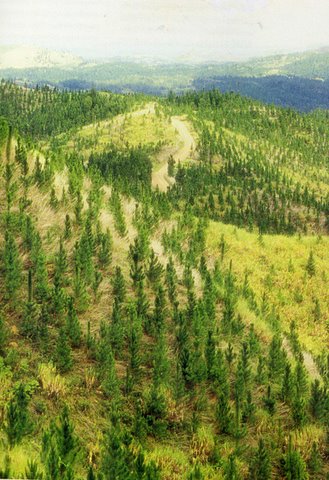
In babasiga (sunburnt land) which is a nickname for Macuata because it is fairly dry mainly grassland, there is a great potential in growing pine trees. One variety trialed in Fiji hs been Pinus caribaca hondurensis or Carribean pine which comes from the Carribean Basin such as Guatemala, Belize, Cuba and Bahamas. It seems to be an excellent tree for plantations in Fiji and has already been planted in Nabou, Nadi, Lololo, Ra, Bua and Macuata.

Because our family land is suitable, one of our boys decided to plant 700 pines last year and added another 1200 last month. He obtained the seedlings from a government station in Seaqaqa. 'They are very expensive,' Junion said to me. 'Oh, how much each?' I asked. His reply was astonishing. 'One cent!' What? I thought they would be one dollar each. It cost more for the transport to pick them up - two trips - than the planting material. Despite the very hot days, Junior got a working bee together with his cousins and they set to work to cover a hillside with the little pines.
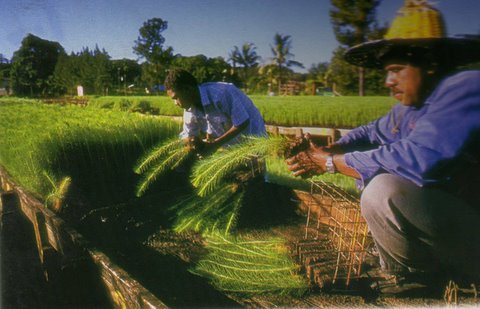


The land is talasiga - which is a similar word to babasiga and vast areas of Vanua Levu and Viti Levu are of this type of hilly grass land with a relatively lower rainfall that the rest of Fiji.

It is a long term project as the pines will be ready for cutting in about ten years time.

Many people in the rural areas just get on with the job of surviving, and planting with the seasons of the year. A military dictatorship, or whatever it calls itself, does not seem particularly relevant to their lives.

Thursday, January 18, 2007

Waiting for the Air Pacific plane


from w.
Last night I noticed that people waiting at Tullamarine,(Melbourne) for the Air Pacific plane from Fiji seemed to be quiet, isolated, not talking to strangers, just standing there at the barrier waiting an hour as their relative/friend went through customs etc. At least the planes seem to be full and tourists are still going to Fiji.

I think at Nadi airport it may be different. People talk to one another whether family, friends, or strangers. Or has Fiji changed and people no longer smile and say hi with small talk?

And some people in Fiji just wait in their homes hoping their kin with one day return from working in security in places like Iraq.

Monday, January 15, 2007

Once were Fijian warriors shaking palm fans


From w.
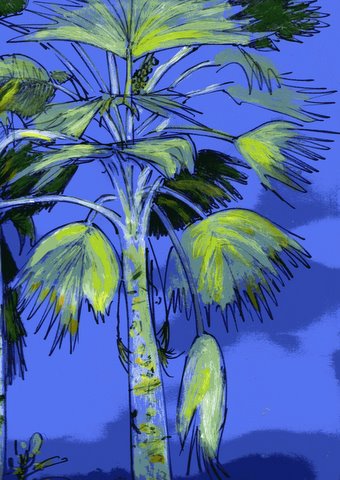
Once Fijians were warriors, using a fan made from palm leaves to wave and slap to make a frightening display and to parry enemy arrows which in Fiji were light and flimsy.

Now the fans are used in dances such as the meke iri. Fans can be made from coconut leaf, pandanus, but the best of all are leaves from the masei tree.

The tree is called vua ni masei and the botanical name is Pritchardia pacifica
The Fiji fan palm is a medium sized quick growing palm native to Fiji. This palm will grows with a straight smooth trunk with some fibre patterning at the base. It has numerous palmate leaves which are very large and nearly as wide as long. The shallowly split leaves are rich lime green with a yellowish midrib. This ornamental palm has fragrant brownish flowers. The spherical fruit is 11-12 mm in diameter, turning red then black at maturity.

A string band group from Mali Island are called Vua ni Masei.

The drawing here made made in a doctor’s garden in Suva. When I was drawing it, she said, ‘Don’t draw these shabby old trees!’ but I did. I will not do what I’m told!
I'll put some variations of my picture of the Suva tree on our Geelong blog.

Saturday, January 13, 2007

National Geographic writes up Vorovoro tribewanted

from w
The latest from tribewanted in Vorovoro.


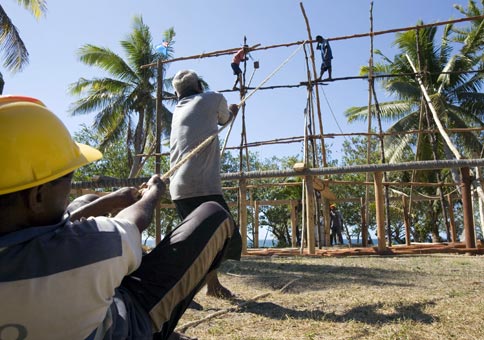
National Geographic write about tribewanted on Vorovoro Island and lots of pictures, some of which I will place here. They are of Tui Mali, Epeli, a women's seasea dance, and building a bure.


Now that’s a real coup for the project in Vorovoro – a great article in National Geographic! I remember it was less than a year ago when Lusiana Speight wrote an article in a Fiji newspaper about the Taiwanese government giving fishing nets to the people of Mali Island. She wrote that she’d never heard of Mali Island! Well, since that time Mali Island people and Vorovoro (near Labasa, Vanua Levu) have had a lot of publicity which interests us because Peceli’s mother came from Mali Island and many of the people there are close relatives.
Friday, January 12, 2007

Way down yonder in the pawpaw patch

from w
Peter Foster, international fraudster, is once again eluding the police as he evades the court. Is he in the Yasawa islands, in Vanuatu, under the bed at Denarau, allowed to disappear while the soldiers (who had taken him over from the police) looked the other way?


Some of the story: first really noticed when he caused a ruckus about the proposed Champagne Resort in the Yasawas with a misleading fake website, then a court case over incorrect immigration papers, then a chase, and a capture at Pacific Harbour involving leaping into a river, the Suva gaol wasn't good enough so he was allowed to stay at JJ's on the Park at his own cost, then he slipped off to see his Mom at Denarau, missed some more court sittings, colluded with the military in making a subversive home-made video with Fijian tricksters, then disappeared once again. Hmmm. Well, it's a distraction from a coup I suppose!

Perhaps he's hiding is someone's pawpaw patch? Called papaya, mummy apple, weleti or maoli in Fiji.

Where oh where oh where is Peter
Way down yonder in the pawpaw patch
Come on girls let’s go find him
Way down yonder in the pawpaw patch

Now a diversion because pawpaws are wonderful fruit. I gave my children pawpaw from about two months of age. An elderly missionary at Dudley ate 20 or more pawpaw seeds for breakfast every day. In Fiji they grow very well in Labasa and Mali Island and are great for breakfast with lemon.


It does have medicinal qualities they say - a diuretic (the roots and leaves), to treat bilious conditions (the fruit). Parts of the plant are also used to combat dyspepsia and other digestive disorders (papaya contains a proteolytic enzyme which soothes the stomach and aides in digestion) and the juice is used for warts, cancers, tumors, corns and skin defects.

The milky sap of a unripe papaya contains a complex proteolytic enzyme called Papain. Although it is a protein, this enzyme is not damaged by heat. The enzyme is similar to pepsin and hence it helps to digest protein in the body. It is therefore used to relieve indigestion.

Papain is also used to treat commercial beer, to degumm natural silk, as a meat tenderizer and in the production of chewing gums. Cosmetically it is used in Shampoos and in a number of face-lifting operations.

Papian has an anticoagulant effect. It is also claimed that the enzyme eliminates necrotic tissues in chronic wounds, burns and ulcers In humans capaine slows down the heart and thus reduces blood pressure.

However, externally the papaya latex is an irritant to the skin and internally it causes severe gastritis. Some people are allergic to various parts of the fruit and even the enzyme papain has its negative properties. Most notable is its ability to induce asthma and rhinitis and its sister enzyme carpaine can cause paralysis, numbing of the nerve centers and cardiac depression. Wow, that sounds ominous!
So, where, oh where oh where is Peter Foster? Munching on pawpaws and eating the seeds to stay regular?

Thursday, January 11, 2007

The Methodist church in the village

from w
The Methodist Church gets a huge serve of criticism in the Fiji newspapers as being conservative and aligned with the Qarase government so when the coup happened one spokesperson was quoted as being fiercely opposed to the military coup of Bainimarama. However since the appointment of a group of interim ministers, there has been a pragmatic response by Rev Ame - I don't think approving of the coup - but accepting the step forward in these appointments. The journalists quote something about 'the will of God' but I think that is simplistic. Of course some leaders in the Methodist Church in 2000 were is disarray, lost their way, and it was a time of great confusion for members. Today many people are also confused as people argue the case for and against. Most families have friends and family in the army as well as links and networks in many other aspects of Fiji society.
Back in the villages which are predominantly Methodist there are usually fervent prayers in households as well as Sunday worship, as people pray that Fiji will get on a right path whichever way it will be. A comment was 'what happens in Suva had nothing to do with us' but of course tampering with Fiji institutions and the economy certainly does impact upon distant places away from suva.

Here are some sentimental pictures - scanned from a larger painting of a Sunday in a rural village.


Wednesday, January 10, 2007

Fiji: it is most strange

that an Interim Government takes on so many tasks. I thought an Interim Government would go softly softly until the next election and not make too many decisions! But I am wrong. They really want to work very hard.

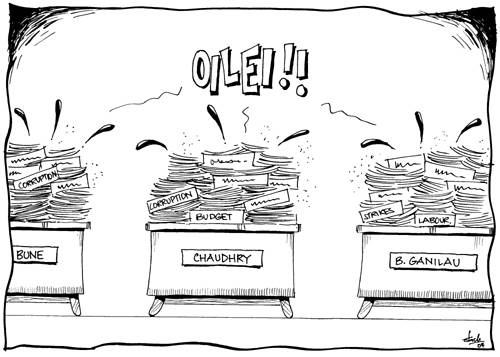
Today's cartoon in the Fiji Times:


It will be a humungous task to sort out all the notes that are coming their way - gossip from kitchens, papers from disgruntled neighbours and work colleagues, mis-information also no doubt. Amidst it all there will be evidence of nepotism, skimming the cream from public money and incompetence. But whose job is it really to be an auditor of everyone's business? Okay, sure, the government departments have to be accountable for the use of funds. They even asked Australia, New Zealand, and USA to send in the 'forensic accountants' to help and so far the answer has been no.
w.

Fijian and Tongan barkcloth

from w
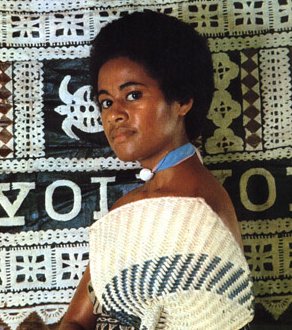
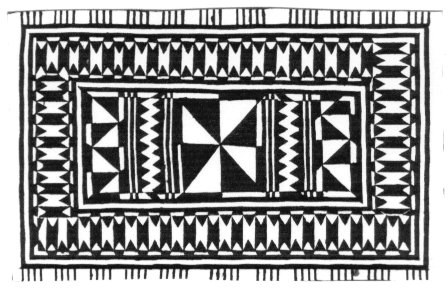
The main difference seems to be that Fijian masi kesa is made by stencilling patterns using brown and black natural dyes. Formerly large leaves such as banana leaves had designs cut into them, but more lately stencils are made with clear plastic xray film. In Tonga the designs are made by rubbing over the barkcloth with a relief pattern underneath. In Fijian ceremonies both Fijian and Tongan kinds of barkcloth are used. The Tongan style is called gatu.


Large Tongan cloths are decorated by passing them repeatedly over a table on which various pattern boards have been placed. In this way the designs are copied repeatedly to obtain a decorated cloth of almost any desired length.

The raw material for these decorated cloths is the paper mulberry tree. Small trees are stripped of their bark, the inner part of which is then soaked and pounded out into flat sheets several feet long and a foot or two wide. These are then felted together to make larger sheets, which can in turn be cut to sizes required for various purposes.

The dye is made from soot collected from the burning nut of a candlenut tree, mixed with a solvent such as kerosene.

Browns and blacks dominate the tapa patterns against the near-white of the fibrous masi cloth. Rusty browns are generally made from a mix of the mangrove plant infused with candlenut bark. Other reds are from the iron oxides in the red clays so abundant in parts of Fiji. And the blacks are usually from the charred candlenuts or the burnt tree resin of the dakua tree.

Monday, January 08, 2007

Rites of passage for Fijian girls - then and now


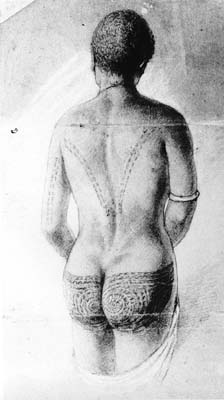
A hundred and fifty years ago it was customary for Fijian girls to be tattooed before marriage but this custom seemed to have disappeared perhaps a hundred years ago. I found a drawing of a girl's tattoo on the internet.

There is a rite of passage for Fijian girls that is sometimes performed in the present day for a girl who is about twelve or thirteen. We attended one of these ceremonies where the girl was dressed up in masi and a feast prepared. I did a little oil painting of Sylvia and her twelve year old daughter.

Fiji - more guys and ladies sworn in

and the rest of the interim government in Fiji are:
from Fiji Times this very hour. And I can't see all of them saying, 'Yes, sir, how high do I jump sir.'

More ministers join interim Cabinet
1015 FJT
Tuesday, January 09, 2007

Update: 10.15am Fiji Labour Party leader Mahendra Chaudhry has been sworn in as interim Finance, Sugar Reform and National Planning Minister in the military-backed interim administration.

He was sworn in moments ago by President Ratu Josefa Iloilo.

Next to be sworn in to the interim regime was deposed Energy Minister in the Laisenia Qarase-led government - Lekh Ram Vayeshnoi.

The Labour Party spokesman has been handed the Youth and Sports portfolio in the interim administration.

Ratu Josefa also swore in Ratu Jone Navakamocea, who was State Minister for National Planning in the deposed government, as interim Minister for Local Government amd Urban Development.

The Labour and Tourism portfolios went to ousted Deputy Opposition Leader Bernadette Rounds-Ganilau, who had to resign from the United Peoples Party to take up the post.

Mrs Rounds-Ganilau won the Suva City General seat in the 2006 polls on a UPP ticket, beating former Labour Minister Kenneth Zinck.

Former Mineral Department employee Tevita Vuibau was sworn in as interim Minister for Lands and Mineral Resources.

Former Director Research in the Agriculture, Sugar and Land Resettlement Ministry Jainend Kumar was sworn in as interim Agriculture, Fisheries and Forests Minister.

He retired from the job in October last year.

---
later -
Epeli Ganilau will be sworn in as Minister for Fijian Affairs later when he finds transport to Suva from Taveuni.
Also - how's this one:
Frank Bainimarama - Commander Fiji Military Forces, recently Acting President, now Interim Prime Minister, also in charge of Home Affairs and Information. That surely requires many hats to juggle?

Sunday, January 07, 2007

Survivor 14 wrap - and some pics


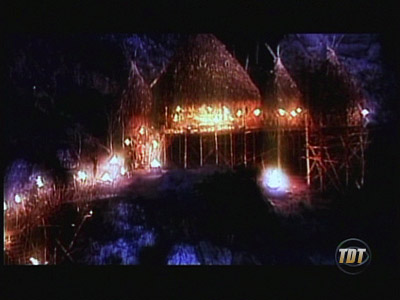
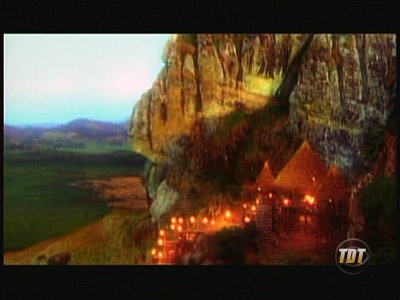
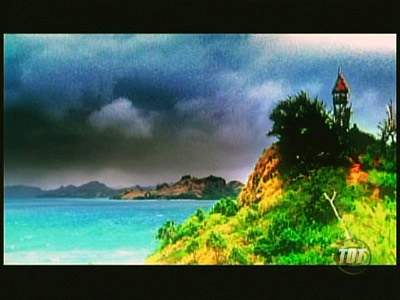
The Fiji Survivor series will be on the TVs in the not-too-distant future and the film crew wrapped up a few weeks ago and sold off some of their redundant stuff to the villagers. Relatives in Oz had to sent money to their kin to purchase left-over goods! Shoulda just given it away really.
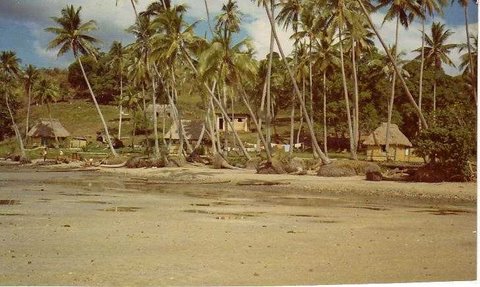
Here are a few pics and this website has more info. The pictures re Survivor 14 were taken in vicinity of Vunivutu, Macuata, Fiji.
A question: did the actors/participants of Survivor 14 spend their evenings in a real survivor mode or occasionally 'rest-up' in the little air-conditioned huts that were built there for the crew?

Fiji Interim Ministers line-up

from Fijilive in the past hour;
Bune, Nailatikau interim ministers
Monday January 08, 2007


Former environment minister Poseci Bune and former Speaker of Fiji’s Parliament Ratu Epeli Nailatikau have been appointed interim ministers. Bune was sworn in as interim Minister for Public Service and Public Service Reforms by the President Ratu Josefa Iloilo at Government House this morning. Ratu Epeli is the new interim Minister for Foreign Affairs and External Trade.

Two unsuccessful National Alliance Party candidates in the 2006 elections, Manu Korovulavula and Netani Sukanaivalu were also appointed interim ministers. Korovulavula, a former senator, is the new interim Minister for Transport.

Sukanaivalu, who is a former navy officer and businessman, is the interim Minister for Education. Dr Jona Senilagakali is the new interim Minister for Health while Fiji Chamber of Commerce President Taito Waradi is the interim Minister for Commerce.

The interim Minister for Justice and Attorney General is Suva lawyer Aiyaz Sayed-Khaiyum.

Former senator Laufitu Malani has been appointed interim Minister for Women and Social Welfare.

A few more interim ministers including the crucial post of Finance Minister will be sworn in tomorrow.
-----------
Some comments:
from W
Despite my difficulty in coming to terms with yet another coup in Fiji and the military's methods of intimidation of people and judgmental attitudes, at least the line-up for the the first swearing-in of ministers in the interim government seems to be satisfactory. The men and one woman all have good track records and experience. It would be nice to have younger guys like those two who were in Health who were energetic enough to get up at 6 a.m. to start work. Most of the new line-up are older, mostly QVS schooled, and linked with the Natonal Alliance Party. I'd like to see a couple from the Western side of Viti Levu. We'll see whose faces are in the line-up for the rest of the portfolios tomorrow. Maybe Berenado, Paula, and even Mahend - though how he could stand not being a dissenter, only Heaven knows!

New restaurant in Labasa


There's a new restaurant opened in Labasa, though we haven't checked it out yet, so we need to ask the relatives to have a look. There are already lots of eating places - some quite cheap - in Labasa. Here's the info about the Royale anyway.

Saturday, January 06, 2007

Fijian youth playing cards


from w
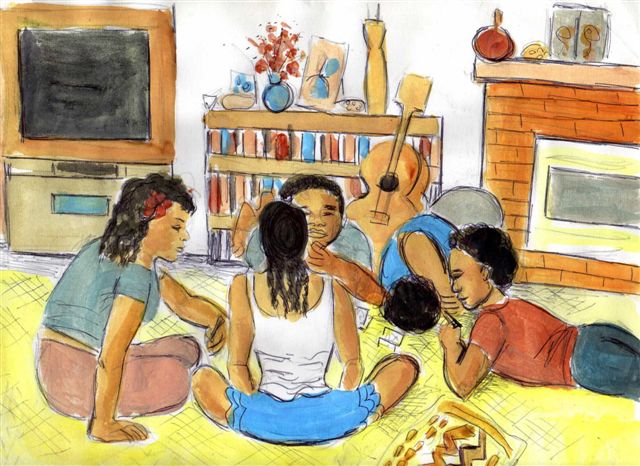
After their swim yesterday and a huge meal of fish and chips from the shop opposite us (a guy from Lebanon) the young people played cards in our lounge room - two sisters, two brothers (one sleeping)and another lad. The girl on the left is the mother of the baby I drew yesterday and posted.

How about a ban on boring short back and sides in Fiji?

from w
It is rather boring to see so many guys with short back and sides and not even dyed black! So on my New Year wish list for Fiji, I would like to see some good old-fashioned variety in hair styles on the modern men who are often in the newspaper front pages.


Friday, January 05, 2007

Fijian youth from Melbourne visit us

from w
We had ten people stay with us last night as part of a youth group camp experience - to Warrnambool, Geelong then back to Melbourne. Mainly teenagers, a young Mum with two kiddies and another Mum. They swam at Eastern Beach most of the time and camped in our youngest son's bungalow (he's over in Labasa at present) and ate huge meals.

While Tema slept on our loungeroom floor this afternoon with baby Talia, I drew them.

They've gone back home now and left our place tidier than when they arrived! We've known them all for many years and seen these kids grow year by year. They are all members of the Coburg Fijian Methodist congregation and their minister is Rev Tepola Raicebe.

Thursday, January 04, 2007

A children's party, a nice diversion from puppets, lies, shiny medals


from w
This morning we went to a jolly good children's birthday party for a three year old boy Noah whose Dad comes from Tailevu. A great venue for children to safely play in then have their morning tea of pizza, bread and hundreds and thousands, etc. Runamuk, I think the children's play centre is called. It was lovely to talk with young Mums and see kids from two to six having a great time. Certainly a perfect diversion from the turn of events in one little Pacific Island.

Tuesday, January 02, 2007

The Fiji Dilo Tree


from w
If only a massage with Dilo magical cream would cool the fevered brow of a few all-over-the-place guys in Suva!

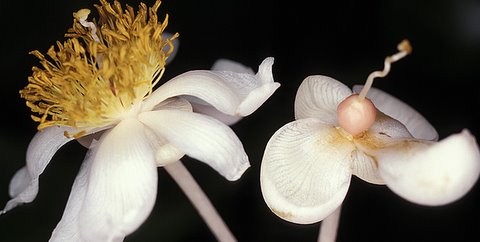
When we lived beside the sea at Nukutatava not far from Labasa, there was a medicinal tree called Dilo growing near the shore. I wonder if it is still there. Other names are Calophyllum inophyllum, Clusiaceae or Alexandrian laurel. It is a low branching tree from India and the Western Pacific and grows in many islands throughout Polynesia. The Dilo tree draws its sustenance directly from nutrient rich warm waters of the ocean.


The tree grows up to 25 or even 30 metres in height, with long, spreading limbs. The tree trunk is typically thick, with dark, cracked bark. The branches are covered with shiny, dark-green oval leaves and small white flowers with yellow centres. The blossoms give off a sweet perfume.

The fruit of the tree, about the size of an apricot, has a thin flesh and a large nut hull inside. The somewhat poisonous kernel of the fruit yields "dilo oil," a thick, dark-green substance used medicinally and for lights. . The extract of the Dilo nut is believed to possess a unique capacity to enhance the skin's own repair mechanism, thereby accelerating the healing of wounds to the skin.

The reddish-brown timber is hard and straight, thus valued for making boat masts. It is also made into planks.. Because the timber does not smell or taste bad, it was also carved into food containers. The thick, dark green oil which exudes from the drying seeds was used as lamp fuel and to waterproof cloth ... The fruits are also used to make a brown dye. If the trunk is cut, it exudes a gum which solidifies. The fragrant flowers are used in leis. Traditional medicinal uses: The gum, bark, leaves, roots, flowers and the oil extracted from the seeds are used in traditional medicine for a wide range of ills. The oil is used for massages, together with coconut oil and flower fragrances. Reference:

In Fiji a Dilo Gel is produced and sold as a skin lotion, especially for sunburn or dry skin or insect bites. It has a buttery texture and replenishes dry and damaged skin.

More information about the dilo tree can be found on this website

Saturday, December 30, 2006

A Fiji wedding - from the archives


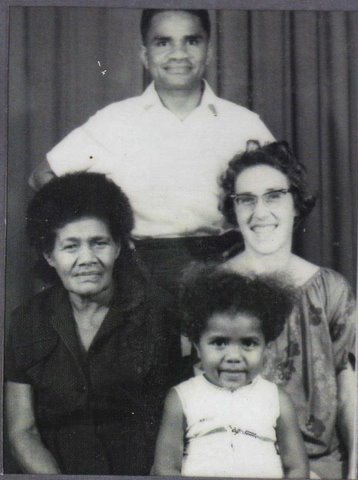
It's an anniversary today - 31st December and it's a bit hard to remember forty years ago in Lautoka. Anyway here's a picture taken about that time of us with Nau Levu and Nau Kisi.

Fiji scouts in Australia for a jamboree in Bendigo


from w
Fiji scouts in Australia for a jamboree at Bendigo
The City of Greater Bendigo (in Australia) is busy preparing to host 12,000 scouts and leaders who are coming to town in January for the 21st Australian Scout Jamboree. They are from across Australia and the Pacific region, including Fiji.

About fifty girl and boy scouts from Suva are already in Melbourne and will travel to Bendigo tomorrow. They are from the Scout Troop from Gospel Primary School, Samabula, mostly eleven and twelve year olds. They are having a great time already in Melbourne being looked after mainly by a Motuku family.

Last Friday night the visiting scout group hosted a concert at Moreland Hall in Melbourne, all nicely decorated with masi. The concert was enjoyed with much enthusiasm and laughter from the audience of mainly Fiji migrant families. The scouts performed mekes (meke iri, meke ni veli, etc.)and skits and sang patriotic and religious songs, even dancing to a psalm and Bible reading. Their headmaster, who is from Kadavu, accompanied the group, and also some teachers, scout masters and some senior boys from RKS. The skits had the audience in fits of laughter as the visiting scouts acted out exaggerated scenes from life in Suva. Kids of eleven and twelve are long-limbed, some skinny, not yet fully grown, and so energetic.They certainly do like to dress up as characters from Suva's night life! One skit was about a faith-healer like Benny Hinn who fixed up people but caught their illnesses, including a pregnancy so everyone laughed at that. The fund-raising concert will help them a little bit with their tour expenses.

I’ll post some pictures from the concert when I get them.

Our boys were cubs and scouts when they were children and two attended jamborees in Fiji – at Lautoka and at QVS. Also, Peceli was a Scout chaplain in Geelong several years ago, so we are always happy to see that scout groups are still flourishing.

Friday, December 29, 2006

Fiji: Looking in the Mirror - a fable

from W
Peceli told me a version of this story this morning so I wrote it up, changing it just a little from its original context in China. There's a moral in it somewhere for Fiji I am sure.

Looking in the Mirror


Once upon a time there were no mirrors in Fiji, until one man named Bula obtained one which he kept secretly in his bag. He would look at the mirror every morning and every night and talk to it, but he never showed the mirror to anyone. No-one in his household had ever looked in a mirror, ever.

One day his wife Ema got suspicious and when her husband went off to the fields to clean his yam patch, she snuck into the place where he kept his bag and opened it up, picked up the mirror and looked at it.

“Oilei!’ she shouted. ‘He has got another wife, and she’s very pretty!’

When Bula came back from the fields wanting his tea and vakalolo, she confronted him. ‘Watiqu, what’s this?” Ema showed him the mirror.

He looked at it and said, sadly, ‘That’s my deceased father and I talk to him every morning and every night.’

‘It is not! It’s another woman!’

‘Alright, if you don’t believe me, let’s go to the patrol post and ask the officer there.’

They finish their tea and vakalolo then go off down the street with the mirror safely tucked into the bag.

The officer is told the story then Bula takes out the mirror, averting his eyes as he hands over the mirror.

The soldier is surprised. ‘Oilei! That’s a soldier in the mirror. He has a strong nose. What’s he doing there? I can’t solve your problem so you had better go to the talatala.’

The mirror is packed up again in the bag and the couple go off up the hill to see the minister who is reading his Bible under a mango tree.

‘Pardon me,’ says Bula, and he tells the minister that his wife says he is unfaithful.

The minister peers into the mirror and exclaims, ‘Well, I don’t see a woman there. I just see a talatala and he’s quite good-looking. Can’t help you there.’

The couple trudge back home again and Ema’s mother is waiting. ‘Where have you two been? Sobosobo, there’s no work done around here. What’s got into you!’

Bula tells his mother-in-law that her daughter is arguing and unhappy because she reckons he has another wife somewhere.

Ema butts in, ‘Yes, Mum, and he looks at her every morning and every night!’

Mother-in-law peers into the mirror and exclaims. ‘Well, looks like you have another mother-in-law too, so where is she hiding?’