Tuesday, November 07, 2006

Qoliqoli and a Turtle Story


from W.
Qoliqoli and a Turtle Story

We were talking about this much-hyped Qoliqoli Bill and Peceli said that there surely will be technical problems about the boundaries between the different sites, and how do you draw a line in the sea? So here’s my story about it.
----

Ari wants to go fishing for a turtle for Uncle Jeke’s birthday party.

It’s the year 2007 and nowadays there are pretty pink, yellow, green, and other coloured ribbons on the mangroves that show every fisherman where the boundaries of qoliqoli are. Ari’s boundaries are set with purple ribbons.

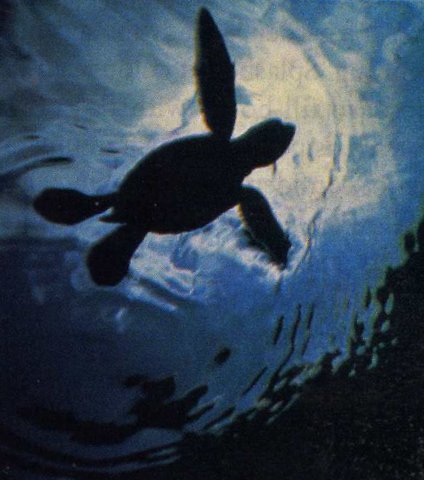
Okay, but does the vonu (turtle) know that?

Ari sees a lovely big turtle, nice and fat that will be excellent for the feast. Ari swims after it with his spear. Okay, the turtle looks back at him, winks and keeps swimming past the purple ribboned mangrove and stops and nibbles on some sea grass and looks back again.

Ari doesn’t know what to do so he says, ‘Hey Vonu. Just wait there, while I go to Auntie Susu and give her some grog so that I can come back and chase you again.’

Two hours later Ari is back in the sea and he’s got permission to use Auntie Susu’s qoliqoli. But the turtle has other ideas. He’s smart. He swims past the yellow-ribboned mangrove that denotes Auntie Susu’s boundary to Uncle Tomu’s qoliqoli which has red ribbons on the mangrove. The turtle looks back, smiles at Ari who is getting rather tired of swimming by now.

‘Hey Vonu. Just wait there, while I go to Uncle Tomu and giver him some grog so that I can come back and chase you again.’

Ari goes to Uncle Tomu’s village and takes his kava, but Uncle Tomu is a modern man and he reads the Fiji Times. He says, ‘No thank you, Ari. I want $50 in cash, then you can use my qoliqoli.'

Well, Ari goes to the moneylender, who has a canefarm on the side, and borrows $50.

And you can make up the rest of the story……..
---------
So what do you think of the implications of the Qoliqoli Bill, especially how will boundaries be set and sighted? And how to tell the fish and sea creatures not to jump the borders when you are chasing them?

Yellow Bucket - a Suva response to the past week

The Yellow Bucket is a column, sometimes humorous, sometimes cynical, about life in Fiji, particularly Suva.

From the Yellow Bucket (kava bucket) at Fiji Village – part of their response to the past week in Suva:

To quote the Acting Commander Teleni “we reserve the right to yell and scream”. Hopefully the Government has learnt that for the moment, the best policy is to develop selective hearing, keep channels open but ignore the extraordinary statements.

Over time hopefully the foreign media will learn that this is a repeat of the popular fable “the Commander who cried wolf” and realize that this is no longer a story.

Sadly this current cycle of bluster started at a time when Howard and Clark were in Fiji for the Forum. Combined with a slow news patch (no great scandals at home and the footy season is over) and Peter Foster taking his dive, it meant that Fiji stuck out on the media radar.

Once the foreign media circus arrives they have got to generate something exciting for back home. Running a “life is normal” story isn’t going to justify the expense budget.

Don’t get us wrong, we don’t blame the foreign media and their interesting interpretations of Fiji politics. We spend hours in debate around the bucket trying to cover all the angles, trying to summarize the complexities in a 60 or 90 second sound bite.
Tragically the message to tourists and foreign investors is once again one of instability. They have an image that the military represents an erratic rogue element within Fiji society, one that they can’t factor into risk analysis with any certainty. The conclusion is then inevitable “nice place not worth the risk”.

For tourists particularly from our core markets there is a growing resilience to these dramas. Many know that the tourists areas have never and will never be affected but at the same time the fear generated by the publicity is real and will affect bookings short term. This is a huge price to pay for some ill tempered remarks.

This brings us to our final conclusion. What has been the over riding sentiment around the yellow bucket this week? WE ARE ANGRY! Angry that as tax payers now paying 15% VAT we have to pay the salaries of all these characters as they tear down everything that we have worked so hard to build and for what, so they can feel important strutting around in the world media.

We just can’t believe that for all their efforts the military is rewarded with a $10 million dollar INCREASE in the budget AND that they still getting a higher allocation than the Police. Meanwhile we navigate disintegrating roads and struggle to get water in our taps. GRRRRRRRRRRRRRR
More on our frustrations next week when we tackle the Budget!

Another look
We hear Peter Foster’s hunger strike and all the drama generated by mummy dearest has proved quite convenient. It has allowed Foster to remain effectively under lock and key without being charged giving local and international police time to finalize charges relating to apparently to various international money laundering ventures.

As an expert on slimming products Foster will shortly be able to sample the efficacy of the Fiji version dhal bhat and tea and cassava. It seems to have worked wonders on the coup convicts!
--------
So, what is the response of many people in Suva?
Taki!

Sunday, November 05, 2006

Epeli and Henry in Vorovoro Island

From Peceli

Many thanks to people like Epeli and Henry

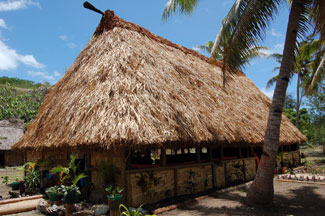
Thanks for the lovely traditional Bure that now becomes the beginning of the land mark of the Tribewanted in Vorovoro Island. There are a few people I would like to mention their names, firstly Komai Viriviri Epeli Gauna, the traditional builder of the large bure. It is not an easy assignment as the building materials all have to brought in from the mainland.

Epeli is a mataisau. The word matai means expert. He is a skilled carpenter and boatbuilder and right-hand practical man to the Tui Mali. Epeli build some of the boats that are used in Vorovoro and Mali. Epeli lives in Vuo village near the Malau Timber Mill and Vuo is a village of Mali Island people. I met him on Vorovoro Island when I was there in August and we talked then with Epeli and Tui Mali about designing a large bure for the tribewanted people.

Secondly Henry Marshall who is now registered in the chiefly yavusa (tribe)of Ligaulevu. He was a skilled mechanic with the Fiji Sugar Corporation, now just retired, and he lives in Vuinika which is near Vuo. He helps with engines and assists the Tui Mali. He is a matai ni idini (engine). And he has a car to drive the Tui Mali to Labasa town.

Thank you also to the women of Mali, particularly Tui Mali’s wife Ana who is a secondary school teacher. She and the women organised the decorations for the interior of the bure.

It is rare today to see the building of a traditional bure in the Labasa area. I don’t think there are any bures in Naseakula or Wailevu villages. The materials are difficult to obtain because most of the land has been turned into sugar cane farms so the forests are gone.

Saturday, November 04, 2006

Official opening of large bure in Vorovoro

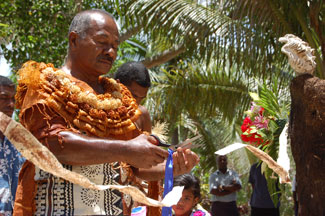
A great achievement to get the large communal bure up and opened despite several weeks of rainy weather. I've taken the liberty of pinching some pics from the Chief's blog on the the tribewanted website. After all our relatives built it! Peceli hasn't seen the pics yet as he's gone off to Altona Meadows Uniting Church for the Fijian service but he will be happy about it as Tui Mali is a close relative and friend and we want really good things to happen for the Mali island people. So far, so good with the tribewanted eco-tourism project, despite a few knockers on some websites.


Friday, November 03, 2006

Macuata Day - far away from the Suva crowd

Far away from the noise and bluster of Suva and the overheated talk by journalists who should take their kura medicine and have a good lie down, was a lovely cultural day in Naduri village in Macuata. It was Macuata Day. We have been to similar cultural days in Naduri and enjoyed the festival atmosphere which usually includes fund-raising, mekes, and a feast.


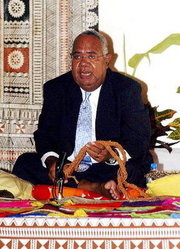
The main guest this time was Ratu Jone Madraiwiwi. Part of his speech is quoted in the Fiji Times today - November 04, 2006. His words are moderate and he is careful not to take sides. He sounds like a very patient man indeed!

VICE President Ratu Joni Madraiwiwi, , said although he and the President had been criticised publicly, they would remain calm. And he assured that the standoff between the military and the Government would be dealt with carefully. Given the military's aggressive reactions, it would not be wise to stir things up at the moment, he said.

Speaking in Fijian to more than 4000 villagers at the Macuata Day celebrations in Naduri, Ratu Joni said the storm would die down and the people should think of the past and reflect on the future. He said it was important to understand where the country was heading and to move on. Ratu Joni said it was useless to point fingers and everyone should reflect on their own actions and remain calm.

He asked the villagers to pray for peace and for guidance for the leaders and there was no reason to become a party to the tension.

Ratu Joni said wisdom and understanding were needed to solve the impasse. He said gatherings of festivities such as the Macuata Day was needed at times when the political atmosphere was tense.

Tui Macuata Ratu Aisea Katonivere said Ratu Joni's speech was very encouraging and motivating. He said the chiefs of Macuata had discussed their stand on the current situation, which they would relay to Ratu Joni. The people of Macuata, he said, wanted the current government to continue its term without interference. He said the government leaders and the military should sit down and work out an amicable solution to their differences.
--------------------
FT Nov 7
The organiser of Macuata Day, Adi Seinimili Dyer said the function was revived to bring all the people in the province together.She said the money raised would be used to construct two hostels in Labasa and provide scholarships to students for further studies. Adi Seinimili said the Macuata Provincial Council was focusing on the education of children from the province. She said it was important that children had the resources to further their education and have a comfortable accommodation while studying in Labasa.

Comments:

Though Suva and the events of the past week seem distant from a community where newspapers are not often read, the people certainly would have listened to the radio and perhaps become alarmed for their kin living in Suva.

We are not isolated people wherever we live. We are connected and there’s this theory that when a butterfly flaps her wings somewhere, it will have an effect elsewhere.

What do you think about Ratu Jone's speech?

added Nov 13th.
Peceli's brother went to Macuata Day and said it was a fabulous day for the women's soli (offering) and because of the tauvu relationship with Bau, there was plenty of teasing going in with the Vice President, Ratu Jone. Also the Wailevu people excelled in their dances - wesi (spear dance) and seasea (women's standing dance). All this jollity when Suva was simmering with disquiet the same day!
W.

Thursday, November 02, 2006

Wise words from a bishop in Vanua Levu

from W.
Words fail me at this time when adults create fear amidst a population of mostly sensible people and I think of those kids doing their Fiji Examinations today after a week of raging newspaper headlines and macho talk.

A bishop in Vanua Levu quoted in today's Fiji Times speaks the voice of reason:

....Meanwhile, Bishop Apimeleki Qiliho the Anglican Bishop from Vanua Levu said as a church leader, he is concerned about the current impasse between the military and the government.

"I urge the leaders of both the government and the military to urgently resolve their differences and to exercise their moral responsibilities," he said.

Mr Qiliho added that it is the moral duty of the government to defend and uphold values such as respect, dialogue, caring for the need, national unity and placing high value on wealth distribution in the country.

"Part of its moral duty is to take heed of the concerns raised, not only by the military, but by many other citizens about some of its controversial and questionable moral conduct in recent years."

He said the Government had to remember that its authenticity depended on the confidence of the people on how it governed them.

Mr Qiliho added that it was important that as citizens of this country, our moral responsibility was to remind both the government and the military to exercise their moral duty and that is to adhere to the boundaries of their roles and responsibilities.

Sunday, October 29, 2006

The power of community - Cuba surviving Peak Oil


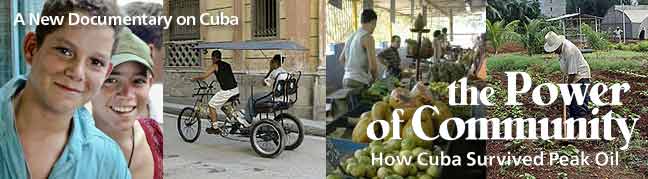
I watched an interesting DVD at the weekend about how the communities in Cuba got moving into self-sufficiency with small farms, organic city farms, urban gardens becaue they lost access to almost all their oil supplies in the early 90s. They had to urgently transfer from large fossil-fuel extensive farming to small gardens.

Will this need to happen to us too?

A review of the DVD is as follows:

Richard Heinberg, author, The Party's Over, Powerdown, and The Oil Depletion Protocol
"Everyone who is concerned about Peak Oil needs to see this film. Cuba survived an energy famine during the 1990s, and how it did so constitutes one of the most important and hopeful stories of the past few decades. It is a story not just of individual achievement, but of the collective mobilization of an entire society to meet an enormous challenge. Lest the point be missed, I will underscore it: this particular challenge – the problem of energy scarcity is one we will all be facing very soon."

The website is here.

Friday, October 27, 2006

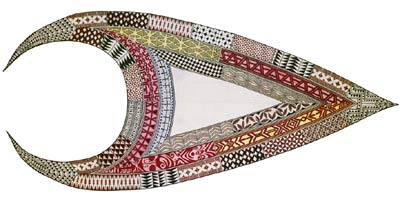
Fijian paintings - sails by Whippy and Whippy and Borg


When browsing 'Fijian paintings' I found designs by Ben Whippy, Barbara Whippy and Jane Borg - designs on sails. The site is artok - but back in 2000 I think.
w.

Thursday, October 26, 2006

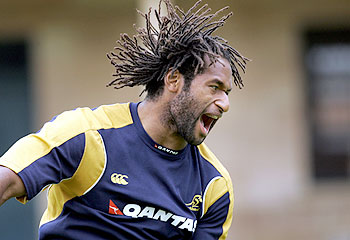
Tuqiri Fiji Rugby Star


Tuqiri, star rugby player
From Peceli

When the Fijian rugby star Lote Tuqiri plays in the Australian team it makes everybody happy but now there are poachers wanting him.
He replies "I like getting a lot of offers put in front of me first and then making a decision."

Lote is an outstanding young man and and sports star and he comes from Namatakula on the Coral Coast of Fiji. If you drive past this village you see a large billboard about Lote Tuqiri and he is helping his village with development. Lote is using his newfound wealth to help his relatives and Fiji.

Here are parts of an article in the Australian by Peter Jenkins
October 26, 2006

AUSTRALIAN Rugby Union bosses have failed to scare off British poachers wanting to lure Lote Tuqiri offshore after next year's Rugby World Cup.
High-powered suitors are already organised to make mega-lucrative pitches when Tuqiri arrives in the UK on Saturday for Australia's seven-game tour of Europe. ARU officials have opened negotiations with Tuqiri's management, and a four-season $4million deal is set to be tabled after his return from the month-long European assignment.

But the record-breaking salary offer has not driven away high-level interest from rugby union and rugby league clubs in Britain, and possibly elsewhere.
Tuqiri, mentioned previously as a target of new NRL club the Gold Coast Titans, confirmed: "To be honest there have been some feelers put out there by other parties (apart from the ARU).

"I like getting a lot of offers put in front of me first and then making a decision."

Gary Hetherington, chief executive of the Leeds club which funds both league and union teams in Britain's top-tier competitions, said he had read of the massive offer the ARU is preparing for Tuqiri, who is off-contract at the end of next season.

But he suggested the 27-year-old dual international could name his own price - in either code - if he chose to move to Britain.

"Lote is a world-class player and I imagine there'd be a lot of interest from clubs over here," Hetherington said. "At Leeds we are always interested in class players, be it a Lote Tuqiri or a Darren Lockyer. "He's also Fijian so he'd be off quota."
British clubs are limited to how many foreign players they can sign, but Pacific Islanders are exempt from the rule.

Wednesday, October 25, 2006

Foster's leap into the Deuba River

from W

Foster’s leap into the Deuba River
There goes the neighbourhood!

Pacific Harbour is a lovely place to live and the villas are very attractive. I've stayed there with relatives a few times. But oh dear, Peter, what was he doing there? Did he really dive or jump into the river at Pacific Harbour? Was it near the Rotary house built by the guys from Geelong? Were there any crocodiles left there after the Anaconda filming?

Some mothers do have ‘em, says Ms Vakaivosavosa, about this Peter Foster as well as Julian Moti over in the Solomons Islands!

What puzzles me is why Julian Moti was pursued so ruthlessly by the Australians over an incident several years ago - to be extradited, and they didn’t care a twig over Peter’s misdemeanours in the Yasawa Islands of Fiji – him, with a criminal record! The Pacific area certainly attracts a bizarre lot of dodgy people these days - and perhaps always did. And the islands have their own odd characters also of course.

From Fiji Times today -

Police have been pursuing Foster for almost two weeks over claims that he manufactured a series of false Internet sites, chat channels and emails in a bid to smear a rival resort development in the Yasawa Islands.

Immigration authorities say he was given a work permit, since cancelled, on the basis of a fake criminal history. Foster has been jailed in three countries over a series of scams, mainly linked to weight loss products.

At a press conference last night, Criminal Investigations Department director Senior Superintendent Josaia Rasiga said members of the PTR unit had seen Mr Foster outside a villa at Deuba. "The PTR managed to find him outside the villa and getting into one vehicle," said SSP Rasiga. "They followed him and when he saw police approaching him, he got out of the vehicle and jumped into the Deuba river. "Foster jumped into the Deuba river and so police asked for assistance from a boat owner who then loaned his boat to the police,'' he said. "They followed him down the river and when they came close to him, he went under water and hurt himself from the propeller of the boat."

SSP Rasiga said police in the boat dived into the river and grabbed the injured man.
"Mr Foster received a gash on his forehead but he is recovering and is in stable condition," SPP Rasiga said. He confirmed that Mr Foster was only wearing his underwear when he was arrested. etc. etc.

Tuesday, October 24, 2006

Tevita Fa and the President's Office

from Peceli
I don't like to comment too much about Fiji politics but this is a matter of importance in my opinion.

Tevita Fa, a Suva Lawyer and the President’s Office

Is it dangerous to be silent when you know the real truth? Or is it dangerous to speak the truth?

The spirit of Fiji former lawyers like A D Patel S M Koya or Carmode or Falvey is back in the legal profession when a lawyer is courageous to speak up. Prominent Suva lawyer Tevita Fa who made a statement against the President last Friday, renewed his criticisms yesterday.

Fa said that Ratu Iloilo made a mistake in referring the problem between the Military and the Government to the High Court many months away. Fa is well-known in helping Fijians about land and he stands up against long-established institutions like the NLTB and other Fijian cases.

The problem of the President is complex. When we look at the office of the President perhaps there should be an age limit. I know Ratu Iloilo personally, especially when he was a Roko in Macuata, Babasiga land. He is a man I still respect but this week he had made a poor decision.

One of the Fiji papers wrote that:

‘ Fa said, "We have a government that says it can only do as much within the rules and we have a President who refuses to do anything. We also have a commander who does not want to listen. For all we know we could be having another coup around the corner." The President's Office and Prime Minister's Office are not commenting on the matter.’

I think Fa is right but not many people are game to criticize the President. The situation really demands strong words and actions from the President’s Office. He is the Commander in Chief so must act.

What do you think?

Monday, October 23, 2006

Making a lovo (underground oven) in Australia

from Peceli
Making a lovo in Australia

A lovo is an underground oven in which an entire feast is cooked over hot rocks while buried in earth. It’s also called an umu in Tonga or a hangi in New Zealand. Men make the lovo, not women.

We make a lovo for a special function, maybe five times a year.

In Australia we can’t make a lovo in your back yard without permission from the local council and the Fire Prevention Officer. The ruling is if we have a small back yard you don’t make the lovo close to the fence – at least 2 metres away. It’s good manners to talk also to your neighbours because there will be smoke. Making a lovo early in the morning is a good idea.

What is needed: rocks, firewood, bags, aluminium foil,leaves e.g. gum leaves. The rocks have to be suitable, not the kind that explode. Even bricks will work.
A hole is dug about half a metre to a metre across, but it depends upon the size of the feast.

Prepare firewood and burn inside the hole for about an hour with the rocks on top. Heating the rocks well will serve as the base for the lovo.

When the rocks are sufficiently heated, the burning wood is pulled from the flames.

Meanwhile the food has been prepared, the dalo peeled, the chicken, fish, pork, probably marinaded. Each portion is wrapped separately and tightly in aluminium foil. Sometimes other delicacies such as palusami are added.

We use a wire basket and put all the food inside that. We add branches of leaves onto the rocks before putting down the wire basket and add more leaves on top. We then cover this with wet newspaper and potato bags then earth. Don’t use plastic materials. Make sure that the steam doesn’t escape.

The lovo is left to steam for three hours depending on the amount of food.


Unearth the lovo carefully, using gardening gloves if you have them, lift out the basket and the food is ready to unwrap for the feast.

The pic is making a lovo in Fiji.

Last Friday I made a lovo in our back yard for a farewell party to a visiting Fiji family.

Have any of you made a lovo in a country outside of Fiji – in Canada, USA or elsewhere?

Sunday, October 22, 2006

Little boxes on the hillsides - at Vunivutu

Are they bathing boxes?
How strange to be in the Nadogo part of Macuata?
So small - certainly not for a Fiji family.


Okay, they are for the Survivor 14 crew? Perhaps each little box has an air conditioner and electricity? What will they do with them when the film crew exit the area? Give them away?

Meanwhile, don't let the rain come down - my roof's got a hole in it...
Not likely here in Oz as there is a serious drought - while in Fiji, it pours and pours!
W.

Saturday, October 21, 2006

Greetings for Diwali in Fiji


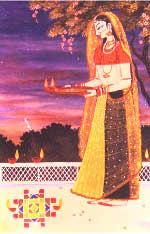
Best wishes to all those who celebrate the Hindu festival of Diwali in Fiji and elsewhere with hospitality, lights, prayer and fine food such as halwa. The Festival of Lights is a lovely occasion for neighbours to visit one another, share in hospitality and to beautify houses and compounds with rows of little lights.
W.

Wages for the Survivor 14 Vunivutu helpers

from Fiji Post 19th October - (my comments after the article)
Survivor blessings for Vunivutu19-Oct-2006

THE arrival of Crab Bay Limited, and its production crew for the shooting of the most watched worldwide television series Survivor, in Vunivutu village in Macuata has not only brought economical benefits for the village but has also changed the attitude and life style of the villagers.

Located about ten miles from Labasa town, Vunivutu villagers could now call themselves lucky as the first village to be part of Government’s Look North Policy.
And with Native Land Trust Board (NLTB) land leases expiring at the end of December Vunivutu villagers are already counting their lucky stars.

Not only have they been able to be given employment for the next two months they have also been able to adapt to a life style that is much more different in all aspects of life. A little over 150 Vunivutu villagers have been given job opportunities including their Indian brothers and sisters living in the vicinity of Vunivutu.

For the villagers waking up at 4am is usually for those leaving the village for Labasa town but for those left behind waking up is always around 7am and some to the extent of waking up at 10am when kava drinking the night before is something to be challenged.

That life style is no longer to be seen for the past month, as the 150 villagers have been employed by Crab Bay Limited. Work starts at 6am, and not merely lazing and chatting around for hours before the actual work is done. As Vunivutu villagers put it, it starts with a bang and no time is wasted on chatting or unnecessary walkabout and having things done at a later time.

"You don't waste time on joking only when its your lunch time and it is always work, work, work, and for us time is very important in getting things done on time," they said.

For some of the villagers working with the production crew is their first time to be employed, and the feeling for them is very different. "It is very different because in the village we have our own time to do things and here we have to work according to rules and regulations," they said.

Vunivutu village chief Tui Sawana, Ratu Lausere Vakadrigi Tugi, said many of them were first-timers in getting employed, and for the first week was very difficult for them to adapt to the life style.

"You know village life, everything is up to you at your own time, and it's funny when they come back from work the first week, and they can't get over the fact they have been able to adapt to working for 10 hours a day," said Ratu Lausere.

He described how men have no time at all to attend to their food gardens because they have been bogged down with work at the base camp.

Villagers were not at all hesitant when asked how much they were being paid an hour.
For 22-year-old Semaema Savou money she received as wages for the past few weeks has been very good. "For us we have been paid $5 an hour and we work ten hours a day and our Fiji National Provident Fund is being deducted and our insurance is also paid," she said. "That is apart from working on a public holiday where we are being paid double time and also working on a Sunday."

So basically, an employee would be receiving about $400 per week as wages that is if the employee also worked on a Sunday. So at the end of the three months an employee would have earned and walked away with $4,800. Not bad and too good to be true especially for only three months.

At the official launching of the shooting of the Survivor series, the ladies served food and drinks to guests at the cocktail.

Their dressing was different, their smiles and laughter showed that they enjoyed every minute of it, and their attitude spoke volumes of how they have been able to adapt very quickly.

"For me I really don't know how to speak fluent English, except for the more common and familiar words like yes, no, come and go, but to actually converse with some members of the production crew, it always a challenge for me in the first week," said one villager who wished to remain anonymous.

"Sometimes I don't understand what they are saying and every time they speak it takes longer for me to understand, but now I'm getting used to the way they speak, but it's just that they speak too fast."

Today the villagers have gotten used to waking up early.
For many who spoke to Fiji Daily Post, being employed by Crab Bay Limited is the blessing from above.

During the traditional presentation of the official launch of shooting of the Survivor series, a Vunivutu villager said villagers never at any time had complained nor have they ever raised their concerns to Government on any development in the village let alone the district.

Keimami kila ni sa qai kena gauna dina ga qo, keimami sega vakadua ni se bau vosataka na matanitu, baleta ni keimami kila ni tiko dina ga na gauna ni kalou vei keimami, (We now know that this is the time that God has prepared for us, as we have been patient and have never spoken out against the Government) were the words of presentation to government and invited guests.

To date Vunivutu villagers are now reaping the fruits of their silence, and they are enjoying every minute of it. What we have here today in the village is the fruits of our forefathers' prayers and the blessing from above is never to be omitted," they said.

"Government should also be thanked for their tremendous effort in identifying our village as the perfect location."

Tui Sawana said that without the relevant government departments' assistance they would not have been able to have the shooting of the Survivor series in Walana a coast off Vunivutu village.

MACA LUTUNAUGA
----------
So they are getting $5 an hour which is okay by Fiji labouring wages, and wkith overtime, they are doing okay.
I won't say much about their frame of reference about God's blessing because life is a bit more complicated actually.
I don't think it's the first move for the Look North policy but it would be interesting to know how the Survivor producers actually came up with Vunivutu and the Wainikoro River area as there are hundreds of outstanding locations in Fiji. At least the North has got some attention because the west of Viti Levu gets more than its share of the goodies from tourism, etc.
W.

Friday, October 20, 2006

I want a book - the Fiji English Dictionary

The only time I every remember getting a smack from my parents was when I was four and I stood outside a bookshop and shouted 'I wanna book! I wanna book!' Well, there's a book now that I would love to have. It's the Fiji English Dictionary.

Here's a discussion about it: from Radio Australia.

FIJI: Local idiom recognised by Fiji English dictionary

If you are in search of alcohol and you enter a "grog-shop" in Fiji, you may be disappointed. That's because in Fijian English, "grog" refers to kava, or yaqona, rather than alcohol. It's just one example of how the English spoken in Fiji has been influenced by the environment in which it's used. And now, the idiom will be recognised in the first-ever dictionary of Fijian English, which will be available in book-stores around the Pacific from August this year. It will be referred to as the Macquarie English Dictionary for the Fiji Islands and will include about 40 000 entries - many of them with links to Hindi and the Fijian language, but which are now used in English.


Presenter/Interviewer: Naziah Ali
Speakers: Dr Paul Garaghty, co-author, Macquarie English Dictionary for the Fiji Islands

GERAGHTY: The main difference is that like a lot of pidgin languages, like Melanesian pidgin, the type of English that's spoken in Fiji has a great deal of input from the local languages, particularly Fijian rather than Hindi, although Fijian and Hindi are both widely spoken in Fiji.

The main input to Fiji English has been Fijian, rather than Hindi, because it was Fijian speakers who first started to use English as a lingua franca in Fiji.

And then, of course, the other main difference is that a lot of vocabulary is different, a lot of the vocabulary that's used in Fiji is unique, some of it comes from Fijian, some of it comes from Hindi, and some of it has its origins in English, but has acquired different meanings.

ALI: So, why an English dictionary for the Fiji islands - does Fiji need one?

GERAGHTY: Well we think the time is right. We think that if you go back a few years, I don't know exactly how many years, but I suspect it was something like 20 or 30 years, people would have asked the same question about Australia. They would have said, you know, 'why do we need a separate dictionary for Australia Surely Australia is an English speaking country and we will continue to use the Oxford English dictionary as our guide'.

But then the people of Macquarie, and probably others who were around at the same time, came up with the idea that, no, Australian English is a different language from British language and is of course distinct also from American English, and they decided that Australian English also needs a dictionary of its own.

And that's where Macquarie came in and Macquarie has I believe been very successful in establishing its niche as the authority on Australian English.

So, I think the time is right also for Pacific English's to have their own dictionary of English, because they have so many features that are unique. The English press, for example, in Fiji is going from strength to strength, there are three English language newspapers, there aren't many publications other than newspapers, there're a few magazines and journals, but nevertheless these are the main means of written communication in Fiji. And of course, you have radio and the television, which is strongly influenced by English, there's far more English on Fiji television than there is any of the local languages, Fijian or Hindi.

So, we need a dictionary of English for Fiji just as much as Australia needs its own dictionary of Australian English.

ALI: How useful is it going to be? Who is going to use it?

GERAGHTY: It's a bit of a shot in the dark, so we really don't know, but our feeling at the moment is that probably it would be most useful to people in the media. There're the immediate people that we're thinking of, people who are journalists with the local newspapers and magazines and radio and television, these are probably the first people who will want to use it.

There will be some interest internationally among linguists, and there's a great deal of interest in various Englishes around the world and to date very, very little has been written about Fiji English, this would be a source of new material for Fiji English for linguists who are interested in all the new varieties of English that are springing up all over the world.

But also I think for teachers, for students, probably secondary students rather than primary students, because it not only gives examples of Fiji English, but it also gives examples of the differences between Fiji English and standard English, international English, which is what is required for exams.

ALI: How did you go about doing it?

GERAGHTY: Basically, I suppose, in two ways: just keeping our ears open for things that people say, which are typical of Fiji English and making notes of these things and also doing a lot of reading of local newspapers.

For example, myself I think it's certainly true of Dr Mugler, my co-author, and it used to be true of Jan Tent when he lived in Fiji, made a point of reading what the local newspapers every day. So I certainly read the Fiji Times every day and I make a note of certainly all the locally written stuff.

A lot of words which are everyday words in Fiji English, which come from Fijian and Hindi mostly, all pick up particular meanings which are peculiar.

Just to give a few examples, you'll often see the drink kava referred to in written English in Fiji as either yaqona, which is the Fijian name, or as grog, which is the local English name. Now in Australia and other parts of the English-speaking world grog means something else, it refers to an alcoholic beverage, strictly speaking it's watered down rum that used to be issued to the navy. But in Fiji - and a number of visitors have noted this - you'll often walk past a shop which has a notice up saying 'grog for sale'. And of course what they're selling there is not watered down rum or any alcoholic beverage but the local drink which is kava or yaqona.

So, the word yaqona and the word kava are in this dictionary with their definitions and also a lot of words from Hindi, especially foods, taracurry, which is the local word for curry. Clothing for example like sari and dhoti and Indian sweets, which are very popular among all people in Fiji like gulab jamun and so forth.
---------
And an excerpt from Fiji Times Saturday 21st Oct.
One of the editors of the Macquarie Dictionary who helped put together the Fijian and English definitions, Dr Paul Geraghty, said it was not easy compiling the dictionary.

"It involved a lot of work, especially research and we used the media to get some words, especially those that are commonly used every day like on the streets, in the nightclubs and other hang-out areas," Dr Geraghty said. He said the words in the dictionary included slang such as Uro, which was famous a year ago. "We have the definition of that word Uro and other Fijian slang that you hear on the streets."

Dr Geraghty said the dictionary would be of great help to tourists visiting Fiji as they would easily understand the definitions of informal English languages that the people of Fiji use every day on our streets.
Big Bure on Vorovoro looking good


The chief's blog on the tribewanted site informs that the big bure (building) on Vorovoro Island is now complete. Photos are here.

The sides are partly open on the bure, by the look, so let's hope the rain and wind don't come in horizontally in the hurricane season! Apparently it has been raining in Fiji nearly every day for the past six weeks. No wonder people are edgy about politics in Suva - not that politics really affects people in Vorovoro!

It seems that there are numerous occasions where the visitors spend time with the local people so this is quite unlike an adventure island/the beach movie/Survivor type of experience where you have the island to yourself and just have to manage. It seems that at every step they take there is interaction with Fijian people and that might be great for some, but annoying for others! Some of the Mali women are pictured here;


They mention getting a Fijian horticulturalist to advise them on planting seeds, etc. They should have done this the very first week and they would have green leafy veggies by now. Cassava and dalo take several months also.

I wonder if the money is still coming in, because their costs must be rather high without subsistence living and growing their own fruit and vegetables, catching fish and other seafoods. If they have to purchase rice etc. in town, then with travel in and out of Labasa the costs will be higher than expected. Part of the deal apparently is that food is free for the tribewanted members who come. So has that worked out okay I wonder.
W.

Wednesday, October 18, 2006

Fiji newspapers, beat-ups and speculation

From Peceli

Fiji newspapers, beat-ups and speculation

We are being manipulated by the media, by army and government handouts. Journalists write stories of half-truths, lies, and exaggerations. Even when they apologize the next day or week, they have already caused some anxiety in the readers – whether in Fiji or overseas.
An Australian was on the phone to me yesterday very worried about Fiji because he had read in an Australian paper that the army commander was making threats against the government again.

I said to him, ‘That’s typical talk from Fiji now. It’s been going on since Qarase won the election. It goes quiet then there’s barking again.’

Maybe the army want recognition and to be noticed. Maybe it’s a tactic to be on the front page. Or, they don’t know what is the right procedure. Or, they have a good point in what they are saying about the proposed bills.

While I was staying in Fiji I learnt a new vocabulary from ordinary people. The word 'coup-taka'. People used it often about family troubles, about village disputes, trouble in the work, in the community, about chiefly titles. And now someone might say they want to 'coup-taka' the government. That means to do a coup.

The word coup is even used a lot in Australia – about someone offering to sell a property on the Gold Coast for $600,000 and then a very rich person came along and offered $3 million. You can ‘coup’ by giving big money. It's a money coup.

Now, the newspapers love this kind of talk and speculation. Fiji stories are reduced to one paragraph when they go overseas, and people here such as my Australian friend thinks there’s trouble brewing in Fiji!

Even academics such as Dr Brij Lal write something after a newspaper report that Bainimarama is threatening the government again.

From Fijilive
Military tactics wrong: academic
Wednesday October 18, 2006

Fiji academic Dr Brij Lal says the military's tactics of force and intimidation against the Government will bring nothing but instability to the country. His comments follow army commander Commodore Voreqe Bainimarama's three week ultimatum to Government to either get rid of controversial Bills or resign.

"The controversial Bills issue should be brought to Parliament, which is currently being revised and after looking at the changes then give our views," he said. One in Parliament, Lal said the Bills should be discussed and debated honestly.

"We can't be kicking dust and say we can't see," he said. He said it is our responsibility to respect the verdict of the ballot box....
----


My opinion is that the military would not be so foolish to do this, and the newspaper beat-ups are very bad. So how can we control the media from adding fuel and anxiety to people?

Fiji is a small country and needs order and respect and not just the newspapers blowing up stories. There is so often judging by the media instead of looking at the details of a topic.

What do you think?

A Fiji girl at a koala and wildlife sanctuary


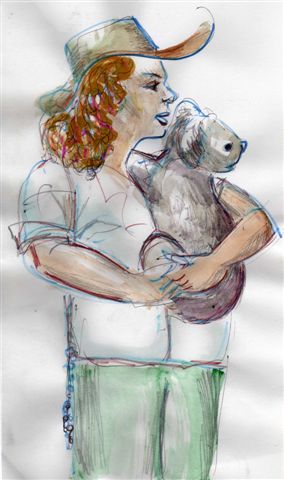
We had a charming morning visiting the Jirrahlinga Koala and Wildlife Sanctuary at Barwon Heads. Our little granddaughter was cautious at first but eventually patted a seven month old koala held by one of the caretakers. We saw sleeping koalas, no doubt zonked out by eucalyptus leaves, wallabies, one with a joey, snakes, goannas, and many colourful birds. The albino bird spread out the beautiful tail but dropped it when I was sketching. The wombats were mainly sleeping but she didn't fancy them much. A lovely morning with a four year old.
W.


Tuesday, October 17, 2006

Leave no footprints?

I wonder if they will leave a mess behind or leave some of the infrastructure that could be used again in the Wainikoro River area? There needs to be care taken about damage to the environment of course. Let's hope the Survivor Team do more than just take advantage of an interesting site. I hear they will leave a wharf behind on the river, but what else?

And I wonder what interpretation they will make of Fijian culture? Respect it, or make fun of aspects of the past. There is plenty of material there if they read up on what John Hunt thought of the people of Mouta, etc.! So when it is said that it will promote Vanua Levu for tourism, it is not as simple as all that.

However, eco-tourism can be a great way forward for Fiji, especially Vanua Levu where there are outstanding locations - mountains and rivers.
W.

from Fiji Times today:
Province considers TV shoot spin-off
Wednesday, October 18, 2006

THE Macuata Provincial Council says it will explore the possibility of developing an eco-tourism resort out of accommodation facilities being used for shooting the Survivor television series in Labasa.

Prime Minister Laisenia Qarase said the Government would support the proposal if it was viable.

After launching the shooting for the popular TV series on Monday, Mr Qarase said he would encourage any such project under the Government's Look North Policy. Shooting for the series ends at Vunivutu in Labasa in six weeks time.

The contractor of the 170 units at the site Dick Beckett said 230 crew used the accommodation and at least 450 people would be employed at the site and for the show by the time the shooting ended.

He said he would take back his equipment and major infrastructure after the shooting but permanent improvements done on the land would remain.

Mr Beckett said millions of people would watch the show and a lot of them would be interested in visiting the site. He said it would be a good idea to develop it into a resort. Macuata Provincial Council spokesman Ratu William Katonivere said the eco-tourism resort idea was exciting and would be explored.

Monday, October 16, 2006

Survivor 14 at Vunivutu - official welcome by PM

more news items about Vunivutu and Survivor 14
From Fiji Times

TV series to eject $6m into community

Tuesday, October 17, 2006

Prime Minister Laisenia Qarase, front, with Audio Visual Commission chairman Joe Mar and Taniela Bolea

POPULAR Television series Survivor will inject $6million direct into the community by creating at least 230 jobs and hosting 250-production crew at Vunivutu in the interior of Labasa.

Prime Minister Laisenia Qarase welcomed the production team saying 'Look North Policy' was slowly taking shape and Vanua Levu will receive international recognition through the country's expanding movie industry.

He said the 'Survivor Project' was a result of the push to transform the division.
Mr Qarase thanked the Audio Visual Commission for working hard and convincing the producers to shoot at Vunivutu.

He said income would be generated through lease money, employment and purchase of goods and services including local produce.

"When the Fiji Survivor programme goes on air our country will attract invaluable international publicity particularly for tourism,'' Mr Qarase said. "Up to 230 local people are to be employed in administrative and office work, in catering, security and land clearance." They can expect to earn a total of approximately half a million dollars in wages over three months.

"The landowners will receive significant income from the temporary leasing of their land and the figure is yet to be known because some locations are not confirmed.
"Infrastructure for the production includes a boat landing at Wainikoro River which will remain for permanent use by locals."

Mr Qarase said seven overseas productions were completed in the country so far and by the end of the year the total number was expected to be 13. He said it was estimated that more than $150million worth of economic activity was created through these projects.

Survivor 14 at Vunivutu - now it's official

from Peceli,
Okay now it's no more a secret as our Fiji Prime Minister travelled to Vunivutu village in Macuata for the official launch of Survivor 14. Good luck with the project. It's really good news for the North, and babasiga people will surely be happy to host these visitors. So we have Survivor 14 at Vunivutu and we have tribewanted at Vorovoro. Way to go!


from last Thursday's Fijilive
PM to launch TV production
Thursday October 12, 2006

Prime Minister Laisenia Qarase will formally launch a major American television production in the Northern Division next Monday.

The Fiji Audio Visual Commission (FAVC) refused to divulge the name and other details about the production until the launch citing a confidentiality agreement signed with the company.

However, the Survivor series is the only American TV production that has set up operations in the North recently.

The production of this reality television show was recently caught up in a land dispute after Fiji landowners had threatened to go to court over the "unlawful" use of their land.

This had prompted FAVC chief executive Dan Bolea to call on Fiji landowners to realise the importance of a film industry and resolve land dispute matters amicably.

FAVC chairman Joe Mar today confirmed that no disruption to the production is anticipated.

This was after a meeting late last week between the FAVC, the producers, the Native Lands Trust Board, the Roko Tui Saravanua, the Tui Sawana and the people of Vunivutu at Vunivutu Village.

Mar conceded however that there were some misunderstanding and misinformation but stressed that under the circumstances some of these may be understandable given the magnitude of the production, the lack of infrastructure and the tight schedule under which it is being put together.

He further added that the Tui Macuata, the Tui Sawana and the chiefs and people of the affected areas have confirmed their full backing to the production.

Survivor producers are reported to have invested $6 million worth of infrastructure in their Nadogo site.

In addition, Mar believes that the Prime Minister's presence at the launching of this project is significant because it is one of the first major projects for the Northern Division as part of Government's 'Look North' policy "and certainly the first major film production of its kind".

"This emphasizes Government's firm commitment to developing this region," he said.

The Look North Policy is aimed at revitalizing the economy of the Northern Division and encouraging developments in that part of the country. This production will take place in Vunivutu and the adjacent coastline and nearby islands, to the north east of Labasa.

Mar says the FAVC has expanded considerable efforts and resources to not only attract this major production to Fiji, but particularly to persuade it to shoot in the North.

The efforts of the Tui Macuata, the Native Lands Trust Board, the Fijian Affairs Board via the Roko Tui Saravanua, the Audio Visual Task Force and others too many to name have all greatly contributed to this achievement," Mar says.

He added that the FAVC was confident that once this major American TV series is broadcast to the world, Fiji will receive tremendous exposure and it is likely to attract other productions here.

Mar maintains that already anecdotal reports from people in the Labasa and surrounding areas confirm that business in the North is "picking up steam" since the production set up its operations there.

Monday's launching of the production by the Prime Minister will be held at Vunivutu Primary School. The people of Vunivutu and nearby villages will perform traditional ceremonies of welcome for the Prime Minister and invited guests beginning at 2pm.

-------------
from Fiji TV news today:
Survivor TV series to pour millions into local economy
16 Oct 2006 22:05:29

The economy in the North is expected to be given a financial boost with the start of a major television production in the coming week.

The Fiji episode of the Survivor series is to be shot on location in the Macuata province in Vanua Levu.

The Prime Minister, Laisenia Qarase, visited the North today to officially launch the TV series.

Vunivutu village, about an hour's drive out of Labasa town, is playing host to the Fiji episode of the Survivor TV series.

Its brought good news for the landowners, villagers and business people, with its multiplying dollar effect on the northern economy.

The Prime Minister's arrival in the north and the traditional ceremonies which followed signified the Government's endorsement and appreciation of a production that will feature Fiji on TV screens around the world.

The Survivor production boasts a crew of some 250 people, whose presence has changed the landscape at Vunivutu - with the construction of over a hundred timber and canvas kit homes.

A landing on the Wainikoro River, built for the series, will remain at the end of the 6-week production.

The Survivor shoot is one of several overseas productions this year.

Sunday, October 15, 2006

Serevi and Fiji Day in Melbourne


from Peceli

Serevi and Fiji Day in Melbourne


It is the second time for Serevi to come to Melbourne that I know about. The last one was in the Commonwealth Games which Fiji lost in the final. This weekend he came to Melbourne for the Fiji Day celebration.

Melbourne is a city of more then 4 million people and a cosmopolitan city with a Premier Steve Bracks who is of Lebanese background and the City Mayor is Chinese, Mr Ho and the Uniting Church Moderator of Victoria and Tasmania is a Tongan. Jason Kioa.

I went up to Melbourne from Geelong with my granddaughter and her parents celebrated Fiji Day. My granddaughter has come over from Fiji for a holiday. We were blessed with good weather. There were plenty of Fiji food stalls, sponsorship from businessmen such as Sharma who made the Seven team visit possible to come to Melbourne with short notice. Well done .

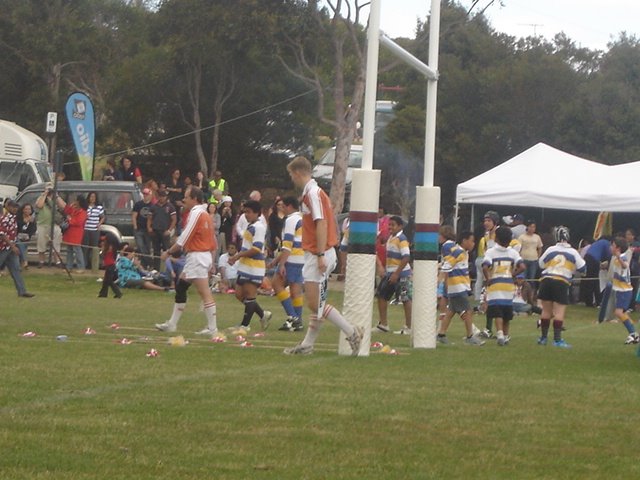
The Christian Mission Fellowship performed items such as a holy spear dance! That surely is one of its kind in the world! A juniors rugby team kept bumping into the dancers near the goal posts. Two lads, about ten years old, did a great Bollywood dance item and were applauded by the crowd then the same boys danced to music by Black Rose.

Children were interviewed in the Radio SBS about that they thought of Fiji Day and though many children are second generation from Fiji migrants they still celebrate Fiji Day.


More than a thousand people gathered at the Harlequins Rugby ground, especially young people for this two day competiton, including teams from Sydney and Adelaide. The highlight was the Nabua team and the Fiji Seven led by Wesley Serevi.

Then yesterday we had the Fiji Day thanksgiving church service at Richmond Town Hall and the main guest speaker was Wesley Serevi. He is 37 years old now and he is of course famous for rugby. He told us his story. He comes from Gau, Lomaiviti from a Christian family. In 1993 in Japan he realised that faith is not just cultural but has to be more and personal. These days he is helping rugby still and is a motivational speaker. You have to listen to him to understand how good he is.

My own observation is that if the young people are motivated by people like Serevi Fiji could be a different world from some of the aimlessness in youth we sometimes see today.

Friday, October 13, 2006

Turaga the Fiji Mens Magazine - issue 1 and 2


from W
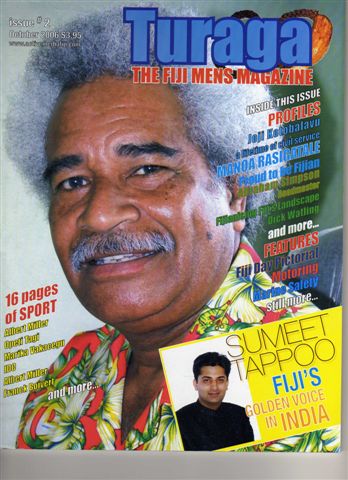
I guess if blokes can browse through Marama magazine, then us ladies can have a peek at the new Fiji magazine for guys - called Turaga. I have the September and October issues and they really are excellent - it's a companion magazine to Marama. Lots of glossy pages, pictures, and stories of different kinds of Fiji men. The pic above is the cover of the October issue. The picture below is from the September issue of Turaga with Rajesh on the left.

One strange story though - now ironic, in the September issue - is an interview with Rajesth Singh, Minister for Sport. A lovely frank and informative interview. Or is he a Minister nowadays? What a decent chap he is in the interview, just the kind of politician to really be in touch with people. Peceli said that he'd done some really grass-roots assistance regarding sports fields in villages. Way to go.


But.... what's going on in Fiji politics this week about Rajesh? He's been sacked from his position - after some kind of a run-in. Very hard to understand. What is going on?

Thursday, October 12, 2006

More about the stones of Wasavulu, Labasa

The Stones at Wasavulu, Labasa

'Anonymous' commented on an earlier post about Wasavulu, so here’s some more about this strange place not far from Labasa town.

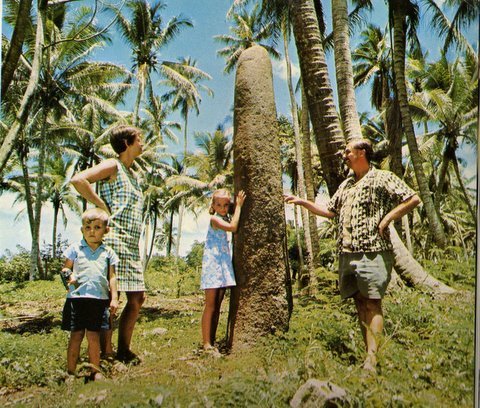
In ‘Fiji in Colour’ from 1969, the author James Siers refers to the stones at Wasavulu, Labasa, in a coconut plantation near a bend in a river.


The Commissioner Northern at the time, Mr Parkes, restored the site and said that one monolith is 11 ft 2 inches high, one of a pair of similar stone on parallel walls 350 ft long. Several smaller stones stand nearby. This ceremonial site would have included a bure kalou (spirit house). Parkes said that one tradition handed down was that nine men and one woman brought the tall monolith from the other side of the mountains which divide Vanua Levu.

The story given to us by a Cikobia man who was caretaker at the time, on a day when we visited Wasavulu was that two princesses carried the stones over the mountains.

There are eleven similar sites in the Labasa area, but I have not heard of any other than Wasavulu.

Mr Parkes, who was also a trustee of the Fiji Museum, and his family are in the photo provided here.

Wasavulu and similar sites were used for investing ceremonies connected with spirits or gods, ceremonial games and the presentation of feasts. Similar sites in Viti Levu have been called naga and anthropologists have connected them with snake god worship in India.
w.

What do you think of drinking yaqona (kava)?

From Peceli
An ongoing problem in Fiji today is the excessive drinking of yaqona in both villages and towns. Why? The Prime Minister spoke about this to the Lau Provincial Council, his own people.

As drinking is a part of our ritual or habit, whether it is tea, water, coffee, kava or beer. So what about kava? Yaqona has been part of Fiji culture for ceremonial purposes and set aside for the traditional priest and the chief such as at the installation of the high chief to become the mana power and ruler of the people and the land.

But then yaqona drinking became informal, for anyone, for women as well as men, for every wedding, funeral, family function, even Sunday afternoons or socially in the evenings. Some villages however have made a ruling to be moderate in ceremonies and even put a tabu on yaqona drinking. For Fiji people overseas, there is also the love of getting together, drinking yaqona socially.


The two pictures I have posted are showing an old tradition of virgin girls mixing the kava, and the other is preparing kava in a ceremony today.
So what do you think about it?
-----
Excessive yaqona to blame: Qarase

Thursday, October 12, 2006
PRIME Minister Laisenia Qarase has again pointed to the excessive concumption of yaqona as the cause of a lot of problems for Fijians.

And he has urged church leaders to start preaching from the pulpits about the effects of excessive kava drinking on youths, church members and government officers. He told the Lau Provincial Council meeting at the Fijian Teachers Association Hall in Suva that the abuse and excessive kava drinking was the cause of a lot of problems in the lives of Fijians.

He said while travelling extensively around the country in the past few years, he saw that kava drinking was abused by villagers, especially young people who were supposed to be the leaders and fathers of tomorrow.

Mr Qarase said there was a trend for youths in villages to drink kava excessively, sometimes not finishing the sessions until the next morning. He said they then slept in the community halls or anywhere where they would not to be disturbed for the rest of the day….

"It slows the mind, makes people lazy, the physical appearance of a person changes and the young people hardly wake up in the morning to go to the plantation while some do not have a dalo or cassava plantation at all and it is really sad," he said.
He said these were some of the "bad habits" brought about by excessive kava drinking.
Mr Qarase said it was sad to see older men instead of the younger ones waking up in the morning and going to the plantation to plant food for the family…

Wednesday, October 11, 2006

Relevant to Qoliqoli Bill - the Great Sea Reef of Macuata

from W.
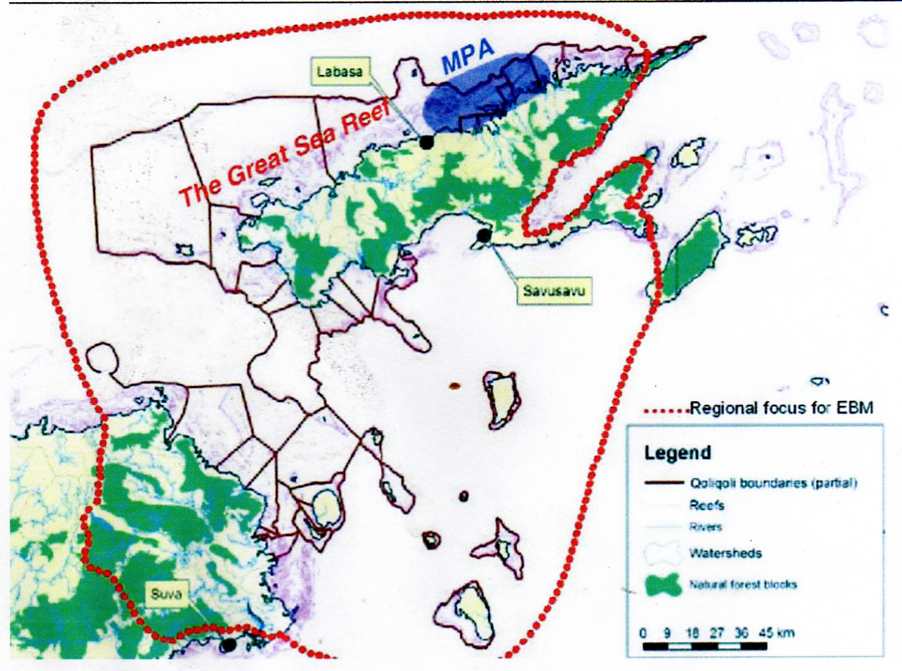
I have probably referenced this before but it is quite relevant to the Qoliqoli discussion - about the Great Sea Reef of Macuata which has been given a tabu by the Macuata chiefs. It is a pdf file here. There are some great pics and also a map which shows the qoliqoli areas.


Part of the discussion is as follows:

Despite the relative intactness of the Great Sea Reef (GSR) and the high levels of biodiversity, emerging pressures are threatening the health and integrity of the reef.

The GSR fringes coastal areas of many sugar cane and pine plantations, and the increasing urbanisation around the township of Labasa. Parts of the GSR are also fished commercially for live reef fish, beche-de-mer and trochus. The most damaged sites in terms of siltation, rubbish and high fishing pressures were observed around Labasa.

Commercially important fish were found in very low numbers and considered to be small in size.

Several threats have been identified by the survey team and communities:
• Over-fishing and poaching by illegal fishers.
• The use of small-mesh fishing nets (regulated three inch mesh size).
• Fish poisoning – an old fishing technique which uses the root of a coastal plant ‘duva’
(derris plant).
• Use of hookah for beche-de-mer collection.
• Siltation of near-shore environment caused by erosion and upland activities, especially
near Malau timber factory.
• Dredging of sand for
construction purposes at Mali Passage.
• Development activities such as drainage of blast water by large vessels in Nadamu Passage.
• Untreated waste water from factories and Labasa town.

Monday, October 09, 2006

Fiji archive document - Deed of Cession

THE DEED OF CESSION OF FIJI TO GREAT BRITAIN

10TH OCTOBER, 1874

Instrument of Cession of the Islands of Fiji by Thakombau, styled Tui Viti and Vuni Valu, and by the other high Chiefs of the said islands to Her Most gracious Majesty Victoria, by the grace of God, of the United Kingdom of Great Britain and Ireland Queen, Defender of the Faith, &c &c &c:

Whereas divers of the subjects of Her Majesty the Queen of Great Britain and Ireland have from time to time settled in the Fijian group of islands and have acquired property or certain pecuniary interests therein; And Whereas the Fijian Chief Thakombau styled Tui Viti and Vuni Valu and the other high native chiefs of the said islands are desirious [sic] of securing the promotion of civilization and Christianity and of increasing trade and industry within the said islands; And Whereas it is obviously desirable, in the interests as well of the native as of the white population, that order and good government should be established therein; And Whereas the said Tui Viti and other high chiefs have conjointly and severally requested Her Majesty the Queen of Great Britain and Ireland aforesaid to undertake the government of the said islands henceforth; And Whereas in order to the establishment of British government within the said islands the said Tui Viti and other the several high chiefs thereof for themselves and their respective tribes have agreed to cede the possession of and the dominion and sovereignty over the whole of the said islands and over the inhabitants thereof and have requested Her said Majesty to accept such cession,- which cession the said Tui Viti and other high chiefs, relying upon the justice and generosity of Her said Majesty, have determined to tender unconditionally,- and which cession on the part of the said Tui Viti and other high chiefs is witnessed by their execution of these presents and by the formal surrender of the said territory to Her said Majesty; And Whereas His Excellency Sir Hercules George Robert Robinson, Knight Commander of the most distinguished* order of Saint Michael and Saint George, Governor Commander in Chief and Vice Admiral of The British Colony of New South Wales and its dependencies, and Governor of Norfolk Island, hath been authorised and deputed by Her said Majesty to accept on Her behalf the said Cession:

Now These Presents Witness,

1. That the possession of and full sovereignty and dominion over the whole of the group of islands in the South Pacific Ocean known as the Fijis (and lying between the parallels of latitude of fifteen degrees South and twenty two degrees South of the Equator and between the Meridians of longitude of one hundred and seventy seven degrees West and one hundred and seventy five degrees East of the meridian of Greenwich) and over the inhabitants thereof, together with the possession of and sovereignty over the waters adjacent thereto and of and over all ports harbours havens roadsteads rivers estuaries and other waters and all reefs and foreshores within or adjacent thereto, are hereby ceded to and accepted on behalf of Her said Majesty the Queen of Great Britain and Ireland her heirs and successors, to the intent that from this time forth the said islands and the waters reefs and other places as aforesaid lying within or adjacent thereto may be annexed to and be a possession and dependency of the British Crown.

2. That the form or constitution of government, the means of the maintenance thereof, and the laws* and regulations to be administered within the said islands shall be such as Her Majesty shall prescribe and determine.

3. That, pending the making by Her Majesty as aforesaid of some more permanent provision for the government of the said islands His Excellency Sir Hercules George Robert Robinson, in pursuance of the powers in him vested and with the consent and at the request of the said Tui Viti and other high Chiefs the ceding parties hereto, shall establish such temporary or provisional government as to him may seem meet.

4. That the absolute proprietorship of all lands not shown to be now alienated so as to have become bona fide the* property of Europeans or other foreigners or not now in the actual use or occupation of some Chief or tribe or not actually required for the probable future support and maintenance of some chief or tribe shall be and is hereby declared to be vested in Her said Majesty her heirs and successors.

5. That Her Majesty shall have power, whenever it shall be deemed necessary for public purposes, to take any lands upon payment to the proprietor of a reasonable sum by way of compensation for the deprivation thereof.

6. That all now existing public buildings houses and offices, all enclosures and other pieces or parcels of land now set apart or being used for public purposes, and all stores fittings and other articles now being used in connection with such purposes are hereby assigned transferred and made over to Her said Majesty.

7. That on behalf of Her Majesty His Excellency Sir Hercules George Robert Robinson promises (1.) that the rights and interests of the said Tui Viti and other high chiefs the ceding parties hereto shall be recognised so far as is and shall be consistent with British Sovereignty and Colonial form of government, (2.) that all questions of financial liabilities and engagements shall be carefully scrutinized and dealt with upon principles of justice and sound public policy, (3.) that all claims to title to land by whomsoever preferred and all claims to pensions or allowances whether on the part of the said Tui Viti and other high chiefs or of persons now holding office under them or any of them shall in due course be fully investigated and equitably adjusted.

In Witness whereof, the whole of the contents of this instrument of Cession having been, previously to the execution of the same, interpreted and explained to the ceding parties hereto by David Wilkinson Esquire, the interpreter nominated by the said Tui Viti and the other high chiefs and accepted as such interpreter by the said Sir Hercules George Robert Robinson, the respective parties hereto have hereunto set their hands and seals.

Done at Levuka this tenth day of October, in the year of Our Lord one thousand eight hundred and seventy four.

Cakobau R. Tui Viti and Vunivalu (Seal)
Maafu (Seal)
Hercules Robinson (Seal) Tui Cakau (Seal)
Ratu Epeli (Seal)
Vakawalitabua Tui Bua (Seal)
Savenaca (Seal)
Esekele (Seal)
B. V. Tui Dreketi (Seal)
Ritova (Seal)
Kato-nivere (Seal)
Ratu Kini (Seal)
Matanitobua (Seal)
Nacagilevu (Seal)

I hereby certify that,(etc. about interpreting document to the chiefs) I fully and faithfully interpreted and who one and all approved thereof. A copy of such interpretation is hereto annexed marked A. Dated this tenth day of October, A.D. 1874.

D. WILKINSON
Chief Interpreter
The interpreter named in the foregoing instrument of Cession

Changing face of Fiji Day


Changing face of Fiji Day

From the archives about Independence Day
and then find the slideshow – black and white – of 10th October 1970

From Peceli

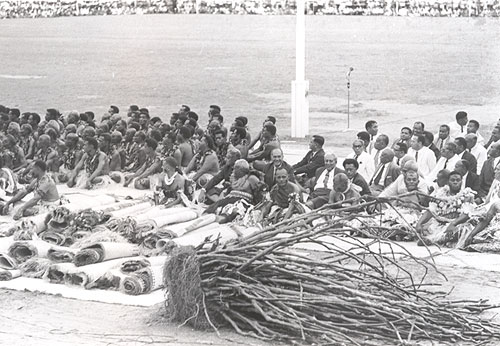
Fiji day is the day I always remember and honour. Undoubtedly the memorable historical Deed of Cession in 1874 is the starting point, this event held in Levuka with high chiefs of Fiji who came to sign the Document. The two chiefs from Macuata were there, Ritova and Katonivere. Apparently Ritova was forced to sign and then he died in Levuka.

In 1970 a big celebration of Independence Day was led by Ratu Mara with Prince Charles attending at Albert Park, Suva. I still can picture the celebration in Rakiraki with my family - Wendy and two little boys then.

The positive part of Fiji Day

We like celebrations, feasts, and church thanksgiving for this day. However when I think more about it, there has been a change from the norm of saying ‘Yes Sir, Io, saka’ to the present day when Fiji people now ask, ‘Should I do it? Should I do this?’ People are more educated now and more outspoken. It was a colonial time before, but not now, and these days we seriously question the chiefs if they are not taking their duties responsibly.

We want to promote good living standards and education for our children and their children. We expect dignity and tolerance and respect but it is not always happening.


Lest we forget

There are sensitive things too. We remember the damage to our society as well, sometimes economic, sometimes social. Natural disasters we can take, tidal waves, landslides, floods and get back on track. Coups though have hurt people and the country, but they have made us all question where we are going.

During my trip to Fiji a couple of months ago I happened to visit some of my Macuata kin at Nukulau Prison together with George Speight. I conducted a small church service with them and had lunch with them. The point is that in Fiji there are many problems and different attitudes. During this Independence Day we also have to think of people in gaol also.

So what are your concerns this day, Fiji Day 2006?

Saturday, October 07, 2006

How's Tribewanted going on Vorovoro?

A few comments in the chief's blog indicate they are still progressing. But it's been raining in Fiji this week - seriously raining - and I think living on Vorovoro at present without the big bure completed might be a bit damp. Were they really sleeping in open-sided vakatunuloa kind of shelters? (A vakatunuloa is a kind of shed made from bamboo or wood with a tin roof or thatch.)

As for the other kind of 'tribe' in the un-named location, I notice that the spoilers are sneaking into this blog for some clues but I'm not naming names though a couple of newspaper articles last week (now archived and hard to find) suggested a bit of a kerfuffle about leasing rights but it was probably just one or two relatives agitating and it's all fixed up by now.
W.

October 10th - happy birthday independent Fiji!

Happy 36th birthday independent Fiji!
from Wendy

Meda Dau Doka or God Bless Fiji is the national anthem of Fiji. The melody was adapted from a 1911 hymn by Charles Austin Miles entitled Dwelling in Beulah Land. The lyrics were composed by Michael Francis Alexander Prescott in a contest where the composers were asked to write words to the given tune. I went in the contest, wrote beautiful words, but well, the winner’s wife was one of the judges! The winner's text was adopted upon independence in 1970.

The English and Fijian lyrics are not translations of each other, and in fact have very little in common. The earlier version as a Fijian Patriotic Song – sere ni vanua – tune from hymn ‘Dwelling in Beulah Land’.

Meda Dau Doka

Meda dau doka ka vinakata na vanua
E ra sa dau tiko kina na savasava
Rawa tu na gauna ni sautu na veilomani
Biu na i tovo tawa savasava

CHORUS:
Me bula ga ko Viti
Ka me toro ga ki liu
Me ra turaga vinaka ko ira na i liuliu
Me ra liutaki na tamata
E na veika vinaka
Me oti kina na i tovo ca

Me da dau doka ka vinakata na vanua
E ra sa dau tiko kina na savasava
Rawa tu na gauna ni sautu na veilomani
Me sa biu na i tovo tawa yaga

Bale ga vei kemuni na cauravou e Viti
Ni yavala me savasava na vanua
Ni kakua ni vosota na dukadukali
Ka me da sa qai biuta vakadua


English Version from 1970, winner of the contest – but not a translation

God Bless Fiji

Blessing grant oh God of nations on the isles of Fiji
As we stand united under noble banner blue
And we honour and defend the cause of freedom ever
Onward march together God bless Fiji

CHORUS:
For Fiji, ever Fiji, let our voices ring with pride.
For Fiji ever Fiji her name hail far and wide,
A land of freedom , hope and glory to endure what ever befall.
May God bless Fiji
Forever more!

Blessing grant oh God of nations on the isles of Fiji
Shores of golden sand and sunshine, happiness and song
Stand united , we of Fiji, fame and glory ever
Onward march together God bless Fiji.

Lyrics by Michael Francis Alexander Prescott
Music by C. Austin Miles


What the Yellow Bucket, in Fiji Village says about the Fiji national anthem.

YB’s problem with the national anthem is that it is in desperate need of a re mix .The tune isn’t too bad and the words adequate but it does drag and it doesn’t reflect the multi racial nature of our society. In fact there is only one official version of the national anthem and it is in English. A Fijian version is sung but this isn’t a translation it is in fact a Methodist hymn. What we would like to see is a new version using the same basic tune, adding a pacific beat and like the Kiwi and South African anthems absorbing English, Fijian and Hindi into the lyrics. It would be very special.

A further note on the anthem try getting a decent recording of it and you are in big trouble. Black Rose has recorded something that Fiji TV uses but other than that recordings available are dreadful.
--------
Yes, needs a pacific beat, a lali (slit drum) or two, some thumping derua (bamboo rods) in the background and a hint or two of other languages than English!

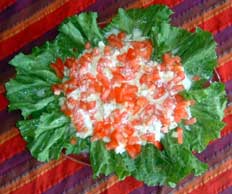
Favourite Fiji food - raw fish


from W
My youngest son's favourite Fiji food is Kokoda using raw fish - preferably yellow-fin tuna. It takes time because it has to marinade for several hours.

Ingredients
2 White Fish Fillets
Juice from 3 large limes
½ teaspoon salt
1 cup Coconut Cream preferably made with 'real' coconuts but a can will do
1 Onion, finely chopped
2 chillies
2 Tomatoes

Directions

1. Cut the fish into bite-size pieces and place in a glass or plastic bowl (avoid metal as it will react with the lime juice and ruin your dish) Add the lime juice and salt. Mix well, cover and marinate in fridge for 6-10 hours.

2. Just before serving, add coconut cream, onion, and the pepper. Stir thoroughly then place onto serving platter. Top with chopped tomatoes.
----
On our Geelong blog site I'll list some of our favourite foods. This is response to a blogger Tooners who described her favourite 'comfort' foods.

Friday, October 06, 2006

plan for eco-tourism spot near Naduri

from today's Fiji Times:
Sailors invest in eco-resort
Saturday, October 07, 2006

A COUPLE who has sailed to more than 150 countries has decided to make Vanua Levu home and is investing its life savings in a eco-friendly farm stay with six bure. The Palmlea Farms Bamboo Bures and Bistro Resort at Tabia/Naduri Road in Macuata will be ready to receive visitors before Christmas.


Joe and Julie Smelser first came to Fiji 13 years ago and after spending seven months in the country trying to repair their boat they made up their mind to make the country home. They bought 30 acres land on which they are building the resort and preparing farms to plant fruits and vegetables not available locally.

The Smelsers said they were not in the country to make a retirement home or make money but were here to stay permanently. They said Vanua Levu had a lot of potential to expand with its serene nature and friendly people.

Joe, an architect and builder, is overlooking the construction of the six bure while Julie is looking after the financial side with her business management background.They said after travelling around the world they were sure they wanted to settle in Fiji. The choice to settle in Vanua Levu was made while they were in Lautoka and a lot of friends suggested they visit the friendly north.

Julie said they were currently working on four bure, which are expected to be completed by early December and two more bure to be constructed early next year.

She said Naduri was an ideal place because it was bright and sunny, not hot and humid and neither did it rain much.

Their couple's property overlooks the open Macuata coastline and is surrounded by Indian settlements and Fijian villages. They said they would give their visitors a touch of local tradition and culture and local delicacies.

The couple said their accommodation would offer an escape from the busy world to serenity and tranquility with scenic beauty in every direction.

----------
Nice to see that some vavalagis are keen to invest and live in babasiga land where it doesn't rain like Suva!
W.

Thursday, October 05, 2006

Being healthy and a sore back

Keeping healthy and a sore back
From Peceli

For five days I have had a sore back, right in the middle. When I stand up I have to get up slowly because of the pain. When I bend down I have to do it carefully. I haven’t played golf since last Friday so that means something! Usually I play in golf competitions on Saturday, Tuesday, and play a social match on Thursday. I think I probably twisted it playing golf.

It is not serious enough though to go to a doctor and it is getting better slowly. I do gentle stretching exercises on the advise of my youngest son but I don’t use his gym equipment. Also I went swimming twice in a heated pool this week and had a sauna and spa. The physio here is expensive. In Fiji relatives often do massage with coconut oil to help with a sore back.


Any suggestions how to relieve the problem?

Fiji Day is coming and I want to be fit to go up to Melbourne for the celebration. Last year we had a good time at Sir Doug Nicolls Park in Melbourne and had many visitors from Fiji from the Police Wives. This year the venue is the Harlequin’s Rugby Ground.

Tuesday, October 03, 2006

Qoliqoli - a cultural view


from Wendy
I found an excellent website from a Convention on Bio-diversity in the South Pacific and here are some excerpts that provide a cultural view of qoliqoli.

For Pacific Island peoples, the land and the sea are an extension of each other. As one commentator has noted: “The marine environment is viewed conceptually as forming part of the land, and the principles of marine tenure differ little if any from land tenure. …land and all that grows upon it, together with the people who derive their sustenance from it, are one and indivisible in many South Pacific Island communities. Adjacent reefs and intervening lagoons, mangroves and estuaries are seen as integral components of that land, not as distinct entities separated from land from a certain tidal level”...

The Sea has always been a source of food for many Fijians but until recently activity was generally confined to the in-shore areas of the main reefs, and has been subsistent in character (Ravuvu, 1983:34). For thousands of years our ancestors have lived off the ocean whose reefs have been and still are home to a wide range of marine life. The people affinity with the land is, therefore, not merely land-based, but literally extends beyond the shores to encompass the ocean and the reefs that surrounds Fiji (ibid, 1-3). The reef is an essential element that ensures the very survival of the indigenous Fijians.

The picture of Fijians fishing near the shore was taken from a Fiji calendar.

Sunday, October 01, 2006

Fijian men and change in dress


from w.
Many drawings and photos of Fijian men from the mid 19th century can be found on the websites of Rod Ewins and Jane Resture. I will put a few other pics here to show the change in dress, such as Fijian chiefs’ costume as in some Fiji stamps from a lovely website of Fijian stamps From the malo - brief masi wrap of the warrior to being clad in masi - barkcloth to the modern day bula shirt and sulu.

Matching shirts and sulus are popular for special occasions and the term used is 'colourvata' - same colour.